Adrian Stokes: Internet pioneer

An abstract schematic of the UK part of the ARPANET. RAL and others connect to UCL which connects to the US via Norway.
Image by Paul Curzon

We take the Internet for granted now, but it is not that long ago that it did not exist at all. Disabled from birth with spina bifida, Adrian Stokes, OBE was one of the people who helped build it: a celebrated “Internet pioneer”. He was, for example, responsible for setting up the first email service in the UK and so the first transatlantic email system, as well as providing the service linking other universities in the UK to the network making it work as a network of networks in different countries.

He worked on ARPANET, the precursor to the Internet. It was a research project funded by the US department of defence exploring the future of communication networks. Up to that point there were global networks but they were based on what is called circuit switching. Think of an old fashioned telephone exchange, Each person had a direct line – an electrical circuit – connecting them to the operator. When you talked to the operator and asked to talk to someone over the phone, the operator would plug a wire that connected your line to theirs, making a new direct circuit from you to them. When you talked, your voice was converted to an analogue signal (a changing electrical signal) which passed down that wire – along the circuit. Transatlantic telephone cables even allowed circuits, so phone calls, to be set up between countries. Early computers connected to each other, sending data over phone lines in this way by converting them into sounds.

ARPANET worked differently to a circuit-based system. It was a packet switched network. It worked by treating data sent over a network as binary, just as the computer itself does internally. This contrasted with the analogue system then used to send sound over early phones. Importantly, the binary data being sent was divided up into fixed size groups of bits called packets. Each packet was then sent separately over the network. In this system there is no fixed circuit from source to destination that the data travels down, just lots of different computers connected to each other, On receiving packets of data each computer or node of the network passes it on to another until eventually it arrives at the target computer. A key advantage to this is that each of those packets can go by a different route, travelling between different computers. They can even arrive out of order, The data no longer travels along a single circuit. The packets are put back together (in the right order) on reaching the destination, reconstructing the original so that the fact it was ever split up is invisible to the person receiving the data. Extra information is added to the packets beyond the actual data to make the system work: such as a destination address to indicate where it is going to and the number of the packet so the order can be reconstructed if they do arrive out of order. Managing the packets and their journey to the destination is done by software implementing a protocol (a set of communication rules agreed between the computers on the network, that allows them to interpret the streams of bits arriving from other computers).

So ARPANET consisted of a series of computers that acted as nodes of the network. Each had to be programmed with software to run the protocol, passing packets on in their journey to the destination and pulling the original data out and reconstructing it if that computer was their destination. UCL were working with the ARPANET team, exploring how to make it work across continents, so had to program one of their computers to make it an ARPANET node. Once done it could connect to the ARPANET via a satellite link in Norway.

At first, the ARPANET was set up as a way just to access data on other computers as though it was on your own local computer. However, other services could be provided on top of the basic protocols. It just amounts to writing code for your node’s computer to turn data into packets and interpret the data in packets arriving in the way needed for the new application. For example, a way to access files on other computers as though they were on yours were added. Much, much later of course code to allow communication through a web page service was written and the world wide web was born to sit on top of the Internet.

This was one of the jobs Adrian Stokes did. He wrote code for the UCL computers that could treat packets of data as email messages rather than just files. Users could write messages and send them to people on other computers on ARPANET without them needing to know where they actually were. It was the first UK email service.

Once UCL had a link to the ARPANET, they could also extend ARPANET. One of Adrian’s other jobs was in managing onward links around the UK, creating a UK ARPANET network. Researchers in other UK universities could set up their own computers as ARPANET nodes (write and run the software on their computer) and then connect their computers to the UCL one. Networks their computers were linked to could then also connect to the ARPANET. In doing so they created a UK ARPANET network but one that was also connected to the full ARPANET via the UCL computer. It meant, for example, that anyone on the ARPANET in the US could (with permission as UCL added password protection to their node – the first on the ARPANET!) access the powerful IBM System 360/195 computer at the Rutherford and Appleton Labs in Oxfordshire. ARPANET became a transatlantic network of connected networks. Any of those UK universities could also then connect to any computer anywhere on the ARPANET. Their packets just went to the UCL one and then to the US via the satellite link, before being forwarded onwards to other US computers. If these UK university computers had the programs for the file transfer or email services, for example, then they could seamlessly use them to access files anywhere else or send messages to anyone else connected to the ARPANET anywhere.

ARPANET ultimately turned into what we now call the Internet. No single person invented the Internet, it was a massive team effort with lots of people involved each responsible for getting some part of it to work. Those like Adrian who played a critical part in making it work, however, have been recognised as “Internet pioneers”: those who can justifiably claim they were part of the team that invented the Internet, and transformed all our lives as a result.

– Paul Curzon, Queen Mary University of London

More on …

Magazines …

Our Books …


Subscribe to be notified whenever we publish a new post to the CS4FN blog.


This page is funded by EPSRC on research agreement EP/W033615/1.

QMUL CS4FN EPSRC logos

Scilly cable antics

CS4FN Banner

by Paul Curzon, Queen Mary University of London (from the archive)

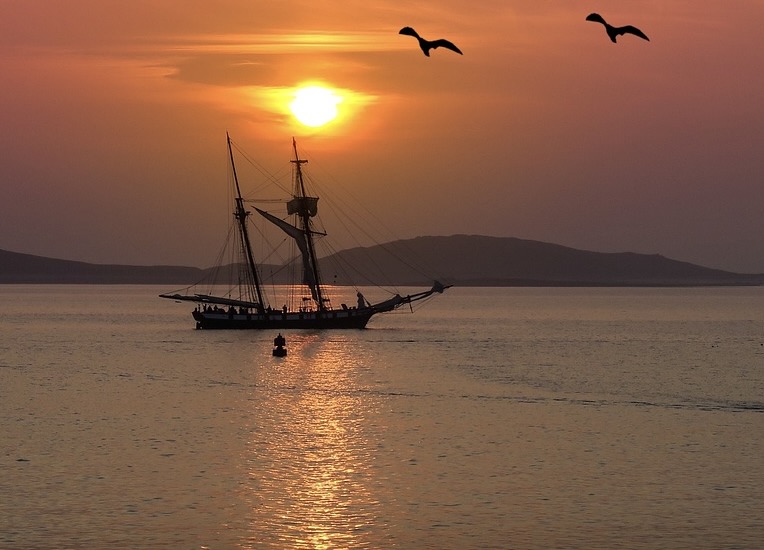
Sunset over the Scilly Isles with a sailing boat in the foreground
Image by Mike Palmer from Pixabay

Undersea telecommunications cables let the world communicate and led to the world spanning Internet. It was all started by the Victorians. Continents were connected, but closer islands were too including the Scilly Isles.

Autumn 1869. There were great celebrations as the 31 mile long telecommunications cable was finally hauled up the shore and into the hut. The Scilly Isles now had a direct cable communication link to the mainland. But would it work? Several tests messages were sent and it was announced that all was fine. The journalists filed their story. The celebrations could begin.

Except it didn’t actually work! The cable wasn’t connected at all. The ship laying the cable had gone off course. Either that or someone’s maths had been shaky. The cable had actually run out 5 miles off the islands. Not wanting to spoil the party, the captain ordered the line to be cut. Then, unknown to the crowd watching, they just dragged the cut off end of the cable up the beach and pretended to do the tests. The Scilly Isles weren’t actually connected to Cornwall until the following year.

More on …


Magazines …


Subscribe to be notified whenever we publish a new post to the CS4FN blog.


This blog is funded through EPSRC grant EP/W033615/1.

Gutta-Percha: how a tree launched a global telecom revolution

CS4FN Banner

by Paul Curzon, Queen Mary University of London

(from the archive)

Rubber tree being tapped
Image  from Pixabay

Obscure plants and animals can turn out to be surprisingly useful. The current mass extinction of animal and plant species needs to be stopped for lots of reasons but an obvious one is that we risk losing forever materials that could transform our lives. Gutta-percha is a good example from the 19th century. It provided a new material with uses ranging from electronic engineering to bioengineering. It even transformed the game of golf. Perhaps its greatest claim to fame though is that it kick-started the worldwide telecoms boom of the 19th century that ultimately led to the creation of global networks including the Internet.

Gutta-percha trees are native to South East Asia and Australia. Their sap is similar to rubber. It’s actually a natural polymer: a kind of material made of gigantic molecules built up of smaller structures that are repeated over and over again. Plastics, amber, silk, rubber and wool are all made of polymers. Though very similar to it, unlike rubber, Gutta-percha is biologically inert – it doesn’t react with biological materials – and that was the key to its usefulness. It was discovered by Western explorers in the middle of the 17th century, though local Malay people already knew about it and used it.

Chomping wires

So how did it play a part in creating the first global telecom network? Back in the 19th century, the telegraph was revolutionising the way people communicated. It meant messages could be sent across the country in minutes. The trouble was when the messages got to the coast they ground to a halt. Messages could only travel across an ocean as fast as a boat could take them. They could whiz from one end of America to the other in minutes but would then take several weeks to make it to Europe. The solution was to lay down undersea telegraph cables. However, to carry electricity an undersea cable needs to be protected and no one had succeeded in doing that. Rubber had been tried as an insulating layer for the cables but marine animals and plants just attacked it, and once the cable was open to the sea it became useless for sending signals. Gutta-percha on the other hand is a great insulator too but it doesn’t degrade in sea-water.

As it was the only known material that worked, soon all marine cable used Gutta-percha and as a result the British businessmen who controlled its supply became very rich. Soon telegraph cables were being laid everywhere – the original global telecoms network. To start with the network carried telegraph signals then was upgraded to voice and now is based on fibre-optics – the backbone of the Internet.

Rotting teeth

Gutta-percha has also been used by dentists – just as marine animals don’t attack it, it doesn’t degrade inside the human body either. That together with it being easy to shape makes it perfect for dental work. For example, it is used in root canal operations. The pulp and other tissue deep inside a rotting tooth are removed by the dentist leaving an empty chamber. Gutta-percha turns out to be an ideal material to fill the space, though medical engineers and materials scientists are trying to develop synthetic materials like Gutta-percha, but that have even better properties for use in medicine and dentistry.

Dimpled balls

That just leaves golf! Early golf balls were filled with feathers. In 1848 Robert Adams Paterson came up with the idea of making them out of Gutta-percha since it was much easier to make than the laborious process of sewing balls of feathers. It was quickly realised, if by accident, that after they had been used a few times they would fly further. It turned out this was due to the dimples that were made in the balls each time they were hit. The dimples improved the aerodynamics of the ball. That’s why modern golf balls are intentionally covered in dimples.

So gutta-percha has revolutionised global communications, changed the game of golf and even helped people with rotting teeth. Not bad for a tree.

More on …


Subscribe to be notified whenever we publish a new post to the CS4FN blog.


This blog is funded through EPSRC grant EP/W033615/1.

Even the dolphins use pocket switched networks!

(from the archive)

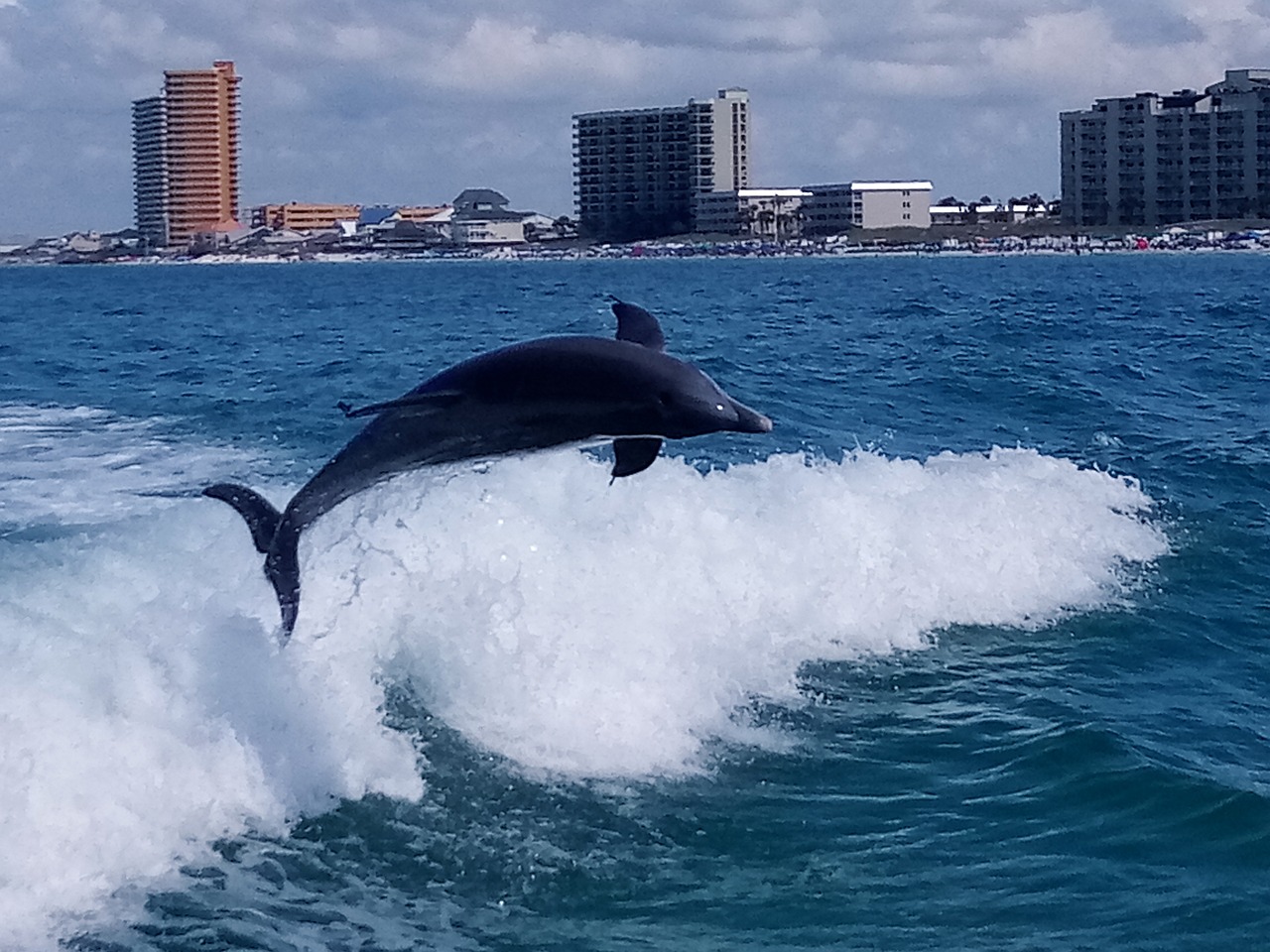
Dolphin leaping in waves off Panama City
Image by Heather Williams from Pixabay

Email, texting, Instant Messaging, Instant response…one of the things about modern telecoms is that they fuel our desire to “talk” to people anytime, anywhere, instantly. The old kind of mail is dismissed as “snail mail”. A slow network is a frustrating network. So why would anyone be remotely interested in doing research into slow networks? Surprisingly, slow networks deserve study. Professor Jon Crowcroft of the University of Cambridge and his team were early researchers of this area, and this kind of network could be the network of the future. The idea is already being used by the dolphins (not so surprising I suppose given according to Douglas Adams’ “The HitchHiker’s Guide to the Galaxy” they are the second most intelligent species on Earth…after the mice).

From node to node

Traditional networks rely on having lots of fixed network “nodes” with lots of fast links between them. These network nodes are just the computers that pass on the messages from one to the other until the messages reach their destinations. If one computer in the network fails, it doesn’t matter too much because there are enough connections for the messages to be sent a different way.

There are some situations where it is impractical to set up a network like this though: in outer space for example. The distances are so far that messages will take a long time – even light can only go so fast! Places like the Arctic Circle are another problem: vast areas with few people. Similarly, it’s a problem under the sea. Signals don’t carry very well through water so messages, if they arrive at all, can be muddled. After major disasters like Hurricane Katrina or a Tsunami there are also likely to be problems.

It is because of situations like these that computer scientists started thinking about “DNTs”. The acronym can mean several similar things: Delay Tolerant Networks (like in space the network needs to cope with everything being slow), Disruption Tolerant Networks (like in the deep sea where the links may come and go) or Disaster tolerant networks (like a Tsunami where lots of the network goes down at once). To design networks that work well in these situations you need to think in a different way. When you also take into account that computers have gone mobile – they no longer just sit on desks but are in our pockets or handbags, this leads to the idea of a “ferrying network” or as Jon Crowcroft calls them: “Pocket Switched Network”. The idea is to use the moving pocket computers to make up a completely new kind of network, where some of the time messages move around because the computers carrying them are moving themselves, not because the message itself is moving. As they move around they pass near other computers and can exchange messages, carrying a message on for someone else until it is near another computer it can jump to.

From Skidoo to you

A skiddo with driver standing next to it
Image by raul olave from Pixabay

How might such networks be useful in reality? Well one was set up for the reindeer farmers in the Arctic Circle. They roam vast icy wastelands on skidoos, following their reindeer. They are very isolated. There are no cell phone masts or internet nodes and for long periods they do not meet other people at all. The area is also too large to set up a traditional network cheaply. How could they communicate with others?

They set up a form of pocket switched network. Each carried a laptop on their skidoo. A series of computers were also set up sitting in tarns spread around the icy landscape. When the reindeer farmers using the network want a service, like delivering a message, the laptop stores the request until they pass within range of one of the other computers perhaps on someone else’s skidoo. The computer then automatically passes the message on. The new laptop takes the message with it and might later pass a tarn, where the message hops again then waits till someone else passes by heading in the right direction. Eventually it makes a hop to a computer that passes within range of a network point connected to the Internet. It may take a while but the mail eventually gets through – and much faster than waiting for the farmer to be back in net contact directly.

Chatting with Dolphins

Even the dolphins got in on the act. US scientists wanted to monitor coastal water quality. They hit on the idea of strapping sensors onto dolphins that measure the quality wherever they go. Only problem is dolphins spend a lot of time in deep ocean where the results can’t easily be sent back. The solution? Give them a normal (well dolphin adapted) cell phone. Their phone stores the results until it is in range of their service provider off the coast. By putting a receiver in the bays the dolphins return to most frequently, they can call home to pass on the data whenever there.

The researchers encountered an unexpected problem though. The dolphin’s memory cards kept inexplicably filling up. Eventually they realised this was because the dolphins kept taking trips across the Atlantic where they came in range of the European cell networks. The European telecom companies, being a friendly bunch, sent lots of text messages welcoming these newly appeared phones to their network. The memory cards were being clogged up with “Hellos”!

The Cambridge team investigated how similar networks might best be set up and used for people on the move, even in busy urban environments. To this end they designed a pocket switched network called Haggle. Using networks like Haggle, it is possible to have peer-to-peer style networks that side-step the commercial networks. If enough people join in then messages can just hop from phone to phone, using bluetooth links say, as they passed near each other. They might eventually get to the destination without using any long distance carriers at all.

The more the merrier

With a normal network, as more people join the network it clogs up as they all try to use the same links to send messages at the same time. Some fundamental theoretical results have shown that with a pocket switched network, the capacity of the network can actually go up as more people join – because of the way the movement of the people constantly make new links.

Pocket switched networks are a bit like gases – the nodes of the network are like gas molecules constantly moving around. A traditional network is like a solid – all the molecules, and so nodes, are stationary. As more people join a gaseous network it becomes more like a liquid, with nodes still moving but bumping into other nodes more often. The Cambridge team explored the benefits of networks that can automatically adapt in this way to fit the circumstances: making phase transitions just like water boiling or freezing.

One of the important things to understand to design such a network is how people pass others during a typical day. Are all people the same when it comes to how many people they meet in a day? Or are there some people that are much more valuable as carriers of messages. If so those are the people the messages need to get to to get to the destination the fastest!

To get some hard data Jon and his students handed out phones. In one study a student handed out adapted phones at random on a Hong Kong street, asking that they be returned a fixed time later. The phones recorded how often they “met” each other before being returned. In another similar experiment the phones were given out to a large number of Cambridge students to track their interactions. This and other research shows that to make a pocket switched network work well, there are some special people you need to get the messages to! Some people meet the same people over and over, and very few others. They are “cliquey” people. Other more “special” people regularly cross between cliques – the ideal people to take messages across groups. Social Anthropology results suggest there are also some unusual people who rather than just networking with a few people, have thousands of contacts. Again those people would become important message carriers.

So the dolphins may have been the “early adopters” of pocket switched networks but humans may follow. If we were to fully adopt them it could completely change the way the telecom industry works…and if we (or the dolphins) ever do decide to head en-mass for the far reaches of the solar system, pocket switched networks like Haggle will really come into their own.

– Paul Curzon, QMUL, based on a talk given by Jon Crowcroft at Queen Mary in Jan 2007.

More on …


Subscribe to be notified whenever we publish a new post to the CS4FN blog.


This blog is funded through EPSRC grant EP/W033615/1.

Ant Track Algorithms

A single ant on a rock
Image by vlada11 from Pixabay

Ants communicate by leaving trails of chemicals that other ants can follow to sources of food they’ve found. Very quickly after a new source of food is found ants from the nest are following the shortest path to get to it, even if the original ant trail was not that direct and wiggled around. How do they do that? And how come computers are copying them?

Bongo playing physicist, Richard Feynman, better known for his Nobel Prize for Physics, wondered about this one day watching ants in his bath. The marvellous thing about science is it can be done anywhere! He grabbed some crayons and started marking the paths each ant followed by drawing a line behind it. He quickly discovered from the trails that what was happening was that each ant was following earlier trails but hurriedly so not sticking to it exactly. Instead it was leaving its own trail. As this was done over and over again the smooth direct route emerged as having the strongest line from the superimposed hurried trails. It’s a bit like when you sketch – you do a series of rough lines to start, but as you do that over and over the final line is much smoother.

From very simple behaviour the ants are able to achieve complex things that might otherwise need complex geometrical skills. As a result, Computer Scientists have been inspired by the ants. Marco Dorigo, Université Libre de Bruxelles first came up with the idea of ‘ant algorithms’: ways of programming separate software agents to do complex things that otherwise would bog down even fast computers. They are part of a more general idea of swarm computing. Finding shortest routes, whether for taxi drivers or for messages sent over networks, is a very common problem of the kind ant algorithms can solve. An ant algorithm solution involves programming lots of software agents to behave a bit like ants leaving digital trails for other agents to pick up. Over time, their simple individual behaviour yields a good solution to the otherwise complex problem of finding the shortest route. Another use is to detect the edges of objects in images – the first step in understanding a picture. Here the virtual ants wander from pixel to pixel based on the differences between nearby pixels, with the result that the strongest trail is left along edges of things shown in the image.

So ants are helping to solve real problems. Not bad for such a tiny brain.

– Peter W McOwan and Paul Curzon, Queen Mary University of London

(Updated from the archive)


More on …

Related Magazines …

cs4fn issue 4 cover

EPSRC supports this blog through research grant EP/W033615/1, and through EP/K040251/2 held by Professor Ursula Martin. 

QMUL CS4FN EPSRC logos

The optical pony express

Pony express - cowboy galloping on horse at sunset
Image by Ronald Plett from Pixabay

Suppose you want to send messages as fast as possible. What’s the best way to do it? That is what Polina Bayvel, a Professor at UCL has dedicated her research career to: exploring the limits of how fast information can be sent over networks. It’s not just messages that it’s about nowadays of course, but videos, pictures, money, music, books – anything you can do over the Internet.

Send a text message and it arrives almost instantly. Sending message hasn’t always been that quick, though. The Greeks used runners – in fact the Marathon athletic event originally commemorated a messenger who supposedly ran from a battlefield at Marathon to Athens to deliver the message “We won” before promptly dying. The fastest woman in the world at the time of writing, 2011, Paula Radcliffe, at her quickest could deliver a message a marathon distance away in 2 hours 15 minutes and 25 seconds (without dying!) … ( now in 2020, Brigid Kosgei, a minute or so faster).

Horses improved things (and the Greeks in fact normally used horseback messengers, but hey it was a good story). Unfortunately, even a horse can’t keep up the pace for hundreds of miles. The Pony Express pushed horse technology to its limits. They didn’t create new breeds of genetically modified fast horses, or anything like that. All it took was to create an organised network of normal ones. They set up pony stations every 10 miles or so right across North America from Missouri to Sacramento. Why every 10 miles? That’s the point a galloping horse starts to give up the ghost. The mail came thundering in to each station and thundered out with barely a break as it was swapped to a new fresh pony.

The pony express was swiftly overtaken by the telegraph. Like the switch to horses, this involved a new carrier technology – this time copper wire. Now the messages had to be translated first though, here into electrical signals in Morse code. The telegraph was followed by the telephone. With a phone it seems like you just talk and the other person just hears but of course the translation of the message into a different form is still happening. The invention of the telephone was really just the invention of a way to turn sound into an electrical code that could be sent along copper cables and then translated back again.

The Internet took things digital – in some ways that’s a step back towards Morse code. Now, everything, even sound and images, are turned into a code of ones and zeros instead of dots and dashes. In theory images could of course have been sent using a telegraph tapper in the same way…if you were willing to wait months for the code of the image to be tapped in and then decoded again. Better to just wait for computers that can do it fast to be invented.

In the early Internet, the message carrier was still good old copper wire. Trouble is, when you want to send lots of data, like a whole movie, copper wire and electricity are starting to look like the runners must have done to horse riders: slow out-of-date technology. The optical fibre is the modern equivalent of the horse. They are just long thin tubes of glass. Instead of sending pulses of electricity to carry the coded messages, they now go on the back of a pulse of light.

Up to this point it’s been mainly men taking the credit, but this is where Polina’s work comes in. She is both exploring the limits of what can be done with optical fibres in theory and building ever faster optical networks in practice. How much information can actually be sent down fibres and what is the best way to do it? Can new optical materials make a difference? How can devices be designed to route information to the right place – such ‘routers’ are just like mail sorting depots for pulses of light. How can fibre optics best be connected into networks so that they work as efficiently as possible – allowing you and everyone else in your street to be watching different movies at the same time, for example, without the film going all jerky? These are all the kinds of questions that fascinate Polina and she has built up an internationally respected team to help her answer them.

Why are optical fibres such a good way to send messages? Well the obvious answer is that you can’t get much faster than light! Well actually you can’t get ANY faster than light. The speed of light is the fastest anything, including information, can travel according to Einstein’s laws. That’s not the end of the story though. Remember the worn out Marathon runner. It turns out that signals being sent down cables do something similar. Well, not actually getting out of breath and dying but they do get weaker the further they travel. That means it gets harder to extract the information at the other end and eventually there is a point where the message is just garbled noise. What’s the solution? Well actually it’s exactly the one the Pony Express came up with. You add what are called ‘repeaters’ every so often. They extract the message from the optical fibre and then send it down the next fibre, but now back at full strength again. One of the benefits of fibre optics is that signals can go much further before they need a repeater. That means the message gets to its destination faster because those repeaters take time extracting and resending the message. That, in turn, leaves scope for improvement. The Pony Express made their ‘repeaters’ faster by giving the rider a horn to alert the stationmaster that they were arriving. He would then have time to get the next horse ready so it could leave the moment the mail was handed over. Researchers like Polina are looking for similar ways to speed up optical repeaters.

You can do more than play with repeaters to speed things up though. You can also bump up the amount of information you carry in one go. In particular you can send lots of messages at the same time over an optical fibre as long as they use different wavelengths. You can think of this as though one person is using a torch with a blue bulb to send a Morse code message using flashes of blue light (say), while someone else is doing the same thing with a red torch and red light. If two people at the other end are wearing tinted sunglasses then depending on the tint they will each see only the red pulses or only the blue ones and so only get the message meant for them. Each new frequency of light used gives a new message that can be sent at the same time.

The tricky bit is not so much in doing that but in working out which people can use which torch at any particular time so their aren’t any clashes, bearing in mind that at any instant messages could be coming from anywhere in the network and trying to go anywhere. If two people try to use the same torch on the same link at the same time it all goes to pot. This is complicated further by the fact that at any time particular links could be very busy, or broken, meaning that different messages may also travel by different routes between the same places, just as you might go a different way to normal when driving if there is a jam. All this, and together with other similar issues, means there are lots of hairy problems to worry about if coming up with a the best possible optical network as Polina is aiming to do.

Polina’s has been highly successful working in this area. She has been made a Fellow of the Royal Academy of Engineering for her work and is also a Royal Society Wolfson Research Merit Award holder. It is only given to respected scientists of outstanding achievement and potential. She has also won the prestigious Patterson Medal awarded for distinguished research in applied physics. It’s important to remember that modern engineering is a team game, though. As she notes she has benefited hugely by having inspiring and supporting mentors, as well as superb students and colleagues. It is her ability to work well with other people that allowed her build a critical mass in her research and so gain all the accolades. All that achieved and she is a mother of two boys to boot. Bringing up children is, of course, a team game too.

– Paul Curzon, Queen Mary University of London, Autumn 2011

More on …

Magazines …

Subscribe to be notified whenever we publish a new post to the CS4FN blog.


This page is funded by EPSRC on research agreement EP/W033615/1.
QMUL CS4FN EPSRC logos