

Bugs…
Computer Scientists get inspiration from all sorts of places, not least biology. Mini-beasts have been quite a source of inspiration. From ant trails leading to computer art, to ways to control self-driving cards, mini-beasts lead the way in terms of innovation…and it is not just about computer bugs meaning programs fail to work.
..
Ant track algorithms

Ants communicate by leaving trails of chemicals that other ants can follow to sources of food they’ve found. Very quickly after a new source of food is found ants from the nest are following the shortest path to get to it, even if the original ant trail was not that direct and wiggled around. How do they do that? And how come computers are copying them?…. (read on).
Bitten Blue

For some reason biting flies home in on some people while leaving others (even those walking next to them) alone. What is going on, what does it have to do with the colour blue, and how is computer science helping? By modelling how flies see … (read on)
The Hive at Kew

Combine an understanding of science, with electronics skills and the creativity of an artist and you can get inspiring, memorable and fascinating experiences. That is what the Hive, an art instillation at Kew Gardens in London, does. It is a massive sculpture linked to a subtle sound and light experience, surrounded by a wildflower meadow, but based on the work of scientists studying bees … (read on)
Hoverflies: comin’ to get ya
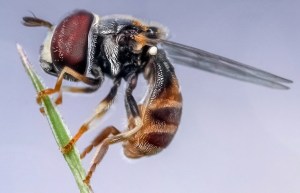
By understanding the way hoverflies mate, computer scientists found a way to sneak up on humans, giving a way to make games harder…. (read on).
Ant art
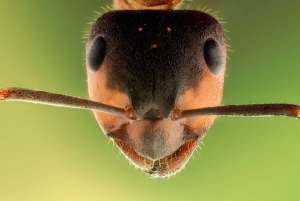
There are many ways Artificial Intelligences might create art. Breeding a colony of virtual ants is one of the most creative…. (read on).

Collecting mini-beasts and pocket monsters

Satoshi Tajiri created one of the biggest money-making media franchises of all time. It all started with his love of nature and, in particular, mini-beasts. It also eventually took gamers back into the fresh air. (read on)
A Storm in a bell jar

Ada Lovelace was close friends with John Crosse, and knew his father Andrew: the ‘real Frankenstein’. Andrew Crosse apparently created insect life from electricity, stone and water ... (read on).
Future Friendly- Kerstin Dautenhahn
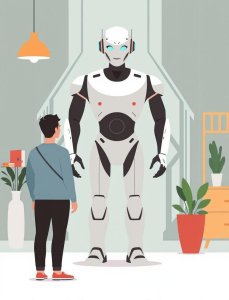
Kerstin Dautenhahn is a biologist turned robot expert with a mission: to help us make friends with robots. Her research on stick insects, led to her interest in the ways that living things process information and control their body movements, and that led her to building robots, and then understanding how we interact with robots, which she now uses to help children with autism ... (read on).
Grace Hopper – sorry to bug you
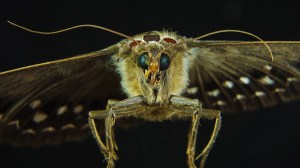
Rear-admiral Grace Hopper was one of the first programmers, a pioneer of high level languages inventing the idea as well as writing the first compiler, so she made high level languages a practical reality. She made large, correct programs possible. She also immortalised the idea that software mistakes should be named after a mini-beast. ... (read on).
Follow those ants

Ant colonies are great at adapting to changing situations: far better than us. Sameena Shah wondered if AI agents might learn intelligent behaviour better from ants rather than from us. She suggests we could learn from the ants too… (read on)
More to come …
Subscribe to be notified whenever we publish a new post to the CS4FN blog.
This blog is funded by EPSRC on research agreement EP/W033615/1.


