Moons, maths and mystical maidens

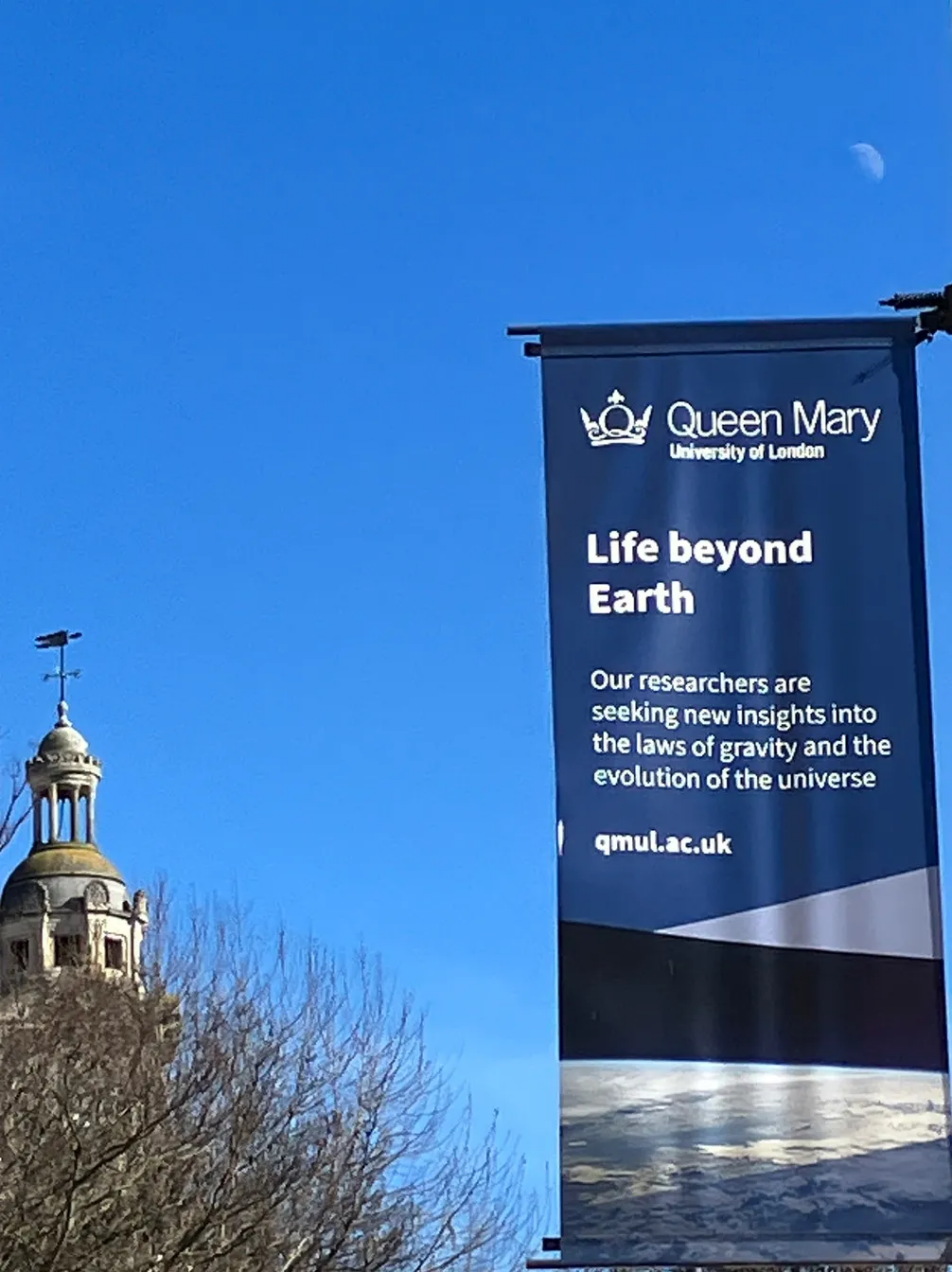
A QMUL astronomy banner with the Moon behind it
Credit: Jo Brodie – under a Public Domain CC0 licence

Heavens above, you’ve discovered a new celestial object! What would you call it? Would you name it Clom, Skaro, Poosh, or even Raxacoricofallapatorius? Or maybe those names are already taken. This sort of thing is complicated – even when it comes to naming new planets, moons or asteroids there are rules, and the need for a bit of computer science too.

It’s not Spock

Asteroids start off being designated using the year and the month they were first detected. Only once their orbit has been correctly predicted can they then be named. Predicting the orbit needs a cosmic fusion of astronomy, physics and lots of computer processing to predict and then check they are where they should be. Choosing a name is not too easy either. Since 1971 when one astronomer named an asteroid ‘2309 Mr. Spock’ after his pet cat, the International Astronomical Union decided to ban pets’ names, but that didn’t stop some creative discoverers getting the names ‘6042 Cheshirecat’ and ‘9007 James Bond’ agreed.

Over the moon

Moons are more difficult to name – more rules apply and more physics and computer science are needed to show they are what they are. A moon not only has to orbit a planet, it must do it in a well-defined way. For example the Cassini probe that’s exploring Saturn and its wonderful ring system discovered a range of small moons that keep the rings of Saturn crisp. Some of these tiny ‘shepherd moons’ orbit near the edges of the gaps in the rings. Materials that drift close to them are pulled back by gravity into the rings, spun off into space or made to crash on the shepherd moon itself. To be able to name one of these moons you need to be able to show that its orbit is stable. When the scientists think they have found a moon, the data from the sensors on the Cassini probe is fed into sophisticated computer simulations to show if that moon has a stable orbit. The outcome of the calculation decides if the moon is, well, a moon.

Good Moon Hunting

The software can even hunt down and find unknown moons. Using the laws of geometry and Kepler’s laws of planetary motion (three rules that German astronomer Johannes Kepler discovered in the 16th century) and applying them to the data from the probe it‘s possible to guess where a moon might be. Scientists then perform a full analysis of the data, including whether the possible moon’s orbit is affected by other known moons, and are able to determine where the previously unknown moons actually are. Using this method, scientists have even discovered so-called retrograde moons, which orbit in the opposite direction to Saturn’s rotation.

Once the orbit is predicted and checked the computer-discovered moon can be named. The scientists have now found so many of these mini-moons that the rules about names have had to change.

More giants and monsters please

To start with the moons of Saturn were named after mythological Greek and Roman giants, but as more were discovered astronomers went over to naming them after the mythical Titans, who fought alongside the giants (and were pretty huge themselves). Finally as more moon hunting showed an ever larger and more fascinating picture the names had to expand to include giants and monsters in Norse, Inuit and Gallic mythologies. Astronomer Carl Murray of Queen Mary, University of London, part of the team who discovered the Saturnian moons Polydeuces and Anthe said “I never thought that a knowledge of ancient mythologies would help me do astronomy”. Quite where this moon-related voyage of discovery will end no one quite knows.

Galileo was the first to observe
Saturn’s rings though he had no
idea what they were. He wrote in his
notebook that the planet had ‘ears’.

Knowing the neighbourhood

Finding moons and keeping an eye on asteroids is an activity that involves astronomers, physicists and computer scientists. Without these scientists all working together, each bringing their skills to work on the problem, our solar system could be a less well-known and more dangerous place to live. We know where things are, after all. We don’t want to end up like Poosh and loose a moon.

Out of the way

Computer science also allows the paths of asteroids to be predicted, which is what’s needed to name them. More importantly these computer models can predict if the asteroids will cut across Earth’s orbit. We don’t want to be unexpectedly hitting one of these lumps, even if the idea makes for a good movie.

Paul Curzon, Queen Mary University of London


Related Magazine …


Subscribe to be notified whenever we publish a new post to the CS4FN blog.

As Easy As A Bee Sees

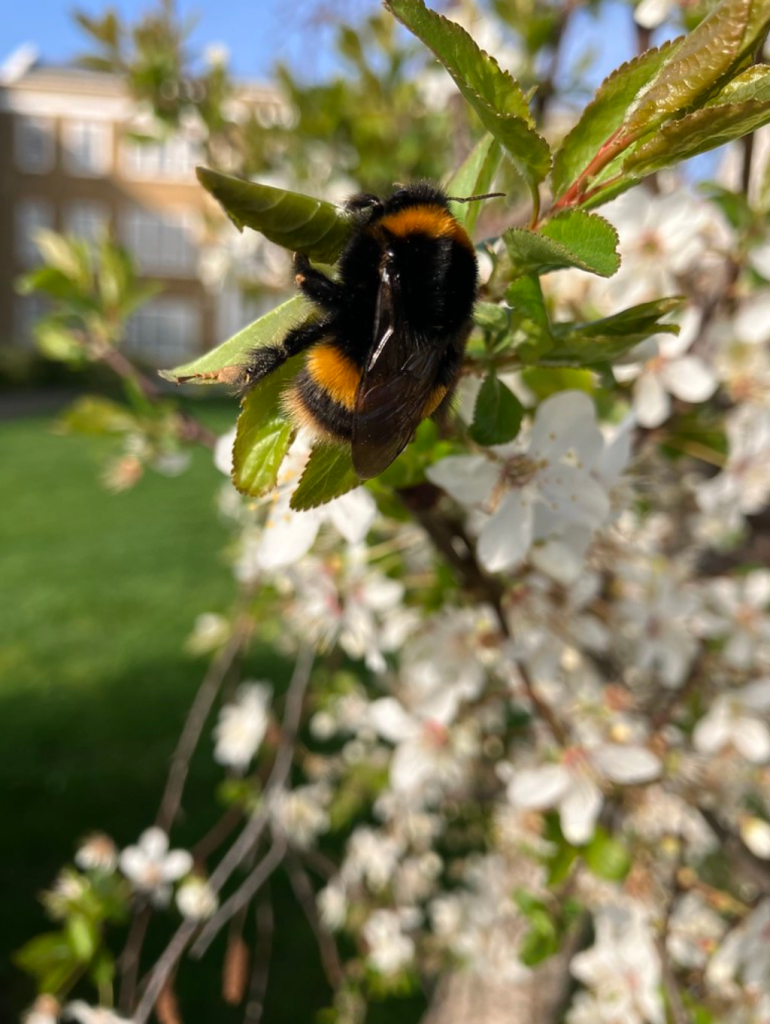
A bee sitting on the leaves of a blossom tree in Blackheath
Bee on blossom by Jodiepedia, Public Domain Dedication (CC0) via Flickr.

If it weren’t for the bees we would be in trouble. In the worst case, life on Earth could go the way of Mars. No plants, no animals, no life. Bees are the main way that flowers get pollinated. As the bees sup the nectar they carry pollen from flower to flower, allowing new generations of flowers to grow. But the way a flower looks to our eyes isn’t the same way a bee sees it. For example, bee vision works into the ultraviolet part of the spectrum and under the correct lighting in a laboratory the wonderful, normally invisible, patterns that bees can see are revealed. Biologists all over the world have been collecting information about the sorts of patterns that particular flowers display. This display is called a spectral profile, and Samia Faruq, a computer science undergraduate at Queen Mary University of London has done her bit to help these scientists peer into the world of the bees.

Her project involved creating a massive online database containing worldwide spectral profile information, so scientists can search this information easily. They can also combine information to help discover new facts using a method called clustering, where the computer pulls together all the data with similar properties.

Samia enjoyed the project: “I met and worked with amazing biologists during the project. It was great to find out what they needed and to be able to create it for them. I got the chance to collaborate and publish material together with them too. To know it will be used in their research is also very rewarding.”

Peter W McOwan, Queen Mary University of London


More on

Related Magazines …

Subscribe to be notified whenever we publish a new post to the CS4FN blog.


Love your data

A heart icon on a computer keyboard
Computer heart key image adapted from an image by congerdesign from Pixabay

How are you two doing together? You and your data, we mean. It’d be nice to have an update. Do you understand one another in that special OMG-we’ve-talked-all-night-and-now-the-sun’s-up kind of way? Is it more like you just kind of hang out together without really bothering to think about each other? Or maybe you’re just a bit baffled by the whole data scene. If your heart doesn’t beat with fervent love for the wild binary information all around you, that’s OK. In fact that’s pretty normal. It just so happens, though, that there’s a guy who wants to improve your data relationships. He’s called Andy Broomfield and he graduated as a designer from the Royal College of Art.

Andy’s worried that as we rely more and more on gadgets like mobiles and satnavs, a lot of us stop thinking about where the data comes from. “Increasingly we’re becoming dependent on the data,” says Andy. “We are just blindly fed it.” He tells the story of some councils that had to put up ‘Ignore Your Satnav’ signs after lorry drivers followed electronic directions down narrow lanes rather than believe their own eyes. He reckons that hapless users wouldn’t get quite so “data-lost” if we had a way to really connect with the pure information out there, being broadcast from satellites every second of the day. So he designed some gadgets of his own to help get our data relationships back on the rails.

Time to yourself

Large yellow road sign with black text saying Ignore Sat Nav next to an orange and white traffic cone on a foggy road at night well lit by street lighting
Ignore Sat Nav image by Dan Pope on Flickr, used under a CC BY-NC-SA 2.0 licence.

The first device lets you keep a personal time zone, and was inspired by a group of data-lovers who are sweet on measuring time. Time zones divide the globe into long tall ribbons based on longitude. Since GPS satellites can give each of us extremely accurate longitude readings all the time (the cs4fn offices are apparently at .042 degrees west), why not go even further and cut the ribbons up even more? That’s what Andy’s Longitude Time Piece does, to the point where you can uncover what Andy calls “your own local time zone”, right down to the second. Then you’d know that wherever you go, your timing would always be perfect.

Flooded with facts

Andy’s second invention is another GPS-flavoured one. Even though a lot of us can get lost really easily (even with maps and satellites to help), others love getting down and dirty with geographic data. This gadget’s good for both groups. People with a great sense of data direction can use the Geo Flood Browser to get info on the nearest river, wherever they are.

They can also share the love with others who get a bit data-lost, by leaving electronic tags around to let them know if the area gets flooded a lot. Then people nearby can use the tags using their own gadget to find out whether they ought to be stocking up on boats and snorkels before the next flood hits.

Spot a satellite

Finally Andy’s designed a gadget for your data relationships in space. Satellite spotters are kind of like backyard astronomers, except they love catching glimpses of the satellites that orbit the Earth. With Andy’s device anyone can tune into a satellite that’s above them and listen to it. You can either hear a voice tell you about the satellite, or you can actually listen into the bleeps of information coming from the satellite itself. That way, Andy says, you get “a connection to the pure data, the data that we’re dependent upon in the world.” It’s strange to think that this data is around us all the time – it’s just our phones and TVs that normally listen in, rather than us. If information is the lifeblood of our high-tech lives, the Satellite Scanner lets you listen to its heart.

Each of Andy’s devices uses information from the satellites whizzing, Cupid-like, around the Earth. The unusual thing is what they do with it – they’re not about being really useful so much as they are about actually experiencing the data that’s out there in the real world. That’s how he’s aiming to improve our data relationships. It’s like the way you can know someone for ages, but never see what they’re really about until you look from a different angle. Except this time it’s with satellites. Weird, eh? But good. A little like love.

Paul Curzon, Queen Mary University of London


Related Magazine …

Subscribe to be notified whenever we publish a new post to the CS4FN blog.

This blog is funded by EPSRC on research agreement EP/W033615/1.

QMUL CS4FN EPSRC logos