ELIZA: the first chatbot to fool people

Chatbots are now everywhere. You seemingly can’t touch a computer without one offering its opinion, or trying to help. This explosion is a result of the advent of what are called Large Language Models: sophisticated programs that in part copy the way human brains work. Chatbots have been around far longer than the current boom, though. The earliest successful one, called ELIZA, was, built in the 1960s by Joseph Weizenbaum, who with his Jewish family had fled Nazi Germany in the 1930s. Despite its simplicity ELIZA was very effective at fooling people into treating it as if it were a human.
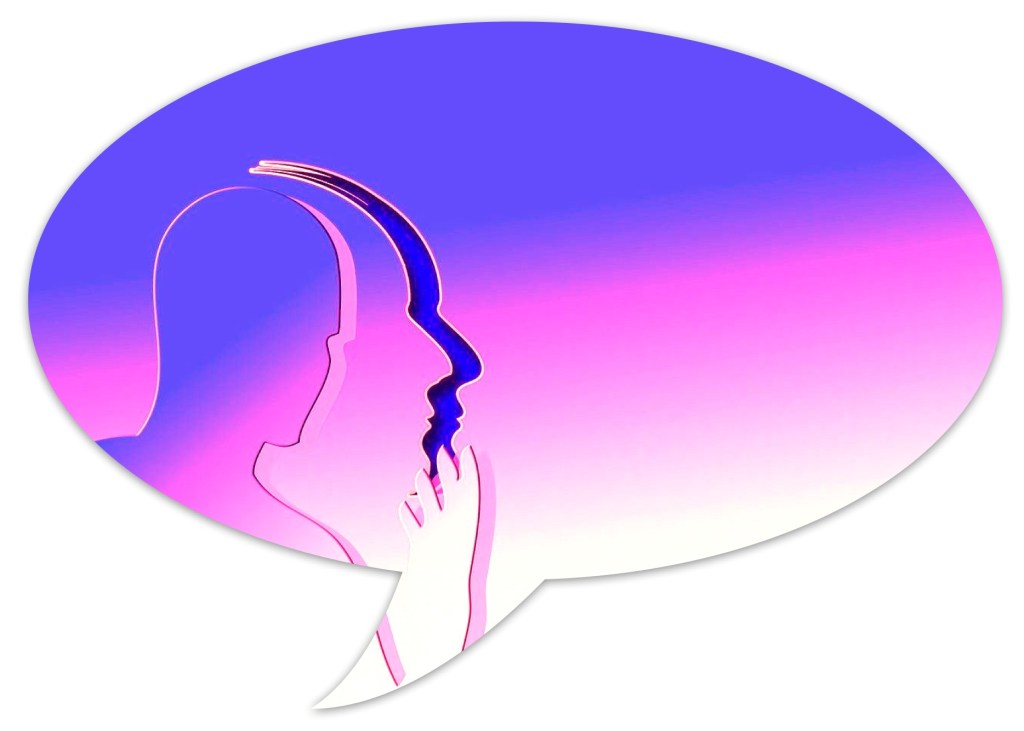
Head thinking in a speech bubble
Image adapted from one by by Gerd Altmann from Pixabay

Weizenbaum was interested in human-computer interaction, and whether it could be done in a more human-like way than just by typing rigid commands as was done at the time. In doing so he set the ball rolling for a whole new metaphor for interacting with computers, distinct from typing commands or pointing and clicking on a desktop. It raised the possibility that one day we could control computers by having conversations with them, a possibility that is now a reality.

His program, ELIZA, was named after the character in the play Pygmalion and musical My Fair Lady. That Eliza was a working class women who was taught to speak with a posh accent gradually improving her speech, and part of the idea of ELIZA was that it could gradually improve based on its interactions. At core though it was doing something very simple. It just looked for known words in the things the human typed and then output a sentence triggered by that keyword, such as a transformation of the original sentence. For example, if the person typed “I’m really unhappy”, it might respond “Why are you unhappy?”.

In this way it was just doing a more sophisticated version of the earliest “creative” writing program – Christopher Strachey’s Love Letter writing program. Strachey’s program wrote love letters by randomly picking keywords and putting them into a set of randomly chosen templates to construct a series of sentences.

The keywords that ELIZA looked for were built into its script written by the programmer and each allocated a score. It found all the keywords in the person’s sentence but used the one allocated the highest score. Words like “I” had a high score so were likely to be picked if present. A sentence starting “I am …” can be transformed into a response “Why are you …?” as in the example above. to make this seem realistic, the program needed to have a variety of different templates to provide enough variety of responses, though. To create the response, ELIZA broke down the sentence typed into component parts, picked out the useful parts of it and then built up a new response. In the above example, it would have pulled out the adjective, “happy” to use in its output with the template part “Why are you …”, for example.

If no keyword was found, so ELIZA had no rule to apply, it could fall back on a memory mechanism where it stored details of the past statements typed by the person. This allowed it to go back to an earlier thing the person had said and use that instead. It just moved on to the next highest scoring keyword from the previous sentence and built a response based on that.

ELIZA came with different “characters” that could be loaded in to it with different keywords and templates of how to respond. The reason ELIZA gained so much fame was due to its DOCTOR script. It was written to behave like a psychotherapist. In particular, it was based on the ideas of psychologist Carl Rogers who developed “person-centred therapy”, where a therapist, for example, echos back things that the person says, always asking open-ended questions (never yes/no ones) to get the patient talking. (Good job interviewers do a similar thing!) The advantage of it “pretending” to be a psychotherapist like this is that it did not need to be based on a knowledge bank of facts to seem realistic. Compare that with say a chatbot that aims to have conversations about Liverpool Football Club. To be engaging it would need to know a lot about the club (or if not appear evasive). If the person asked it “Who do you think the greatest Liverpool manager was?” then it would need to know the names of some former Liverpool managers! But then you might want to talk about strikers or specific games or … A chatbot aiming to have conversations about any topic the person comes up with convincingly needs facts about everything! That is what modern chatbots do have: provided by them sucking up and organising information from the web, for example. As a psychotherapist, DOCTOR never had to come up with answers, and echoing back the things the person said, or asking open-ended questions, was entirely natural in this context and even made ti seem as though it cared about what the people were saying.

Because Eliza did come across as being empathic in this way, the early people it was trialled on were very happy to talk to it in an uninhibited way. Weizenbaum’s secretary even asked him to leave while she chatted with it, as she was telling it things she would not have told him. That was despite the fact, or perhaps partly because, she knew she was talking to a machine. Others were convinced they were talking to a person just via a computer terminal. As a result it was suggested at the time that it might actually be used as a psychotherapist to help people with mental illness!

Weizenbaum was clear though that ELIZA was not an intelligent program, and it certainly didn’t care about anyone, even if it appeared to be. It certainly would not have passed the Turing Test, set previously by Alan Turing that if a computer was truly intelligent people talking to it would be indistinguishable from a person in its answers. Switch to any knowledge-based topic and the ELIZA DOCTOR script would flounder!

ELIZA was also the first in a less positive trend, to make chatbots female because this is seen as something that makes men more comfortable. Weizenbaum chose a female character specifically because he thought it would be more believable as a supportive, emotional female. The Greek myth Pygmalion from which the play’s name derives is about a male sculptor falling in love with a female sculpture he had carved, that then comes to life. Again this fits a trend of automaton and robots in films and reality being modelled after women simply to provide for the whims of men. Weizenbaum agreed he had made a mistake, saying that his decision to name ELIZA after a woman was wrong because it reinforces a stereotype of women. The fact that so many chatbots have then copied this mistake is unfortunate.

Because of his experiences with ELIZA he went on to become a critic of Artificial Intelligence (AI). Well before any program really could have been called intelligent (the time to do it!), he started to think about the ethics of AI use, as well as of the use of computers more generally (intelligent or not). He was particularly concerned about them taking over human tasks around decision making. He particularly worried that human values would be lost if decision making was turned into computation, beliefs perhaps partly shaped by his experiences escaping Germany where the act of genocide was turned into a brutally efficient bureaucratic machine, with human values completely lost. Ultimately, he argued that computers would be bad for society. They were created out of war and would be used by the military as a a tool for war. In this, given, for example, the way many AI programs have been shown to have built in biases, never mind the weaponisation of social media, spreading disinformation and intolerance in recent times, he was perhaps prescient.

by Paul Curzon, Queen Mary University of London

Fun to do

If you can program why not have a go at writing an ELIZA-like program yourself….or perhaps a program that runs a job interview for a particular job based on the person specification for it.

More on …

Magazines …

Front cover of CS4FN issue 29 - Diversity in Computing
Cover of CS4FN Issue 16 - Clean up your language

Our Books …


Subscribe to be notified whenever we publish a new post to the CS4FN blog.


This page and talk are funded by EPSRC on research agreement EP/W033615/1.

Turn Right in Tenejapa

Designing software that is inclusive for global markets is easy. All you have to do is get an AI to translate everything in the interface into multiple languages…or perhaps to do it properly it is harder than that! Not everyone thinks like you do.

Coloured arrows turning and pointing in lots of different directions on a curved surface
Image by Gerd Altmann from Pixabay

Suppose you are the successful designer of a satellite navigation system. You’ve made lots of money selling it in the UK and the US and are now ready to take on the world. You want to be inclusive. It should be natural and easy to use by all. You therefore aim to produce versions for every known language. It should be easy shouldn’t it. The basic system is fine. It can use satellite signals to work out where it is. You already have maps of everywhere based on Google Earth that you have been selling to the English Speakers. It can work out routes and gives perfectly good directions just as the user needs them – like “Turn Left 200 meters ahead”. It is already based on Unicode, the International standard for storing characters so can cope with characters from all languages. All you need to do now is get a team of translators to come up with the equivalent of the small number of phrases used by the device (which, of course will also involve switching units from eg meters to yards and the like, but that is easy for a computer) and add a language selection mechanism. You have thought of everything. Simple…

Not so simple, actually. You may need more than just translators, and you may need more than just to change the words. As linguists have discovered, for example, a third of known languages have no concept of left and right. Since language helps determine the way we think, that also suggests the people who speak those languages don’t use the concepts. “Turn right” is meaningless. It has no equivalent.

So how do such people give directions or otherwise describe positions. Well it turns out many use a method that for a long time some linguists suggested would never occur. Experiments have also shown that not only do they talk that way, but they also may think that way.

Take Tzeltal. It is spoken very widely in Mexico. A dialect of it that is spoken by about 15 000 people in the Indian community of Tenejapa has been studied closely by Stephen Levinson and Penelope Brown. It is a large area roughly covering one slope of a mountainous region. The language has no general notion of left or right. Unlike in European languages where we refer to directions based on the way we are facing (known as a relative frame of reference), in Tzeltal directions use what is known as an absolute frame of reference. It is as though they have a compass in their heads and do the equivalent of referring to North, South, East and West all the time. Rather than “The cup is to the left of the teapot”, they might say the equivalent of “The cup is North of the teapot”. How did this system arise? Well they don’t actually refer to North and South directly, but more like uphill and downhill, even when away from the mountain side: they subconsciously keep track of where uphill would be. So they are saying something more like “The cup is on the uphill side of the teapot”.

In Tenejapa they think diferently about direction too

Experiments have suggested they think differently too – Show Europeans a series of objects ordered so “pointing” to their left on a table, turn them through 180 degrees and ask them to order the same objects on the table in front of them, and they will generally put them “pointing” to their left. In experiments with native Tzeltal speakers and they tended to put them “pointing” to their right (Still pointing uphill or whatever). Similar things apply when they make gestures. Its not just the words they use that are different, it is the way they internally represent the world that differs.

So back to the drawing board with the navigation system. If you really want it to be completely natural for all, then for each language you need more than just translators. You need linguists who understand the way people think and speak about directions in each language. Then you will have to do more than just change the words the system outputs, but recode the navigation system to work the way they think. A natural system for the Tzeltal would need to keep track of the Tenejapan uphill and give directions relative to that.

It isn’t just directions of course, there are many ways that our language and cultures lead to us thinking and acting differently. Design metaphors are also used a lot in interactive systems but they only work if they fit their users’ culture. For example, things are often ordered left to right as that as the way we read…except who is we there? Not everyone reads left to right!

Writing software for International markets isn’t as easy as it seems. You have to have good knowledge not just of local languages but also differences in culture and deep differences in the way different people see the world… If you want to be an International success then you will be better at it if you work in a way that shows you understand and respect those from elsewhere.

by Paul Curzon, Queen Mary University of London, adapted from the archive

More on …

Magazines …

Our Books …


Subscribe to be notified whenever we publish a new post to the CS4FN blog.


EPSRC supports this blog through research grant EP/W033615/1. 

Navajo Code Talkers

Three Navajo Code talkers in WWII
Navajo Code Talkers, Image from National Archives at College Park, Public domain, via Wikimedia Commons

Bletchley Park, the British code cracking centre helped win World War II, but it is not just breaking codes and ciphers that wins wars, creating unbreakable ones to keep your own secrets safe matters too. Bletchley Park wasn’t the first or only time a secret cryptography team helped win battles or even wars. In World War I secret messages had been successfully sent using Choctaw, the language of a tribe of Native Americans, including to help organise a surprise attack. It worked with their messages left un-cracked. This led to an even more successful code-creating team in World War II based on Navajo. The Navajo “Code Talkers” as they were called, could encode, transmit and decode messages in minutes when it would take hours using conventional codes and ciphers.

In World War II, the US forces used a range of Native American languages to communicate, but a code based on a native Indian language, Navajo, was especially successful. The use of a Navajo-based code was the idea of Philip Johnston after the attack on Pearl Harbour. His parents were missionaries so he had grown up on a Navajo reservation, speaking the language fluently despite how difficult it was. Aged only 9, he acted as an interpreter for a group who went to Washington to try to improve Indian rights.

He suggested using Navajo as a secret language and enlisted in the marines to help bring the idea to fruition. He thought it would work as a secret code because there was no written version of Navajo. It was a purely a spoken language. That meant he was one of very few people who were not Navajo who could speak it. It was also a complex language unlike any other language. The US marines agreed to trial the idea. 

To prove it would work, Johnston had Navajo transmit messages in the way they would need to on the battlefield. They could do it close to 100 times faster than it would take using standard cipher machines. That clinched it. 

Many Navajo had enlisted after Pearl Harbour and a platoon soley of Navajo were recruited to the project, including a 15 year old, William Dean Yazzie. However, they didn’t just speak in Navajo to transmit messages. The original 29 Navajo recruited worked out the details of the code they would use. Once deployed to the Pacific a group of them also met to further improve the code. None of it was written down apart from in training manuals that did not leave the training site, so there was no chance the code book could be captured in battle. All those involved memorised it and practiced sending messages quickly and accurately. Messages were also always spoken, eg over radio and never written down, making it harder for the code to be cracked based on analysing intercepted messages.

Commonly needed words, like ‘difficult’ or ‘final’ had direct Navajo code words (NA-NE-KLAH and TAH-AH-KWO-DIH). However for critical words (countries, kinds of planes, kinds of ships, etc) they first swapped English words for other English words using one code. They then translated those words into Navajo. That meant even a Navajo speaker outside their trained group wouldn’t immediately understand a message. The code, for example, used birds names in place of kinds of planes. So the English code word for a bomber plane was Buzzard. But then the Navajo for Buzzard was actually used: (JAY-SHO). 

Another part of the code was to use Navajo words for letters of the alphabet, so A is for ant translated to WOL-LA-CHE in Navajo. However, to make this more secure two other words stood for A too (apple: BE-LA-SANA and axe: TSE-NILL). Each letter had three alternatives like this and any of the three could be used.

Finally the way that it was used meant a message would always just be a series of unconnected words making no sense even to a Navajo speaker.

The code talkers played a key part in many battles including the iconic battle of Iwo Jima, capturing the heavily defended Japanese controlled island of that name. The US Major responsible for communications said of the battle, “Were it not for the Navajos, the Marines would never have taken Iwo Jima.”

Not only did it make communications much faster than they would have been, unlike other US codes and ciphers, the code talker’s code was never cracked … all thanks to the Navajo team who devised it.

– Paul Curzon, Queen Mary University of London

More on …


Magazines …

Front cover of CS4FN issue 29 - Diversity in Computing

Subscribe to be notified whenever we publish a new post to the CS4FN blog.


This blog is funded through EPSRC grant EP/W033615/1.

QMUL CS4FN EPSRC logos

Computers that read emotions

by Matthew Purver, Queen Mary University of London

One of the ways that computers could be more like humans – and maybe pass the Turing test – is by responding to emotion. But how could a computer learn to read human emotions out of words? Matthew Purver of Queen Mary University of London tells us how.

Have you ever thought about why you add emoticons to your text messages – symbols like 🙂 and :-@? Why do we do this with some messages but not with others? And why do we use different words, symbols and abbreviations in texts, Twitter messages, Facebook status updates and formal writing?

In face-to-face conversation, we get a lot of information from the way someone sounds, their facial expressions, and their gestures. In particular, this is the way we convey much of our emotional information – how happy or annoyed we’re feeling about what we’re saying. But when we’re sending a written message, these audio-visual cues are lost – so we have to think of other ways to convey the same information. The ways we choose to do this depend on the space we have available, and on what we think other people will understand. If we’re writing a book or an article, with lots of space and time available, we can use extra words to fully describe our point of view. But if we’re writing an SMS message when we’re short of time and the phone keypad takes time to use, or if we’re writing on Twitter and only have 140 characters of space, then we need to think of other conventions. Humans are very good at this – we can invent and understand new symbols, words or abbreviations quite easily. If you hadn’t seen the 😀 symbol before, you can probably guess what it means – especially if you know something about the person texting you, and what you’re talking about.

But computers are terrible at this. They’re generally bad at guessing new things, and they’re bad at understanding the way we naturally express ourselves. So if computers need to understand what people are writing to each other in short messages like on Twitter or Facebook, we have a problem. But this is something researchers would really like to do: for example, researchers in France, Germany and Ireland have all found that Twitter opinions can help predict election results, sometimes better than standard exit polls – and if we could accurately understand whether people are feeling happy or angry about a candidate when they tweet about them, we’d have a powerful tool for understanding popular opinion. Similarly we could automatically find out whether people liked a new product when it was launched; and some research even suggests you could even predict the stock market. But how do we teach computers to understand emotional content, and learn to adapt to the new ways we express it?

One answer might be in a class of techniques called semi-supervised learning. By taking some example messages in which the authors have made the emotional content very clear (using emoticons, or specific conventions like Twitter’s #fail or abbreviations like LOL), we can give ourselves a foundation to build on. A computer can learn the words and phrases that seem to be associated with these clear emotions, so it understands this limited set of messages. Then, by allowing it to find new data with the same words and phrases, it can learn new examples for itself. Eventually, it can learn new symbols or phrases if it sees them together with emotional patterns it already knows enough times to be confident, and then we’re on our way towards an emotionally aware computer. However, we’re still a fair way off getting it right all the time, every time.


This article was first published on the original CS4FN website and a copy can be found on Pages 16-17 of Issue 14 of the CS4FN magazine, “The genius who gave us the future“. You can download a free PDF copy below, and download all of our free magazines and booklets from our downloads site.


Related Magazine …


EPSRC supports this blog through research grant EP/W033615/1.

Happy World Emoji Day – 📅 17 July 2023 – how people use emoji to communicate and what it tells us about them 😀

“Emoji didn’t become so essential because they stand in for words – but because they finally made writing a lot more like talking.”

Gretchen McCulloch (see Further reading below)
Emoji samples © Emojipedia 2025.

The emoji for ‘calendar‘ shows the 17th July 📅 (click the ‘calendar’ link to find out why) and, since 2014, Emojipedia (an excellent resource for all things emoji, including their history) has celebrated World Emoji Day on that date.

Before we had emoji (the word emoji can be both singular as well as plural, but 'emojis' is fine too) people added text-based 'pictures' to their texts and emails to add flavour to their online conversations, such as 
:-) or :)  - for a smiling face 
:-( or :( - for a sad one.

These text-based pictures were known as ’emoticons’ (icons that added emotion) because it isn’t always possible to know just from the words alone what the writer means. They weren’t just used to clarify meaning though, people peppered their prose with other playful pictures, such as :p where the ‘p’ is someone blowing a raspberry / sticking their tongue out* and created other icons such as this rose to send to someone on Valentine’s Day @-‘-,->—-, or this polevaulting amoeba ./

Here are the newly released emoji for 2023.

People use emoji in very different ways depending on their age, gender, ethnicity, personal writing style. In our “The Emoji Crystal Ball” article we look at how people can tell a lot about us from the types of emoji we use and the way we use them.

The Emoji Crystal Ball

Fairground fortune tellers claim to be able to tell a lot about you by staring into a crystal ball. They could tell far more about you (that wasn’t made up) by staring at your public social media profile. Even your use of emojis alone gives away something of who you are. Walid Magdy’s research team … Continue reading

Further reading

Writing IRL (July 2019) Gretchen McCullock writing in Slate
(IRL = In Real Life)
– this is an excerpt about emoji from Gretchen’s fascinating book “Because internet” about internet culture, communication and linguistics (the study of language).

Penguins and pizza – cracking the secret Valentine’s Day code (February 2018) The Scotsman – on how people are using emoji as a secret language, from research done by Sarah Wiseman and Sandy Gould.


*For an even better raspberry-blowing emoticon try one of the letters (called ‘thorn’) from the Runic alphabet. If you have a Windows computer with a numeric keypad on the right hand side press the Num Lock key at the top to lock the number keypad (so that the keys are now numbers and not up and down arrows etc). Hold down the Alt key (there’s usually one on either side of the spacebar) and while holding it down type 0254 on the numeric keypad and let go. This should now appear wherever your cursor is: þ. Or for the lower case letter it’s Alt+0222 = Þ – for when you just want to blow a small raspberry :Þ

For Mac users press control+command+spacebar to bring up the Character Viewer and just type thorn in the search bar and lots will appear. Double-click to select the one you want, it will automatically paste into wherever your cursor is.


EPSRC supports this blog through research grant EP/W033615/1.

Chatbot or Cheatbot?

CS4FN Banner

by Paul Curzon, Queen Mary University of London

Speech bubbles
Image by Clker-Free-Vector-Images from Pixabay
IImage by Clker-Free-Vector-Images from Pixabay 

The chatbots have suddenly got everyone talking, though about them as much as with them. Why? Because one, chatGPT has (amongst other things) reached the level of being able to fool us into thinking that it is a pretty good student.

It’s not exactly what Alan Turing was thinking about when he broached his idea of a test for intelligence for machines: if we cannot tell them apart from a human then we must accept they are intelligent. His test involved having a conversation with them over an extended period before making the decision, and that is subtly different to asking questions.

ChatGPT may be pretty close to passing an actual Turing Test but it probably still isn’t there yet. Ask the right questions and it behaves differently to a human. For example, ask it to prove that the square root of 2 is irrational and it can do it easily, and looks amazingly smart, – there are lots of versions of the proof out there that it has absorbed. It isn’t actually good at maths though. Ask it to simply count or add things and it can get it wrong. Essentially, it is just good at determining the right information from the vast store of information it has been trained on and then presenting it in a human-like way. It is arguably the way it can present it “in its own words” that makes it seem especially impressive.

Will we accept that it is “intelligent”? Once it was said that if a machine could beat humans at chess it would be intelligent. When one beat the best human, we just said “it’s not really intelligent – it can only play chess””. Perhaps chatGPT is just good at answering questions (amongst other things) but we won’t accept that as “intelligent” even if it is how we judge humans. What it can do is impressive and a step forward, though. Also, it is worth noting other AIs are better at some of the things it is weak at – logical thinking, counting, doing arithmetic, and so on. It likely won’t be long before the different AIs’ mistakes and weaknesses are ironed out and we have ones that can do it all.

Rather than asking whether it is intelligent, what has got everyone talking though (in universities and schools at least) is that chatGPT has shown that it can answer all sorts of questions we traditionally use for tests well enough to pass exams. The issue is that students can now use it instead of their own brains. The cry is out that we must abandon setting humans essays, we should no longer ask them to explain things, nor for that matter write (small) programs. These are all things chatGPT can now do well enough to pass such tests for any student unable to do them themselves. Others say we should be preparing students for the future so its ok, from now on, we just only test what human and chatGPT can do together.

It certainly means assessment needs to be rethought to some extent, and of course this is just the start: the chatbots are only going to get better, so we had better do the thinking fast. The situation is very like the advent of calculators, though. Yes, we need everyone to learn to use calculators. But calculators didn’t mean we had to stop learning how to do maths ourselves. Essay writing, explaining, writing simple programs, analytical skills, etc, just like arithmetic, are all about core skill development, building the skills to then build on. The fact that a chatbot can do it too doesn’t mean we should stop learning and practicing those skills (and assessing them as an inducement to learn as well as a check on whether the learning has been successful). So the question should not be about what we should stop doing, but more about how we make sure students do carry on learning. A big, bad thing about cheating (aside from unfairness) is that the person who decides to cheat loses the opportunity to learn. Chatbots should not stop humans learning either.

The biggest gain we can give a student is to teach them how to learn, so now we have to work out how to make sure they continue to learn in this new world, rather than just hand over all their learning tasks to the chatbot to do. As many people have pointed out, there are not just bad ways to use a chatbot, there are also ways we can use chatbots as teaching tools. Used well by an autonomous learner they can act as a personal tutor, explaining things they realise they don’t understand immediately, so becoming a basis for that student doing very effective deliberate learning, fixing understanding before moving on.

Of course, a bigger problem, if a chatbot can do things at least as well as we can then why would a company employ a person rather than just hire an AI? The AIs can now a lot of jobs we assumed were ours to do. It could be yet another way of technology focussing vast wealth on the few and taking from the many. Unless our intent is a distopian science fiction future where most humans have no role and no point, (see for example, CS Forester’s classic, The Machine Stops) then we still in any case ought to learn skills. If we are to keep ahead of the AIs and use them as a tool not be replaced by them, we need the basic skills to build on to gain the more advanced ones needed for the future. Learning skills is also, of course, a powerful way for humans (if not yet chatbots) to gain self-fulfilment and so happiness.

Right now, an issue is that the current generation of chatbots are still very capable of being wrong. chatGPT is like an over confident student. It will answer anything you ask, but it gives wrong answers just as confidently as right ones. Tell it it is wrong and it will give you a new answer just as confidently and possibly just as wrong. If people are to use it in place of thinking for themselves then, in the short term at least, they still need the skill it doesn’t have of judging when it is right or wrong.

So what should we do about assessment. Formal exams come back to the fore so that conditions are controlled. They make it clear you have to be able to do it yourself. Open book online tests that become popular in the pandemic, are unlikely to be fair assessments any more, but arguably they never were. Chatbots or not they were always too easy to cheat in. They may well be good still for learning. Perhaps in future if the chatbots are so clever then we could turn the Turing test around: we just ask an artificial intelligence to decide whether particular humans (our students) are “intelligent” or not…

Alternatively, if we don’t like the solutions being suggesting about the problems these new chatbots are raising, there is now another way forward. If they are so clever, we could just ask a chatbot to tell us what we should do about chatbots…

.

More on …

Related Magazines …

Issue 16 cover clean up your language

This blog is funded through EPSRC grant EP/W033615/1.

The last speaker

CS4FN Banner

by Paul Curzon, Queen Mary University of London

(from the cs4fn archive)

The wings of a green macau looking like angel wings
Image by Avlis AVL from Pixabay

The languages of the world are going extinct at a rapid rate. As the numbers of people who still speak a language dwindle, the chance of it surviving dwindles too. As the last person dies, the language is gone forever. To be the last living speaker of the language of your ancestors must be a terribly sad ordeal. One language’s extinction bordered on the surreal. The last time the language of the Atures, in South America was heard, it was spoken by a parrot: an old blue-and-yellow macaw, that had survived the death of all the local people.

Why do languages die?

The reason smaller languages die are varied, from war and genocide, to disease and natural disaster, to the enticement of bigger, pushier languages. Can technology help? In fact global media: films, music and television are helping languages to die, as the youth turn their backs on the languages of their parents. The Web with its early English bias may also be helping to push minority languages even faster to the brink. Computers could be a force for good though, protecting the world’s languages, rather than destroying them.

Unicode to the rescue

In the early days of the web, web pages used the English alphabet. Everything in a computer is just stored as numbers, including letters: 1 for ‘a’, 2 for ‘b’, for example. As long as different computers agree on the code they can print them to the screen as the same letter. A problem with early web pages is there were lots of different encodings of numbers to letters. Worse still only enough numbers were set aside for the English alphabet in the widely used encodings. Not good if you want to use a computer to support other languages with their variety of accents and completely different sets of characters. A new universal encoding system called Unicode came to the rescue. It aims to be a single universal character encoding – with enough numbers allocated for ALL languages. It is therefore allowing the web to be truly multi-lingual.

Languages are spoken

Languages are not just written but are spoken. Computers can help there, too, though. Linguists around the world record speakers of smaller languages, understanding them, preserving them. Originally this was done using tapes. Now the languages can be stored on multimedia computers. Computers are not just restricted to playing back recordings but can also actively speak written text. The web also allows much wider access to such materials that can also be embedded in online learning resources, helping new people to learn the languages. Language translators such as BabelFish and Google Translate can also help, though they are still far from perfect even for common languages. The problem is that things do not translate easily between languages – each language really does constitute a different way of thinking, not just of talking. Some thoughts are hard to even think in a different language.

AI to the rescue?

Even that is not enough. To truly preserve a language, the speakers need to use it in everyday life, for everyday conversation. Speakers need someone to speak with. Learning a language is not just about learning the words but learning the culture and the way of thinking, of actively using the language. Perhaps future computers could help there too. A long-time goal of artificial intelligence (AI) researchers is to develop computers that can hold real conversations. In fact this is the basis of the original test for computer intelligence suggested by Alan Turing back in 1950…if a computer is indistinguishable from a human in conversation, then it is intelligent. There is also an annual competition that embodies this test: the Loebner Prize. It would be great if in the future, computer AIs could help save languages by being additional everyday speakers holding real conversations, being real friends.

Time is running out…
by the time the AIs arrive,
the majority of languages may be gone forever.

Too late?

The problem is that time is running out. Artificial intelligences that can have totally realistic human conversations even in English are still a way off. None have passed the Turing Test. To speak different languages really well for everyday conversations those AIs will have to learn the different cultures and ‘think’ in the different languages. The window of opportunity is disappearing. By the time the AIs arrive the majority of human languages may be gone forever. Let’s hope that computer scientists and linguists do solve the problems in time, and that computers are not used just to preserve languages for academic interest, but really can help them to survive. It is sad that the last living creature to speak Atures was a parrot. It would be equally sad if the last speakers of all current languages bar English, Spanish and Chinese say, were computers.

More on …

Related Magazines …

Issue 16 cover clean up your language

This blog is funded through EPSRC grant EP/W033615/1.

Only the fittest slogans survive!

(From the archive)

Being creative isn’t just for the fun of it. It can be serious too. Marketing people are paid vast amounts to come up with slogans for new products, and in the political world, a good, memorable soundbite can turn the tide over who wins and loses an election. Coming up with great slogans that people will remember for years needs both a mastery of language and a creative streak too. Algorithms are now getting in on the act, and if anyone can create a program as good as the best humans, they will soon be richer than the richest marketing executive. Polona Tomašicˇ and her colleagues from the Jožef Stefan Institute in Slovenia are one group exploring the use of algorithms to create slogans. Their approach is based on the way evolution works – genetic algorithms. Only the fittest slogans survive!

A mastery of language

To generate a slogan, you give their program a short description on the slogan’s topic – a new chocolate bar perhaps. It then uses existing language databases and programs to give it the necessary understanding of language.

First, it uses a database of common grammatical links between pairs of words generated from wikipedia pages. Then skeletons of slogans are extracted from an Internet list of famous (so successful) slogans. These skeletons don’t include the actual words, just the grammatical relationships between the words. They provide general outlines that successful slogans follow.

From the passage given, the program pulls out keywords that can be used within the slogans (beans, flavour, hot, milk, …). It generates a set of fairly random slogans from those words to get started. It does this just by slotting keywords into the skeletons along with random filler words in a way that matches the grammatical links of the skeletons.

Breeding Slogans

New baby slogans are now produced by mating pairs of initial slogans (the parents). This is done by swapping bits into the baby from each parent. Both whole sections and individual words are swapped in. Mutation is allowed too. For example, adjectives are added in appropriate places. Words are also swapped for words with a related meaning. The resulting children join the new population of slogans. Grammar is corrected using a grammar checker.

Culling Slogans

Slogans are now culled. Any that are the same as existing ones go immediately. The slogans are then rated to see which are fittest. This uses simple properties like their length, the number of keywords used, and how common the words used are. More complex tests used are based on how related the meanings of the words are, and how commonly pairs of words appear together in real sentences. Together these combine to give a single score for the slogan. The best are kept to breed in the next generation, the worst are discarded (they die!), though a random selection of weaker slogans are also allowed to survive. The result is a new set of slogans that are slightly better than the previous set.

Many generations later…

Hot chocolate from above with biscuits, spoon of chocolate and fir cone on a leaf.
Image by Sabrina Ripke from Pixabay

The program breeds and culls slogans like this for thousands, even millions of generations, gradually improving them, until it finally chooses its best. The slogans produced are not yet world beating on their own, and vary in quality as judged by humans. For chocolate, one run came up with slogans like “The healthy banana” and “The favourite oven”, for example. It finally settled on “The HOT chocolate” which is pretty good.

More work is needed on the program, especially its fitness function – the way it decides what is a good slogan and what isn’t. As it stands this sort of program isn’t likely to replace anyone’s marketing department. They could help with brainstorming sessions though, to spark new ideas but leaving humans to make the final choice. Supporting human creativity rather than replacing it is probably just as rewarding for the program after all.


More on …

Related Magazines …

Issue 22 Cover Creative Computing

This article was originally published on CS4FN and also appears on p13 of Creative Computing, issue 22 of the CS4FN magazine. You can download a free PDF copy of the magazine as well as all of our previous booklets and magazines from the CS4FN downloads site.

QMUL CS4FN EPSrC logos

What are birds actually saying?

Birds make so much noise, and it’s very complex. Is it just babble, or are they saying complicated things to each other? If so, could we work out what they are saying, what it means? Could we learn their language and speak to the birds?

We know that bird communication is not as complicated as the words and sentences in human speech. So far, no one has been able to find grammatical patterns like those we find in human language. There apparently aren’t rules for birds like the ones we have about verbs and nouns. Birds don’t have to learn grammar! Exactly how complex bird languages are is still hotly debated, though.

Sometimes they’re passing on information about predators, or food, or sometimes just advertising their own fitness – showing off to get a mate (a bit like karaoke nights). Scientists have proved that such specific kinds of information are in the sounds birds make by observing bird behaviour. By playing recordings of birds and seeing how other birds react, they can see what information was communicated by a particular sound. If you play a ‘predator near’ call, for example, then other birds flee, but they stay put if you play other calls. They get the message.

Birds are definitely passing on
specific information when they sing.

It turns out some birds have even learnt the languages of other animals and use it both to help those other animals and to support a life of crime. Many animals listen for the alarm calls of the animals around them, and so flee when others see a problem. Birds called Drongos, for example, act as lookouts for Meerkats, giving warning calls when they see Meerkat predators, allowing them to return to the safety of their burrows. However, the Drongos also sound false alarms every so often. They do it when they see a Meerkat with some juicy morsel. As the Meerkats run, the Drongo swoops in to steal the abandoned food.

Unfortunately for the Drongo, Meerkats are quite clever and get wise to the con. Eventually, they start to ignore the Drongo and only listen for their own Meerkat sentry’s call. The Drongo has another trick though. They are really good at mimicking sounds they hear, just like parrots. They have learnt to speak Meerkat just like the scientists do in experiments. So when the Meerkats stop reacting, the Drongos just switch tactics and start making perfect Meerkat language alarm calls instead. Once again the food is theirs.

Drongos give false alarms so they can steal food.

While most of us can’t reproduce bird sounds ourselves, and so talk directly to animals, we can certainly write programs to do it. In Star Wars, C3PO is a master of languages, speaking millions. Real robots of the near future will be able to mimic the sounds of whatever animals they wish and communicate with them in at least the simple ways that animals of different species listen and talk to each other. Perhaps something like this might be used to help protect endangered species from their predators, for example, watching for hawks and issuing timely warnings. We just have to hope they don’t turn to the Dark Side, like the Drongos, and use these skills to support a life of crime.

Dan Stowell and Paul Curzon, Queen Mary University of London


This article was originally published on CS4FN and in issue 21 of the CS4FN magazine ‘Computing Sounds Wild’ on p3. You can download a PDF copy of Issue 21, as well as all of our previous published material, free, at the CS4FN downloads site.

Front cover of CS4FN Issue 21 – Computing sounds wild

Computing Sounds Wild explores the work of scientists and engineers who are using computers to understand, identify and recreate wild sounds, especially those of birds. We see how sophisticated algorithms that allow machines to learn, can help recognize birds even when they can’t be seen, so helping conservation efforts. We see how computer models help biologists understand animal behaviour, and we look at how electronic and computer generated sounds, having changed music, are now set to change the soundscapes of films. Making electronic sounds is also a great, fun way to become a computer scientist and learn to program.


QMUL CS4FN EPSrC logos

Emoticons and Emotions

Emoticons are a simple and easily understandable way to express emotions in writing using letters and punctuation without any special pictures, but why might Japanese emoticons be better than western ones? And can we really trust expressions to tell us about emotions anyway?

African woman smiling
Image by Tri Le from Pixabay (cropped by CS4FN)

The trouble with early online message board messages, email and text messages was that it was always more difficult to express subtleties, including intended emotions, than if talking to someone face to face. Jokes were often assumed to be serious and flame wars were the result. So when in 1982 Carnegie Mellon Professor Scott Fahlman suggested the use of the smiley : – ) to indicate a joke in message board messages, a step forward in global peace was probably made. He also suggested that since posts more often than not seemed to be intended as jokes then a sad face : – ( would be more useful to explicitly indicate anything that wasn’t a joke.

He wasn’t actually the first to use punctuation characters to indicate emotions though. The earliest apparently recorded use is in a poem in 1648 by Robert Herrick, an English poet in his poem “To Fortune”.

Tumble me down, and I will sit
Upon my ruins, (smiling yet:)

Whether this was intentional or not is disputed, as punctuation wasn’t consistently used then. Perhaps the poet intended it, perhaps it was just a coincidentall printing error, or perhaps it was a joke inserted by the printers. Either way it is certainly an appropriate use (why not write your own emoticon poem!)

You might think that everyone uses the same emoticons you are familiar with but different cultures use them in different ways. Westerners follow Fahlman’s suggestion putting them on their side. In Japan by contrast they sit the right way up and crucially the emotion is all in the eyes not the mouth which is represented by an underscore. In this style, happiness can be given by (^_^) and T or ; as an indication of crying, can be used for sadness: (T_T) or (;_;). In South Korea, the Korean alphabet is used so a different character set of letter are available (though their symbols are the right way up as with the Japanese version).

Automatically understanding people’s emotions is an important area of research, called sentiment analysis, whether analysing text, faces or other aspects that can be captured. It is amongst other things important for marketeers and advertisers to work out whether people like their products or what issues matter most to people in elections, so it is big business. Anyone who truly cracks it will be rich.

So in reality is the western version or the Eastern version more accurate: are emotions better detected in the shape of the mouth or the eyes? With a smile at least, it turns out that the eyes really give away whether someone is happy or not, not the mouth. When people put on a fake smile their mouth does curve just as with a natural smile. The difference between fake and genuine smiles that really shows if the person is happy is in the eyes. A genuine smile is called a Duchenne smile after Duchenne de Boulogne who in 1862 showed that when people find something actually funny the smile affects the muscles in their eyes. It causes a tell-tale crow’s foot pattern in the skin at the sides of the eyes. Some people can fake a Duchenne too though, so even that is not totally reliable.

As emoticons hint, because emotions are indicated in the eyes as much as in the mouth, sentiment analysis of emotions based on faces needs to focus on the whole face, not just the mouth. However, all may not be what it seems as other research shows that most of the time people do not actually smile at all when genuinely happy. Just like emoticons facial expressions are just a way we tell other people what we want them to think our emotions are, not necessarily our actual emotions. Expressions are not a window into our souls, but a pragmatic way to communicate important information. They probably evolved for the same reason emoticons were invented, to avoid pointless fights. Researchers trying to create software that works out what we really feel, may have their work cut out if their life’s work is to make them genuinely happy.

     ( O . O )
         0

– Paul Curzon, Queen Mary University of London, Summer 2021