Ninja White Hat Hacking

Female engineer working at a computer
Image by This_is_Engineering from Pixabay

Computer hackers are the bad guys, aren’t they? They cause mayhem: shutting down websites, releasing classified information, stealing credit card numbers, spreading viruses. They can cause lots of harm, even when they don’t mean to. Not all hackers are bad though. Some, called white hat hackers, are ethical hackers, paid by companies to test their security by actively trying to break in – it’s called penetration testing. It’s not just business though, it was also turned into a card game.

Perhaps the most famous white hat hacker is Kevin Mitnick. He started out as a bad guy – the most-wanted computer criminal in the US. Eventually the FBI caught him, and after spending 5-years in prison he reformed and became a white hat hacker who now runs his own computer security company. The way he hacked systems had nothing to do with computer skills and everything to do with language skills. He did what’s called social engineering. A social engineer uses their skills of persuasion to con people into telling them confidential information or maybe even actually doing things for them like downloading a program that contains spyware code. Professional white hat hackers have to have all round skills though: network, hardware or software hacking skills, not just social engineering ones. They need to understand a wide range of potential threats if they are to properly test a company’s security and help them fix all the vulnerabilities.

Breaking the law and ending up in jail, like Kevin Mitnik, isn’t a great way to learn the skills for your long-term career though. A more normal way to become an expert is to go to university and take classes. Wouldn’t playing games be a much more fun way to learn than sitting in lectures, though? That was what Tamara Denning, Tadayoshi Kohno, and Adam Shostack, computer security experts from the University of Washington, wondered. As a result, they teamed up with Steve Jackson Games and came up with a card game Control-Alt-Hack(TM) (www.controlalthack.com), sadly no longer available. It was based on the cult tabletop card game, Ninja Burger. Rather than being part of a Ninja Burger Delivery team as in that game, in Control-Alt-Hack(TM) you are an ethical white hat hacker working for an elite security company. You have to complete white hat missions using your Ninja hacking skills: from shutting down an energy company to turning a robotic vacuum cleaner into a pet. The game is lots of fun, but the idea was that by playing it you would understand a lot more of about the part that computer security plays in everyones lives and about the kinds of threats that security experts have to protect against.

We could all do with more of that. Lot’s of people like gaming so why not learn something useful at the same time as having fun? Let’s hope there are more fun, and commercial games, invented in future about cyber security. It would make a good cooperative game in the style of Pandemic perhaps, and there must be simple board game possibilities that would raise awareness oc cyber security threats. It would be great if one day such games could inspire more people to a career as a security expert. We certainly need lots more cybersecurity experts keeping us all safe.

– Paul Curzon, Queen Mary University of London

adapted from the archives

More on …

Subscribe to be notified whenever we publish a new post to the CS4FN blog.


This page is funded by EPSRC on research agreement EP/W033615/1.

QMUL CS4FN EPSRC logos

The Sweet Learning Computer: Learning Ladder

The board for the ladder game with the piece on the bottom rung
The Ladder board. Image by Paul Curzon

Can a machine learn from its mistakes, until it plays a game perfectly, just by following rules? Donald Michie worked out a way in the 1960s. He made a machine out of matchboxes and beads called MENACE that did just that. Our version plays the game Ladder and is made of cups and sweets. Punish the machine when it loses by eating its sweets!

Let’s play the game, Ladder. It is played on a board like a ladder with a single piece (an X) placed on the bottom rung of the ladder. Players take it in turns to make a move, either 1, 2 or 3 places up the ladder. You win if you move the piece to the top of the ladder, so reach the target. We will play on a ladder with 10 rungs as on the right (but you can play on larger ladders).

To make the learning machine, you need 9 plastic cups and lots of wrapped sweets coloured red, green and purple. Spread out the sheets showing the possible board positions (see below) and place a cup on each. Put coloured sweets in each cup to match the arrows: for most positions there are red, green and purple arrows, so you put a red, green and purple sweet in those cups. Once all cups have sweets matching the arrows, your machine is ready to play (and learn).

The machine plays first. Each cup sits on a possible board position that your machine could end up in. Find the cup that matches the board position the game is in when it is its go.  Shut your eyes and take a sweet at random from that cup, placing it next to the cup. Make the move indicated by the arrow of that colour. Then the machine’s human opponent makes a move. Once they have moved the machine plays in the same way again, finding the position and taking a sweet to decide its move. Keep playing alternately like this until someone wins. If the machine ends up in a position with no sweets in that cup, then it resigns.

The possible board positions showing possible moves with coloured arrows.
The 9 board positions with arrows showing possible moves. Place a cup on each board position with sweets corresponding to the arrows. Image by Paul Curzon

If the machine loses, then eat the sweet corresponding to the last move it made. It will never make that mistake again! Win or lose, put all the other sweets back.

The initial cup for board position 8, with a red and purple sweet.
The initial cup for board position 8, with a red and purple sweet. Image by Paul Curzon

Now, play lots of games like that, punishing the machine by eating the sweet of its last move each time it loses. The machine will play badly at first. It’s just making moves at random. The more it loses, the more sweets (losing moves) you eat, so the better it gets. Eventually, it will play perfectly. No one told it how to win – it learnt from its mistakes because you ate its sweets! Gradually the sweets left encode rules of how to win.

Try slightly different rules. At the moment we just punish bad moves. You could reward all the moves that led to it by adding another sweet of the same colour too. Now the machine will be more likely to make those moves again. What other variations of rewards and punishments could you try?

Why not write a program that learns in the same way – but using data values in arrays to represent moves instead of sweets. Not so yummy!

– Paul Curzon, Queen Mary University of London

Subscribe to be notified whenever we publish a new post to the CS4FN blog.


This page is funded by EPSRC on research agreement EP/W033615/1.

QMUL CS4FN EPSRC logos

The CS4FN Easter Egg Hunt

Image by Susanne from Pixabay

Easter eggs can be chocolate but they are also hidden treasures to be found in games, websites, other software (and now even Lego sets). Especially for Easter we have hidden an Easter Egg in one of our diversity linked pages. Can you find it? Enjoy the hunt! (But if you do find it don’t give it away and spoil the fun for others. Just be quietly pleased at how clever you are!)

The term Easter Egg was coined after Warren Robinett hid the message “Created by Warren Robinett” in the Atari game, Adventure, that he created. He did it as part of a plan he hatched to protest against the Atari policy of the time of not crediting the developers of their games – supposedly so their best people wouldn’t get poached by rivals!! The real purpose of the game was to find a hidden chalice, but the hidden message could be found if the player’s avatar (a square block) stopped over one specific pixel (“the gray dot”) in one specific place in the game.

It was only found (by a player) after Warren had left the company (he hadn’t let on to the management what he had done even when he resigned). Originally the company scrambled to try to re-release the game without the message, but given how expensive that would have been to do, instead they turned it into a feature to whip up more excitement around their games and started to hide similar surprises in other games from then on, calling them Easter Eggs.

The Easter Egg was born.

Start your hunt for our Easter Egg here at our diversity portal.

As an aside, the wonderful book, Ready Player One by Ernest Cline is based on a plot around finding Easter Eggs. It is a must read for anyone interested in 1980s technology, easter eggs and what a metaverse might one day be actually like to live in. All computer scientists should read it (and only then watch the film which is good, but not as good.)


Subscribe to be notified whenever we publish a new post to the CS4FN blog.


This page is funded by EPSRC on research agreement EP/W033615/1.

QMUL CS4FN EPSRC logos

Hint – we think you will never see it without some help.

A Sea Hero Quest to understand our navigation skills

A lego minifigure hiking with map and compass
Image by Andrew Martin from Pixabay

Video games can be a very successful way to do citizen science, getting ordinary people involved in research. Sea Hero Quest is an extremely successful example. It involves a boy setting out on a sea quest to recover his father’s memories, lost when he suffers from dementia. The hundreds of thousands of people joining the quest have helped researchers better understand our ability to navigate.

The Sea Hero Quest project was led by Deutsche Telecom, working with both universities and Alzheimer’s Research UK. The first mass-market game of its kind, it has allowed researchers to explore navigation and related cognitive abilities of people throughout their lives. The game has 75 levels, each with different kinds of task in different environments, and has been played by millions of people around the world for over a 100 years of combined game time. The amount of data collected is vast and would have taken researchers centuries to collect by traditional means, if possible at all.

For example, an international team including researchers from UCL, the University of Lyon and the University of Münster used the game to explore how the place people grew up affects their ability to navigate. As well as more general data from around 400,000 people across the world, they also used the data specifically from people who had completed all levels of the game. This amounted to around ten thousand adults of all ages.

They found that people are best at navigating in situations similar to where they grew up (where they lived at the time of playing the game had no effect). So, for example, people who grew up in an American grid-like city such as Chicago, were better at navigating in grid-based levels. Those who grew up in cities such as Prague in Europe, where the streets are more wiggly and chaotically laid out, were better at levels needing similar navigation skills. Throughout, the researchers found that those that grew up in the countryside were better at navigating overall as well as specifically in more unstructured environments.

Sea Hero Quest shows that games designers, if they can create fun but serious games, can help us all help researchers…It is often said that playing video games is bad for growing brains but it also shows that the way we design our cities affects the way we think and can be bad for our brains!

More on …

Magazines …

Front cover of CS4FN issue 29 - Diversity in Computing

Subscribe to be notified whenever we publish a new post to the CS4FN blog.


This page is funded by EPSRC on research agreement EP/W033615/1.

QMUL CS4FN EPSRC logos

Nemisindo: breaking the sound barrier

Womens feet walking on a path
Image by ashokorg0 from Pixabay

Games are becoming ever more realistic. Now, thanks to the work of Joshua Reiss’s research team and their spinout company, Nemisindo, it’s not just the graphics that are amazing, the sound effects can be too.

There has been a massive focus over the years in improving the graphics in games. We’ve come along way from Pong and its square ball and rectangular paddles. Year after year, decades after decade, new algorithms, new chips and new techniques have been invented that combined with the capabilities of ever faster computers, have meant that we now have games with realistic, real-time graphics immersing us in the action as we play. And yet games are a multimedia experience and realistic sounds matter too if the worlds are to be truly immersive. For decades film crews have included whole teams of Foley editors whose job is to create realistic everyday sounds (check out the credits next time you watch a film!). Whether the sound is of someone walking on a wooden floor in bare feet, walking on a crunchy path,opening thick, plush curtains, or an armoured knight clanging their way down a bare, black cliff, lots of effort goes into getting the sound just right.

Game sound effects are currently often based on choosing sounds from a sound library, but games, unlike films, are increasingly open. Just about anything can happen and make a unique noise while doing so. The chances of the sound library having all the right sounds get slimmer and slimmer.

Suppose a knight character in a game drops a shield. What should it sound like? Well, it depends on whether it is a wooden shield or a metal one. Did it land on its edge or fall horizontally, and was it curved so it rang like a bell? Is the floor mud or did it hit a stone path? Did it bounce or roll? Is the knight in an echoey hall, on a vast plain or clambering down those clanging cliffs…

All of this is virtually impossible to get exactly right if you’re relying on a library of sound samples. Instead of providing pre-recorded sounds as sound libraries do, the software of Josh and team’s company Nemisindo (which is the Zulu word for ‘sound effects’), create new sounds from scratch exactly when they are needed and in real time as a game is played. This approach is called “procedural audio technology”. It allows the action in the game itself to determine the sounds precisely as the sounds are programmed based on setting options for sounds linked to different action scenarios, rather than selecting a specific sound. Aside from the flexibility it gives, this way of doing sound effects gives big advantages in terms of memory too: because sounds are created on the fly, large libraries of sounds no longer need to be stored with the program. 

Nemisindo’s new software provides generated procedural sounds for the Unreal game engine allowing anyone building games using the engine to program a variety of action scenarios with realistic sounds tuned to the situation in their game as it happens…

In future, if that Knight steps off the stone path just as she drops her shield the sound generated will take the surface it actually lands on into account…

Procedural sound is the future of sound effects so just as games are now stunning visually, expect them in future to become ever more stunning to listen to too. As they do the whole experience will become ever more immersive… and what works for games works for other virtual environments too. All kinds of virtual worlds just became a lot more realistic. Getting the sound exactly right is no longer a barrier to a perfect experience.

Nemisindo has support from Innovate UK.

– Paul Curzon, Queen Mary University of London

More on …


Magazines …


Our Books …

Subscribe to be notified whenever we publish a new post to the CS4FN blog.


This page is funded by EPSRC on research agreement EP/W033615/1.

QMUL CS4FN EPSRC logos

Marc Hannah and the graphics pipeline

Film and projectors
Image by Gerd Altmann from Pixabay

What do a Nintendo games console and the films Jurassic Park, Beauty and the Beast and Terminator II have in common? They all used Marc Hannah’s chips and linked programs for their amazing computer effects..It is important that we celebrate the work of Black Computer Scientists and Marc is one who deserves the plaudits as much as anyone as his work has had a massive effect on the leisure time of everyone who watches movies with special effects or plays video games – and that is just about all of us.

In the early 1980s, with six others, Marc founded Silicon Graphics, becoming its principal scientist. Silicon Graphics was a revolutionary company, pioneering fast computers capable of running the kind of graphics programs on special graphics chips that suddenly allowed the film industry to do amazing special effects. Those chips and linked programs were designed by Marc.

Now computers and games consoles have special graphics chips that do fast graphics processing as standard, but it is Marc and his fellow innovators at Silicon Graphics who originally made it happen.

It all started with his work with James Clark on a system called the Geometry Engine while they were at Stanford. Their idea was to create chips that do all the maths needed to do sophisticated manipulation of imagery. VLSI (Very Large scale Integration), whereby computers were getting smaller and fitting on a chip was revolutionising computer design. Suddenly a whole microprocessor could be put on a single chip because tens of thousands (now billions) of transistors could be put on a single slice of silicon. They pioneered the idea of using VLSI for creating 3-D computer imagery, rather than just general-purpose computers, and with Silicon Graphics they turned their ideas into an industrial reality that changed both film and games industries for ever.

Silicon Graphics was the first company to create a VLSI chip in this way, not to be a general-purpose computer, but just to manipulate 3-D computer images.

A simple 3D image in a computer might be implemented as the vertices (corners) of a series of polygons. To turn that into an image on a flat screen needs a series of mathematical manipulations of those points’ coordinates to find out where they end up in that flat image. What is in the image depends on the position of the viewer and where light is coming from, for example. If the object is solid you also need to work out what is in front, so seen, and what behind, so not. Each time the object, viewer or light source moves, the calculations need to be redone. It is done as a series of passes doing different geometric manipulations in what is called a geometry pipeline and it is these calculations they focussed on. They started by working out which computations had to be really fast: the ones in the inner most loops of the code that did this image processing, so was executed over and over again. This was the complex code that meant processing images took hours or days because it was doing lots of really complex calculation. Instead of trying to write faster code though, they instead created hardware, ie a VLSI chip, to do the job. Their geometry pipeline did the computation in a lightening fast way as it was avoiding all the overhead of executing programs and instead implementing the calculations that slowed things down directly in logic gates that did all that crucial maths very directly and so really quickly.

The result was that their graphic pipeline chips and programs that worked with them became the way that CGI (computer generated imagery) was done in films allowing realistic imagery, and were incorporated into games consoles too, allowing for ever more realistic looking games.

So if some amazing special effects make some monster appear totally realistic this Halloween, or you get lost in the world of a totally realistic computer game, thank Marc Hannah, as his graphics processing chips originally made it happen.

– Paul Curzon, Queen Mary University of London

More on …


Magazines …

Front cover of CS4FN issue 29 - Diversity in Computing

Subscribe to be notified whenever we publish a new post to the CS4FN blog.


This blog is funded through EPSRC grant EP/W033615/1.

Photogrammetry for fun, preservation and research – digitally stitching together 2D photographs to visualise the 3D world.

Composite image of one green glass bottle made from three photographs. Image by Jo Brodie

Imagine you’re the costume designer for a major new film about a historical event that happened 400 years ago. You’d need to dress the actors so that they look like they’ve come from that time (no digital watches!) and might want to take inspiration from some historical clothing that’s being preserved in a museum. If you live near the museum, and can get permission to see (or even handle) the material that makes it a bit easier but perhaps the ideal item is in another country or too fragile for handling.

This is where 3D imaging can help. Photographs are nice but don’t let you get a sense of what an object is like when viewed from different angles, and they don’t really give a sense of texture. Video can be helpful, but you don’t get to control the view. One way around that is to take lots of photographs, from different angles, then ‘stitch’ them together to form a three dimensional (3D) image that can be moved around on a computer screen – an example of this is photogrammetry.

In the (2D) example above I’ve manually combined three overlapping close-up photos of a green glass bottle, to show what the full size bottle actually looks like. Photogrammetry is a more advanced version (but does more or less the same thing) which uses computer software to line up the points that overlap and can produce a more faithful 3D representation of the object.

In the media below you can see a looping gif of the glass bottle being rotated first in one direction and then the other. This video is the result of a 3D ‘scan’ made from only 29 photographs using the free software app Polycam. With more photographs you could end up with a more impressive result. You can interact with the original scan here – you can zoom in and turn the bottle to view it from any angle you choose.

A looping gif of the 3D Polycam file being rotated one way then the other. Image by Jo Brodie

You might walk around your object and take many tens of images from slightly different viewpoints with your camera. Once your photogrammetry software has lined the images up on a computer you can share the result and then someone else would be able to walk around the same object – but virtually!

Photogrammetry is being used by hobbyists (it’s fun!) but is also being used in lots of different ways by researchers. One example is the field of ‘restoration ecology’ in particular monitoring damage to coral reefs over time, but also monitoring to see if particular reef recovery strategies are successful. Reef researchers can use several cameras at once to take lots of overlapping photographs from which they can then create three dimensional maps of the area. A new project recently funded by NERC* called “Photogrammetry as a tool to improve reef restoration” will investigate the technique further.

Photogrammetry is also being used to preserve our understanding of delicate historic items such as Stuart embroideries at The Holburne Museum in Bath. These beautiful craft pieces were made in the 1600s using another type of 3D technique. ‘Stumpwork’ or ‘raised embroidery’ used threads and other materials to create pieces with a layered three dimensional effect. Here’s an example of someone playing a lute to a peacock and a deer.

Satin worked with silk, chenille threads, purl, shells, wood, beads, mica, bird feathers, bone or coral; detached buttonhole variations, long-and-short, satin, couching, and knot stitches; wood frame, mirror glass, plush”, 1600s. Photo CC0 from Metropolitan Museum of Art uploaded by Pharos on Wikimedia.

A project funded by the AHRC* (“An investigation of 3D technologies applied to historic textiles for improved understanding, conservation and engagement“) is investigating a variety of 3D tools, including photogrammetry, to recreate digital copies of the Stuart embroideries so that people can experience a version of them without the glass cases that the real ones are safely stored in.

Using photogrammetry (and other 3D techniques) means that many more people can enjoy, interact with and learn about all sorts of things, without having to travel or damage delicate fabrics, or corals.

*NERC (Natural Environment Research Council) and AHRC (Arts and Humanities Research Council) are two organisations that fund academic research in universities. They are part of UKRI (UK Research & Innovation), the wider umbrella group that includes several research funding bodies.

Other uses of photogrammetry

Examples of cultural heritage and ecology are highlighted in the post but also interactive games (particularly virtual reality), engineering and crime scene forensics and the film industry use photogrammetry, an example is Mad Max: Fury Road which used the technique to create a number of its visual effects. Hobbyists also create 3D versions (called ‘3D assets’) of all sorts of objects and sell these to games designers to include in their games for players to interact with.

Careers

This was an example job advert (since closed) for a photogrammetry role in virtual reality.

Further reading

Other CS4FN posts about the use of 3D imaging

“The team behind the idea scanned several works of art using very accurate laser scanners that build up a 3D picture of the thing being scanned. From this they created a 3D model of the work. This then allowed a person wearing to feel as though they were touching the actual sculpture feeling all the detail.”

See also our collection of Computer Science & Research posts.


Subscribe to be notified whenever we publish a new post to the CS4FN blog.


This page is funded by EPSRC on research agreement EP/W033615/1.

QMUL CS4FN EPSRC logos

Joyce Weisbecker: a teenager the first indie games developer?

CS4FN Banner

by Paul Curzon, Queen Mary University of London

Video games were once considered to be only of interest to boys, and the early games industry was dominated by men. Despite that, a teenage girl, Joyce Weisbecker, was one of the pioneers of commercial game development.

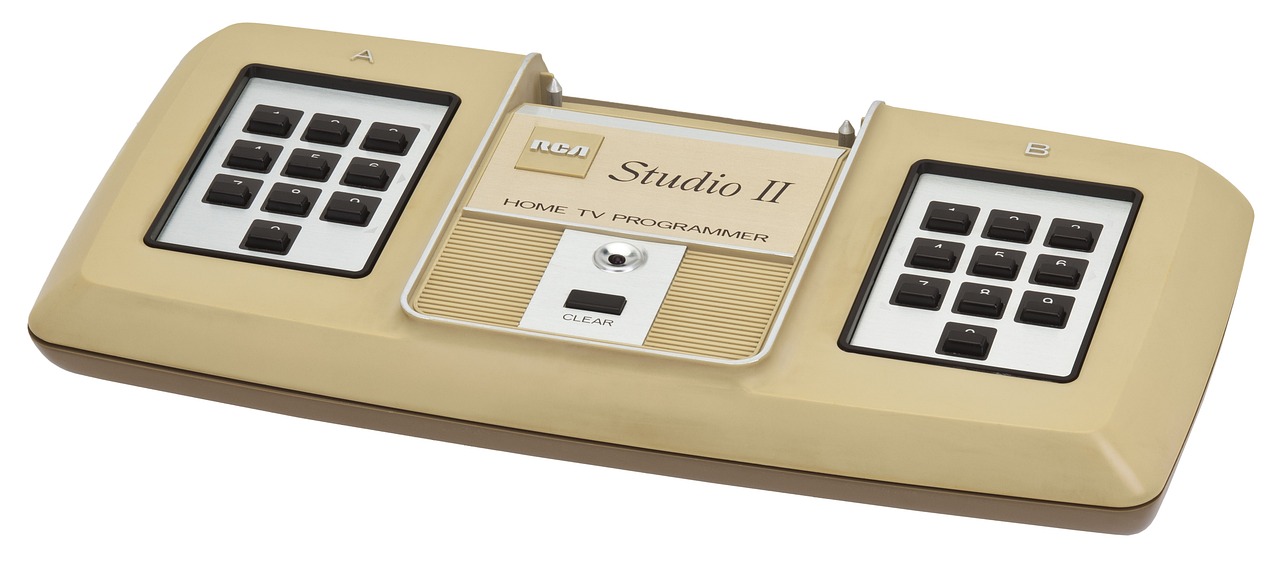
Originally, video games were seen as toys for boys. Gradually it was realised that there was a market for female game players too, if only suitably interesting games were developed, so the games companies eventually started to tailor games for them. That also meant, very late in the day, they started to employ women as games programmers. Now it is a totally normal thing to do. However, women were also there from the start, designing games. The first female commercial programmer (and possibly first independent developer) was Joyce Weisbecker. Working as an independent contractor she wrote her first games for sale in 1976 for the RCA Studio II games console that was released in January 1977.

RCA Studio II video games console
Image by WikimediaImages from Pixabay

Joyce was only a teenager when she started to learn to program computers and wrote her first games. She learnt on a computer that her engineer father designed and built at home called FRED (Flexible Recreational and Educational Device). He worked for RCA (originally the Radio Corporation of America), one of the major electronics, radio, TV and record companies of the 20th century. The company diversified their business into computers and Joyce’s father designed them for RCA (as well as at home for a hobby). He also invented a programming language called CHIP-8 that was used to program the RCA computers. This all meant Joyce was in a position to learn CHIP-8 and then to write programs for RCA computers including their new RCA Studio II games console before the machine was released, as a post-high school summer job.

The code for two games that she wrote in 1976, called Snake Race and Jackpot, were included in the manual for an RCA microcomputer called the COSMAC VIP, and she also wrote more programs for it the following year. These computers came in kit form for the buyer to build themselves. Her programs were example programs included for the owner to type in and then play once they had built the machine. Including them meant their new computer could do something immediately.

She also wrote the first game that she was paid for in that Summer of 1976. It was for the RCA Studio II games console, and it earned her $250 – well over $1000 in today’s money, so worth having for a teenager who would soon be going on to college. It was a quiz program, called TV School House I. It pitted two people against each other, answering questions on topics such as maths, history and geography, with two levels of difficulty. Questions were read from question booklets and whoever typed in the multiple choice answer number the fastest got the points for a question, with more points the faster they were. There is currently a craze for apps that augment physical games and this was a very early version of the genre.

Speedway screen from Wikimedia

She quickly followed it with racing and chase games, Speedway and Tag, though as screens were still very limited then, with only tiny screens, the graphics of all these games were very, very simple – eg racing rectangles around a blocky, rectangular racing track.

Unfortunately, the RCA games console itself was a commercial failure as it couldn’t compete with consoles like the Atari 2600, so RCA soon ended production. Joyce, meanwhile, retired from the games industry, still a teenager, ultimately becoming a radar signal processing engineer.

While games like Pong had come much earlier, the Atari 2600, which is credited with launching the first video game boom, was released in 1977, with Space Invaders, one of the most influential video games of all time, released in 1980. Joyce really was at the forefront of commercial games design. As a result her papers related to games programming, including letters and program listings, are now archived in the Strong National Museum of Play in New York.

More on …


Magazines …

Front cover of CS4FN issue 29 - Diversity in Computing

Subscribe to be notified whenever we publish a new post to the CS4FN blog.


This blog is funded through EPSRC grant EP/W033615/1.

Pac-Man and Games for Girls

In the beginning video games were designed for boys…and then came Pac-Man.

Pac-man eating dots
Image by OpenClipart-Vectors from Pixabay

Before mobile games, game consoles and PC based games, video games first took off in arcades. Arcade games were very big earning 39 billion dollars at their peak in the 1980s. Games were loaded into bespoke coin-operated arcade machines. For a game to do well someone had to buy the machines, whether actual gaming arcades or bars, cafes, colleges, shopping malls, … Then someone had to play them. Originally boys played arcade games the most and so games were targeted at them. Most games had a focus on shooting things: games like asteroids and space invaders or had some link to sports based on the original arcade game Pong. Girls were largely ignored by the designers… But then came Pac-Man. 

Pac-Man, created by a team led by Toru Iwatani,  is a maze game where the player controls the Pac-Man character as it moves around a maze, eating dots while being chased by the ghosts: Blinky, Pinky, Inky, and Clyde. Special power pellets around the maze, when eaten, allow Pac-Man to chase the ghosts for a while instead of being chased.

Pac-Man ultimately made around $19 million dollars in today’s money making it the biggest money making video arcade game of all time. How did it do it? It was the first game that was played by more females than males. It showed that girls would enjoy playing games if only the right kind of games were developed. Suddenly, and rather ironically given its name, there was a reason for the manufacturers to take notice of girls, not just boys.

A Pac-man like ghost
Image by OpenClipart-Vectors from Pixabay

It revolutionised games in many ways, showing the potential of different kinds of features to give it this much broader appeal. Most obviously Pac-Man did this by turning the tide away from shoot-em up space games and sports games to action games where characters were the star of the game, and that was one of its inventor Toru Iwatani’s key aims. To play you control Pac-Man rather than just a gun, blaster, tennis racket or golf club. It paved the way for Donkey Kong, Super Mario, and the rest (so if you love Mario and all his friends, then thank Pac-Man). Ultimately, it forged the path for the whole idea of avatars in games too. 

It was the first game to use power ups where, by collecting certain objects, the character gains extra powers for a short time. The ghosts were also characters controlled by simple AI – they didn’t just behave randomly or follow some fixed algorithm controlling their path, but reacted to what the player does, and each had their own personality in the way they behaved.

Because of its success, maze and character-based adventure games became popular among manufacturers, but more importantly designers became more adventurous and creative about what a video game could be. It was also the first big step towards the long road to women being fully accepted to work in the games industry. Not bad for a character based on a combination of a pizza and the Japanese symbol for “mouth”.

– Paul Curzon, Queen Mary University of London

More on …

Magazines …

Front cover of CS4FN issue 29 - Diversity in Computing

Subscribe to be notified whenever we publish a new post to the CS4FN blog.


This page is funded by EPSRC on research agreement EP/W033615/1.

QMUL CS4FN EPSRC logos

Testing AIs in Minecraft

by Paul Curzon, Queen Mary University of London

A complex Minecraft world with a lake, grasslands, mountains and a building
Image by allinonemovie from Pixabay

What makes a good environment for child AI learning development? Possibly the same as for human child learning development: Minecraft.

Lego is one of the best games to play for impactful learning development for children. The word Lego is based on the words Play and Well in Danish. In the virtual world, Minecraft has of course taken up the mantle. A large part of why they are wonderful games is because they are open-ended and flexible. There are infinite possibilities over what you can build and do. They therefore help encourage not just focussing on something limited to learn as many other games do, but support open-ended creativity and so educational development. Given how positive it can be for children, it shouldn’t be surprising that Minecraft is now being used to help AIs develop too.

Games have long been used to train and test Artificial Intelligence programs. Early programs were developed to play and ultimately beat humans at specific games like Checkers, Chess and then later Go. That mastered they started to learn to play individual arcade games as a way to extend their abilities. A key part of our intelligence is flexibility though, we can learn new games. Aiming to copy this, the AIs were trained to follow suit and so became more flexible, and showed they could learn to play multiple arcade games well. 

This is still missing a vital part of our flexibility though. The thing about all these games is that the whole game experience is designed to be part of the game and so the task the player has to complete. Everything is there for a reason. It is all an integral part of the game. There are no pieces at all in a chess game that are just there to look nice and will never, ever play a part in winning or losing. Likewise all the rules matter. When problem solving in real life, though, most of the world, whether objects, the way things behave or whatever, is not there explicitly to help you solve the problem. It is not even there just to be a designed distractor. The real world also doesn’t have just a few distractors, it has lots and lots. Looking round my living room, for example, there are thousands of objects, but only one will help me turn on the tv.

AIs that are trained on games may, therefore, just become good at working in such unreal environments. They may need to be told what matters and what to ignore to solve problems. Real problems are much more messy, so put them in the real world, or even a more realistic virtual world, to problem solve and they may turn out to be not very clever at all. Tests of their skills that are based on such tasks may not really test them at all.

Researchers at the University of Witwatersrand in South Africa decided to tackle this issue, but using yet another game: Minecraft.  Because Minecraft is an open-ended virtual world, tackling challenges created in it will involve working in a world that is much more than just about the problem itself. The Witwatersrand team’s resulting MinePlanner system is a collection of 45 challenges, some easy, some harder. They include gathering tasks (like finding and gathering wood) and building tasks (like building a log cabin), as well as tasks that include combinations of these things. Each comes in three versions. In the easy version nothing is irrelevant. The medium version contains a variety of extraneous things that are not at all useful to the task. The hard version is in a full Minecraft world where there are thousands of objects that might be used.

To tackle these challenges an AI (or human) needs to solve not just the complex problem set, but also work out for themselves what in the Minecraft world is relevant to the task they are trying to perform and what isn’t. What matters and what doesn’t?

The team hope that by setting such tests they will help encourage researchers to develop more flexible intelligences, taking us closer to having real artificial intelligence. The problems are proposed as a benchmark for others to test their AIs against. The Witwatersrand team have already put existing state-of-the-art AI planning systems to the test. They weren’t actually that great at solving the problems and even the best could not complete the harder tasks.

So it is back to school for the AIs but hopefully now they will get a much better, flexible and fun education playing games like Minecraft. Let’s just hope the robots get to play with Lego too, so they don’t get left behind educationally.

More on …

Magazines …


Front cover of CS4FN issue 29 - Diversity in Computing

EPSRC supports this blog through research grant EP/W033615/1,