Film Futures: Brassed Off

The pit head of a colliery at sunset with a vivid red sky behind the setting sun
Image from Pixabay

Computer Scientists and digital artists are behind the fabulous special effects and computer generated imagery we see in today’s movies, but for a bit of fun, in this series, we look at how movie plots could change if they involved Computer Scientists. Here we look at an alternative version of the film Brassed Off.

***SPOILER ALERT***

Brassed Off, starring Pete Postlethwaite, Tara Fitzgerald and Ewan McGregor, is set at a time when the UK coal and steel industries were being closed down with terrible effects on local communities across the North of England and Wales. It tells the story of the closing of the fictional Grimley Pit (based on the real mining village of Grimethorpe), from the point of view of the members of the colliery brass band and their families. The whole village relies on the pit for their livelihoods.

Danny, the band’s conductor is passionate about the band and wants to keep it going, even if the pit closes. Many of the other band members are totally despondent and just want to take the money that is on offer if they agree to the closure without a fight. They feel they have no future, and have given up hope over both the pit and the band (why have a colliery band if there is no colliery?)

Gloria, a company manager who grew up in the village arrives, conducting a feasibility study for the company to determine if the pit is profitable or not as justification for keeping it open or closing it down. A wonderful musician, she joins the band but doesn’t tell them that she is now management (including not telling her childhood boyfriend, and band member, Andy).

The story follows the battle to keep the pit open, and the effects on the community if it closes, through the eyes of the band members as they take part in a likely final ever brass band competition…

Brassed Off: with computer science

In our computer science film future version, the pit is still closing and Gloria is still management, but with a Computer Science PhD in digital music, she has built a flugelhorn playing robot with a creative AI brain. It can not only play brass band instruments but arrange and compose too. On arriving at Grimley she asks if her robot can join the band. Initially, every one is against the idea, but on hearing how good it is, and how it will help them do well in the national brass band competition they relent. The band, with robot, go all the way to the finals and ultimately win…

The pit, however, closes and there are no jobs, at all, not even low quality work in local supermarkets (automatic tills and robot shelf-stackers have replaced humans) or call centres (now replaced by chatbots). Gloria also loses her job due to a shake-out of middle managers as the AIs take over the knowledge economy jobs. Luckily, she is ok, as with university friends, she starts a company building robot musicians which is an amazing success. The band never make the finals again as bands full of Gloria’s flugelhorn and cornet playing robots take over (also taking the last of the band’s self-esteem). In future years, all the brass bands in the competition are robot bands as with all the pits closing the communities around them collapse. The world’s last ever flugelhorn player is a robot. Gloria and Andy never do get to kiss…

In real life…

Could a robot play a musical instrument? One existed centuries before the computer age. In 1737  Jacques de Vaucanson revealed his flute playing automaton to the public. A small human height figure, it played a real flute, that could be replaced to prove the machine could really play a real instrument. Robots have played various instruments, including drums and a cello playing robot that played with an orchestra in Malmo. While robot orchestras and bands are likely, it seems less likely that humans would stop playing as a result.

Can an AI compose music? Victorian, Ada Lovelace predicted they one day would, a century before the first computer was ever built. She realised that this would be the case just from thinking about the machines that Charles Babbage was trying to build. Her prediction eventually came true. Now of course, generative AI is being used to compose music, and can do so in any style, whether classical or pop. How good, or creative, it is may be debated but it won’t be long before they have super-human music composition powers.

So, a flugelhorn playing robot, that also composes music, is not a pipe dream!

What about the social costs that are the real theme of the film though? When the UK pits and steelworks closed whole communities were destroyed with great, and long lasting, social cost. It was all well and good for politicians to say there are new jobs being created by the new service and knowledge economy, but that was no help when no thought or money had actually been put in to helping communities make the transition. “Get on your bike” was their famous, if ineffective, solution. For example, if the new jobs were to be in technology as suggested then massive technology training programmes for those put out of work were needed, along with financial support in the meantime. Instead, whole communities were effectively left to rot and inequality increased massively. Areas in the North of England and Wales that had been the backbone of the UK economy, still haven’t really recovered 40 years later.

Are we about to make the same mistakes again? We are certainly arriving at a similar point, but now it is those knowledge economy jobs that were supposed to be the saviours 40 years ago that are under threat from AI. There may well be new jobs as old ones disappear…but even if they do will the people who lose their jobs be in a position to take the new ones, or are we heading towards a whole new lost generation. As back then, without serious planning and support, including successful efforts to reduce inequality in society, the changes coming could again cause devastation, this time much more widespread. As it stands technology is increasing, not decreasing, inequality. We need to start now, including coming up with a new economic model of how the world will work that actively reduces inequality in society. Many science fiction writers have written of utopian futures where people only work for fun (eg Arthur C Clarke’s classic “Childhood’s End” is one I’m reading at the moment), but that only happens if wealth is not sucked up by the lucky few. (In “Childhood’s End” it takes alien invaders to force out inequality.)

We can avoid a dystopian future, but only if we try…really hard.

More on …

Subscribe to be notified whenever we publish a new post to the CS4FN blog.


This page is funded by EPSRC on research agreement EP/W033615/1.

QMUL CS4FN EPSRC logos

Designing a planet’s road network

Image by Gerd Altmann from Pixabay

This article is inspired by the Kilburn Lecture given by Professor Steve Furber of the University of Manchester on 20th June 2008.

Can you imagine designing the world’s road network from scratch? Plus all the pavements, footpaths, bridges and shortcuts? Can you imagine designing a computer with the complexity of a planet?

In Douglas Adams’ classic The Hitchhiker’s Guide to the Galaxy, there’s a whole planet devoted to designing other planets, and the Earth was one of their creations. In the story, Earth isn’t just a planet: it’s also the most powerful and most complicated computer ever made, and its job was to help explain the answer to the meaning of life. Aliens had to design every last bit of it – one character, Slartibartfast, had the particularly complex job of designing the world’s coastlines. His favourite thing to make was fjords, because he liked the decorative look they gave to a country. (He even won an award for designing Norway.)

That’s just a story though, right? Could anyone ever design a computer of planetary complexity from scratch? As it happens that is exactly the task facing modern computer chip designers.

It is often said that modern chips are the most complex things humans have ever created, and if you imagine starting to design a whole planet’s road network, you will start to get the idea of what that means. The task is rather similar.

Essentially a computer chip is made up of millions of transistors: tiny elements that control how electrons flow round a circuit. A microscopic view of a chip like the one above looks very much like a road network with tracks connecting the transistors, which are a bit like junctions. Teams of chip designers have to design where the transistors go and how they are connected. The electrons flowing are a little like cars moving around the road network.

There’s an extra complication on a chip though. Designers of a road network only have to make sure people can get from A to B. In a computer, the changing voltages caused by the electrons as they move around is how data both gets from one part of the chip to another. Data also get switched around and transformed as calculations are performed at different points in the circuit. That means chip designers have to think about more than just connecting known places together. They have to make sure that as the electrons flow around, the data they represent still makes sense and computes the right answers. That’s how the whole thing is capable of doing something useful – like play music, give travel directions or control a computer game. It’s like designing a planetary road network, except all the traffic has to mean something in the end! Just like the fictional version of the Earth, only in fact.

It’s actually even harder for chip designers. Nowadays the connections they have to design are smaller than the wavelength of light. All that complexity has to fit, not on something as big as a planet, but crammed on a slab of silicon the size of your fingernail! Pretty impressive, but Earth’s intricate fjords are still more beautiful (especially the ones in Norway).

– Paul Curzon, Queen Mary University of London (from the archive)

More on …

Subscribe to be notified whenever we publish a new post to the CS4FN blog.


This page is funded by EPSRC on research agreement EP/W033615/1.

QMUL CS4FN EPSRC logos

Film Futures: Tsotsi

A burnt out car
Image by Derek Sewell from Pixabay

Computer Scientists and digital artists are behind the fabulous special effects and computer generated imagery we see in today’s movies, but for a bit of fun, in this series, we look at how movie plots could change if they involved Computer Scientists. Here we look at an alternative version of the film Tsotsi.

***SPOILER ALERT***

The outstanding, and Oscar winning, film Tsotsi follows a week in the life of a ruthless Soweto township gang leader who calls himself Tsotsi (township slang for ‘thug’). Having clawed a feral existence together from childhood in extreme urban deprivation he has lost all compassion. After a violent car-jacking, he finds he has inadvertently kidnapped a baby. What follows, to the backing of raw “Kwaito” music, is his chance for redemption.

Introducing new technology does not
always have just the effect you intended …

Tsotsi: with computer science

In our computer science film future version the baby is still accidentally kidnapped, but luckily the baby has wealthy parents, so wasn’t born in the township and was chipped with a rice-sized device injected under the skin at birth. It both contains identity data and can be tracked for life using GPS technology. The police are waiting as Tsotsi arrives back at the township having followed his progress walking across the scrubland with the baby.

Tsotsi doesn’t get a chance to form a bond with the baby, so doesn’t have a life-changing experience. There is no opportunity for redemption. Instead on release from jail he continues on his violent crime spree with no sense of humanity whatsoever.

In real life…

In 2004 there was a proposal in Japan that children would be tagged in the way luggage is. Now it is a totally standard way of tracking goods as they are moved around warehouses, and as a way to detect goods being shoplifted too. After all if it is sensible to keep track of your suitcase in case it is lost, why wouldn’t you for your even more important child. Fear of a child going missing is one of the biggest nightmares of being a parent. Take your eyes off a toddler for a few seconds in a shop and they could be gone. Such proposals repeatedly surface and

various similar proposals have been suggested ever since. In 2010, for example, nursery school kids in Richmond California were for a while required to wear jumpers containing RFID tags, supposedly to protect them. By placing sensors in appropriate places the children’s movements could be tracked so if they left school they could quickly be found.

Of course, pet cats and dogs are often chipped with tags under their skin. So it has also been suggested that children be tagged in a similar way. Then they couldn’t remove whatever clothing contained the tag and disappear. Someone who had kidnapped them would of course cut it out as, for example, Aaron Cross in the Bourne Legacy has to do at one point. Not what you want to happen to your child!

In general, there is an outcry and such proposals are dropped. As it was pointed out at the time of the California version, an RFID tag is not actually a very secure solution, for example. There have been lots and lots of demonstrations of how such systems can be cracked (even at a distance). For example, the RFID tags used in US passports was cracked so that the passports could be copied at a distance. And if the system can be cracked, then bad actors can sit in a van outside a school, or follow them on a school trip and track those children. Not only does it undermine their privacy, it could put them in greater danger of the kind it was supposed to protect them from. Ahh, you might think, but if someone did kidnap a child then the chip would still show where they were! Except if they can be copied then a duplicate could be used to leave a virtual version of the child in the school where they should be.

Security and privacy matter, and cyber security solutions are NEVER as simple as they seem. There are so often unforseen consequences, and fixing one problem just opens up new ones. Utopias can sometimes be distopian.

– Paul Curzon, Queen Mary University of London (extended from the archive version)

More on …

Subscribe to be notified whenever we publish a new post to the CS4FN blog.


This page is funded by EPSRC on research agreement EP/W033615/1.

QMUL CS4FN EPSRC logos

Annie Easley: putting rockets into space

Annie Easley head and shoulders portrait
Annie Easley. NASA, Public domain, via Wikimedia Commons

Annie Easley was a pioneer both as a computer programmer but also as a champion of women and minorities into computer science. She went from being a human computer doing calculations for the rocket scientists (in the days before computers were machines), to becoming a programmer whose programs were integral to many NASA projects. Here work has helped us explore the planets and beyond, to put satellites into space and help humans leave the Earth. She also contributed to early battery technology as well as the alternative energy sources we now need to transition away from oil and gas. Throughout her career, despite being repeatedly discriminated against herself as an African-american woman, she encouraged, supported and mentored others like her.

Annie was a maths graduate so when she saw that computers were needed by NACA, the predecessor of NASA, she jumped at the chance. At the time a computer was a human who did calculations, as no machine at that point had been created to take over the job. She was one of only four African-american employees out of several thousand. Her job was to do the calculations researchers needed for their work. However, as digital computers started to be introduced – machines were now able to do large numbers of tedious calculations much more quickly than humans so took over the job…but now needed people who could program them for each task. To do so still needed mathematical ability to understand the task, as well as the ability to write code. She learnt both low level assembly language and the high level language, Fortran, invented for such scientific programming work and transitioned to being a programmer mathematician.

Much of her work involved or supported simulation, so writing programs that model aspects of the real world to test whether scientists predictions are correct, or to help make new predictions. Ultimately, this work would help provide the data to make choices of which technologies to use. Today computer simulation is a completely standard way of doing both engineering and science and has actually provided a completely new way to do science complementing theory and experiment. It allows us to probe everyday science questions but also big questions like exploring the origins of the universe or probing the long term consequences of our actions on the climate. Back then it was totally novel though, as computers were completely new. She was involved in simulation work that prefigured important work today around the environment, investigating systems to convert energy between different forms and so hybrid battery technology. It allows vehicles (whether a rocket, satellite, car or planetary rover) to switch between electric power and other sources of energy – an idea that has provided an important bridge from petrol to electric cars. She was also part of teams exploring alternative fuel sources like wind power and solar power (important of course now in space for satellites and planetary rovers, as well as a fossil fuel alternatives on Earth).

An Atlas rocket with centaur final stage launching
An Atlas rocket with centaur final stage. NASA, Public domain, via Wikimedia Commons

One of her major areas of work, that has had a lasting impact, was on the Centaur rocket. Rocket launches involve multiple fuel tanks to get the payload (eg a satellite) into space. The tanks of each stage are ejected when their fuel runs out with the next stage taking over. Centaur was the final upper stage which used the then novel fuel of liquid hydrogen and liquid oxygen to propel the payload in the final step into space. Centaur became a mainstay for satellite launches as well as for probes sent to visit other planets – like Voyager (which visited the outer planets and is now in interstellar space heading away from the solar system having visited ) and CassiniHuygens  (which sent back stunning images of Saturn’s rings). Newer versions of Centaur are still used today,

At the same time as doing all this work she was also heavily involved in NASAs public engagement with science programmes, visiting schools and giving talks about the work, inspiring girls and those from ethnic minorities that STEM careers were for them. She also worked as equal employment opportunity counselor. This involved her helping sort out discrimination complaints (whether over age or race or gender) in a positive and cooperative way.

Space travel has opened up not only a new ability to explore our solar system, but made lots of other technologies from SatNav to remote monitoring possible as well has helped in the development of other technology such as battery technology and alternative energy sources. We all owe a lot to the pioneers like Annie Easley, and none more so than the private companies now aiming to further commercialise space.

– Paul Curzon, Queen Mary University of London

More on …

Magazines …

Subscribe to be notified whenever we publish a new post to the CS4FN blog.


This page is funded by EPSRC on research agreement EP/W033615/1.

QMUL CS4FN EPSRC logos

Torchwood: in need of some backup

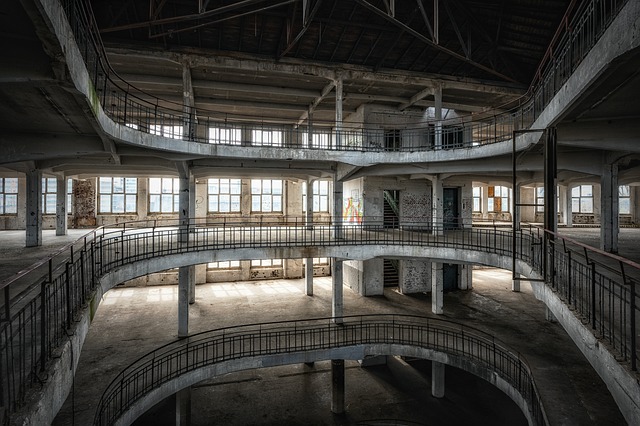
Multiple floors of an abandoned building
Image by Peter H from Pixabay

***SPOILER ALERT***

Disaster planning, that’s the Torchwood game. They are there to save the Earth whenever it needs saving from aliens (which is every week). Shame they blew it when it came to disaster planning for Torchwood itself!

We are coming

Torchwood is the BBC’s cult spin-off from Doctor Who. In the series, Children of the Earth, the world is threatened by the mysterious and brutal ‘456’ whose arrival is heralded when every child in the world simultaneously stops in their tracks and chants ‘We are coming’. The Torchwood team of Captain Jack Harkness, Gwen Cooper and Ianto Jones once more spring into action. Unfortunately, early on a little accident (we won’t say what so as not to spoil it) happens in their base buried under Cardiff. On the run and homeless for a while, they have only their wits in place of the normal hi-tech surveillance gadgetry. It’s so desperate at one point, they end up in an empty shell of a warehouse with only a sofa and the contents of their pockets with which to save the world!

Move it!

It’s such a shame that it comes to this when a little bit of disaster planning would have made it all so much easier to beat the aliens. A backup plan including a backup site is crucial in dealing with a disaster, whether earthquake or Martian hordes. Just because your home city has been hit by a tsunami or flattened to the ground by a meteorite doesn’t mean your company’s operations have to be disrupted.

Captain Jack knows all about disaster management of course. Kill him, and after a brief period of pain he jolts back to life and carries on as though nothing has happened. With some standard forward planning any organisation ought to operate just like that too.

The fact that when the disaster happens the Torchwood team have to come up with solutions on the fly shows that they not only had no backup, but hadn’t even thought about it. Tut tut!

If they had done some planning, what would have been their alternatives?

Cold war

The first alternative, for those organisations that need to survive a disaster is to have a ‘cold site’ ready. In fact this is what Torchwood defaulted to in their warehouse. Lucky Ianto remembered it! A cold site is just a backup location that can be moved in to. It doesn’t have software, data or even hardware ready, but at least everyone knows what to do and where to go. In time it can be up and running again. Clearly given their remit of saving the Earth against war-hungry aliens, Torchwood needed something better than that.

Getting warmer

At the other end of the disaster planning spectrum is the ‘hot site’. It is a fully functioning copy of your main operations building. All the hardware is there, the software is there and so is the data. Everything that happens at the main site IT-wise is copied at the hot site too. Lose your main site to a nuclear bomb and you just carry on almost seamlessly at the hot site. (It obviously has to be located somewhere else suitably far away, not just next door, or it too will be as radioactively hot as the original and be of little use). You can also have ‘warm sites’ of different degrees where for example you just have the hardware installed, or the data backups are only weekly rather than continuously.

Which kind of backup site is chosen depends on the organisation: what can it afford balanced against the costs of downtime (and how much down time the business can take and still survive). If it is critical to the survival of the planet, like Torchwood, then clearly you need to be at the warmer end of the backup scale!

Back to life

It’s a shame then that Torchwood’s IT management only focused on installing lots of fancy gadgets and ignored the more mundane side of things. If they had been a little more competent Jack and co might have sorted out the ‘456’ before it all got out of hand. Never mind. It all worked out OK in the end. Well, sort of.

– Paul Curzon, Queen Mary University of London (from the archive)

More on …

Magazines …

Issue 24 cover Keep Out

Subscribe to be notified whenever we publish a new post to the CS4FN blog.


This page is funded by EPSRC on research agreement EP/W033615/1.

QMUL CS4FN EPSRC logos

Moon and Mind-Body Dualism

**spoiler alert**

Two identical  astronauts facing one another
Image by Mohamed Hassan from Pixabay (duplicated by CS4FN)

The least interesting thing about Duncan Jones is who his superstar father is. He stepped out of the shadow with a vengeance in directing one of the coolest films ever: Moon. It premiered at Sundance in 2009 to brilliant reviews and for me is a classic along the lines of the likes of Silent Running, Outland and 2001. If you are interested in artificial intelligence (which Jones obviously is) then you will undoubtedly love Moon.

What’s most interesting about Duncan is that he finished off his degree in Philosophy by writing a dissertation on Artificial Intelligence. He obviously wasn’t quite so in to snappy titles then as now though as he called it: “How to kill your computer friend: an investigation of the Mind / Body problem and how it relates to the hypothetical creation of a thinking machine.”

What is the mind-body problem all about? Well, it’s probably one of the deepest problems computer scientists, along with philosophers, psychologists and neurobiologists, are grappling with. Its roots date back at least as far as Plato and it has been keeping philosophers in business ever since. It boils down to the question of whether our mind is a physical thing or not, and if not how can our mind affect the physical world at all. Descartes believed they were separate but interacted through the pineal gland – a pea sized gland in the brain. (He was wrong about the pineal gland incidentally. It actually produces melatonin which amongst other things controls sleep patterns). Descartes also thought that only humans, not animals, had both pineal glands and minds (He was wrong about that too, though I’m being a bit harsh on him, making him sound like a bit of a loser – he was pretty smart really, one of the greatest thinkers ever – honest.) A more interesting part of Descartes’ theory of mind and body dualism is that he suggested that the body works like a machine. That is of course where computer scientists get interested.

Fascinating an argument as that over dualism is, it was all a bit, well philosophical, until computers became a practical reality, that is. Suddenly it turned into an important question about what it is possible to engineer. Forget about the AI question of whether a computer can be intelligent. Dualism moves us on to worrying about whether a computer can ever have a mind. Could a computer ever become conscious and have a “self”? No one knows. No machine does either, right now.

After finishing his degree, Duncan actually flirted with studying for a PhD on Artificial Intelligence but packed it in to focus on film directing instead. He seems to have done an awful lot of searching for his “self” before finding his passion as a Director. Luckily for us though he has continued to explore the same philosophical themes in Moon.

It all concerns Sam Bell, who is left alone working at a base on the far side of the moon. He has only a robot called Gerty to keep him company on his three year stint. After an accident he comes across a doppelganger of himself. Is it the real him, or a clone the company have somehow created…? Is his “self” just losing the plot or is there more to his “self” than meets the eye?

Art as film can clearly be just as good a medium as a PhD thesis for exploring the philosophy of computation!

Oh and if you are really interested and didn’t hear from all the media fuss at the time, we will leave you to Google who his father is for yourself. This may be the first article ever written about Duncan Jones that doesn’t tell you!

– Paul Curzon, Queen Mary University of London (from the archive)

More on …

Subscribe to be notified whenever we publish a new post to the CS4FN blog.


This page is funded by EPSRC on research agreement EP/W033615/1.

QMUL CS4FN EPSRC logos

Bank holiday bunting!

Chain of bunting flags
Image adapted by PC based on one by Clker-Free-Vector-Images from Pixabay

Bank holiday bunting appears automatically on the GOV.UK website thanks to a little program! If you’re reading this post today (Monday 21 April 2025) it’s Easter Monday which is a Bank Holiday in England & Wales and in Northern Ireland you have a chance to see it.

The UK Government’s website has a UK Bank Holidays page which lists all the upcoming dates for the next two years’ worth of bank holidays (so people can put them in the diaries) for England & Wales, Northern Ireland and Scotland (the different UK nations share many but not all bank holidays).

Bunting on the UK bank holidays page – appears whenever there’s an appropriate bank holiday.
Screenshot taken today (Monday 21st April 2025) – the bunting won’t be there tomorrow.

But… if you visit the page on a Bank Holiday then you may be met with some bunting, which doesn’t appear if you visit the page on a non-bank holiday day. People who look after the website added in this little Easter egg* over a decade ago and people have been discovering it ever since. They use an Application Program Interface (API) which connects the bank holiday website to a database which lets the website check, whenever there’s a bank holiday, whether it should display bunting. For example Easter Monday is a celebratory day in the Christian calendar but Good Friday isn’t. Both are holidays but it wouldn’t be appropriate for bunting on Good Friday so it gets the instruction “bunting: false” whereas Easter Monday is “bunting: true”. You can see the API’s instructions here.

If you’re reading this post after Easter Monday 2025 you’ll still have a few more chances to catch the bunting on 5 May (Early May bank holiday) and 26 May (Spring bank holiday) then you’ll need to wait until August for the Summer bank holiday then a few more weeks before Christmas Day, Boxing Day and New Year’s Day and New Year’s Day – on those days the bunting changes to tinsel!

*it’s not called an Easter egg because it’s there at Easter, the bunting is there at other times too but because it’s something to discover (like Easter Egg Hunts – find ours at The CS4FN Easter Egg Hunt).


10 Downing Street has a bunting competition to celebrate VE Day

10 Downing Street VE Day Children’s Bunting Competition – closes 23 April 2025

VE Day commemorates ‘Victory in Europe’ which was declared on 8th May 1945, at the end of the second world war. The celebration in 2025 is the 80th anniversary of the event . Children around the UK have been invited to draw some celebratory bunting to decorate 10 Downing Street (the home of the UK Prime Minister) and the competition closes on Wednesday 23rd April 2025.

Find out more, download the triangular bunting template and enter the competition.

We want to see bunting designs that are colourful, patriotic, and full of creativity and heart.

Designs should look back on years of tradition, commemorate the fallen, and recognise the sacrifices made by communities across the UK during the war.

We also encourage a message of thanks and hope for the future.

There are several street parties and other events taking place across the UK to celebrate VE day including, on Monday 5th May in London, a televised event that includes a flypast of old and new military aircraft.

Jo Brodie, Queen Mary University of London

This is an updated version of a snippet that appeared previously on this blog.


Part of a series of ‘whimsical fun in computing’ to celebrate April Fool’s (all month long!).

Find out about some of the rather surprising things computer scientists have got up to when they're in a playful mood.

Subscribe to be notified whenever we publish a new post to the CS4FN blog.


This page is funded by EPSRC on research agreement EP/W033615/1.

QMUL CS4FN EPSRC logos

Robot runners

The first ever half marathon allowing humanoid robots to run against humans was held in Beijing this weekend (April 2025). 12,000 humans ran the event alongside 21 robots…and for now the humans definitely are the winners.

A robot called Tiangong Ultra, was the robot winner, one of 6 robots that managed to finish. It completed the half marathon in just over 2 hours, 40 minutes. The fastest human, for comparison, finished in 1 hour 2 minutes and Jacob Kiplimo, of Uganga holds the half-marathon world record at 56 minutes 42 seconds set in Feb 2025 in Barcelona. The first world record from 1960 being 1 hour 7 minutes. The robots, therefore, have a long way to go.

The robots struggled in various ways reminiscent of human runners such as over-heating and finding it hard to even keep standing (though for humans the latter usually only happens towards the end, not on the start line as with one robot!). While humans need to constantly take water and nutrients, the winning robot similarly needed several battery changes. It’s winning performance was put down to it copying the way that human marathon runners run by Tang Jian, chief technology officer from the Beijing Innovation Centre of Human Robotics who built it. It also has relatively long legs which also is certainly an advantage to human runners (given it had mastered standing in the first place on such long legs).

Totally autonomous marathon running is relatively difficult for a machine because it takes physical ability, including dealing with kerbs, rough road surfaces and the like but also navigating the course and avoiding other runners. In this race the robots each had a team of human ‘trainers’ with them, in some cases giving them physical support, but also for safety (though one took out its trainer as it crashed into the side barriers!)

So the robots still have to make a lot of progress before they take the world record and show themselves to be superhuman as runners (as they have already done in games including chess, go, poker, jeopardy and more). Expect the records to tumble quickly, though, now they have entered the race.

Of course, a robot does not need to run on 2 legs at all, apart from due to our human centred preferences. Whilst it is a great, fun challenge for robotics researchers that helps push forward our understanding, it is plausible that the future of robotics is in some other form of locomotion: centipede-like perhaps with hundreds of creepy crawly legs, or maybe we will settle on centaur-like robots in the future (four legs being better than two for stability and speed). After all evolution has only settled on 2 legs because it has to work with what came before and standing upright is a way to free up our hands to do other things…so if designing from scratch why not go for 4 legs and 2 arms.

So the future of robot marathons is likely to involve a large number of categories from centipedal all the way down to humanoid. Of course, expect robot Formula 1 for wheeled self driving robots too in any future robot olympics. Will other robots ever enjoy watching such sport? That remains to be seen.

More on …

Subscribe to be notified whenever we publish a new post to the CS4FN blog.


This page is funded by EPSRC on research agreement EP/W033615/1.

QMUL CS4FN EPSRC logos

Anne-Marie Imafidon’s STEMettes

Anne-Marie Imafidon: Image by Doc Searls, CC BY 2.0 https://creativecommons.org/licenses/by/2.0, via Wikimedia Commons

Anne-Marie Imafidon was recently awarded the Society Medal by the British Computer Society for her work supporting young women and non-binary people of all ages into Science, Technology, Engineering and Maths (STEM) careers.

Born and raised in East London, Anne-Marie became the youngest girl to pass A-Level Computing at the age of 11 and she was only 20 when she passed a Master’s degree in Maths and Computer Science from Oxford University! She went on to work in industry but realised there was a big problem in how few women there were both studying STEM subjects and so taking up careers, despite there being no good reason why they shouldn’t enjoy such subjects and careers.

Using her entrepreneurial skills, and industry contacts, she decided to do something about it. In 2013 she therefore founded STEMettes a social enterprise (a business aiming to do good for society rather than just make money like most companies). It aims to inspire and support young women and non-binary people in STEM now extended to STEAM so including the arts as well. Since then it has reached over 73,000 young people. They do this by running all kinds of events like programming hackathons solving real world problems in teams, STEAM clubs, panel sessions where women share and non-binary role people act as models sharing their experiences and advice, school trips to STEAM offices, run courses in programming and cyber security, run competitions and lots.

Anne-Marie has campaigned tirelessly for equity in the tech workplace, raising the profile of under-represented groups in industry and commerce so is a really deserving winner of the BCS award that recognises people who have made a major contribution to society.

– Jane Waite and Paul Curzon, Queen Mary University of London

This is an extended version of an article that first appeared on our Teaching London Computing Site.

More on …

Magazines …

Front cover of CS4FN issue 29 - Diversity in Computing

Subscribe to be notified whenever we publish a new post to the CS4FN blog.


This page is funded by EPSRC on research agreement EP/W033615/1.

QMUL CS4FN EPSRC logos

The CS4FN Easter Egg Hunt

Image by Susanne from Pixabay

Easter eggs can be chocolate but they are also hidden treasures to be found in games, websites, other software (and now even Lego sets). Especially for Easter we have hidden an Easter Egg in one of our diversity linked pages. Can you find it? Enjoy the hunt! (But if you do find it don’t give it away and spoil the fun for others. Just be quietly pleased at how clever you are!)

The term Easter Egg was coined after Warren Robinett hid the message “Created by Warren Robinett” in the Atari game, Adventure, that he created. He did it as part of a plan he hatched to protest against the Atari policy of the time of not crediting the developers of their games – supposedly so their best people wouldn’t get poached by rivals!! The real purpose of the game was to find a hidden chalice, but the hidden message could be found if the player’s avatar (a square block) stopped over one specific pixel (“the gray dot”) in one specific place in the game.

It was only found (by a player) after Warren had left the company (he hadn’t let on to the management what he had done even when he resigned). Originally the company scrambled to try to re-release the game without the message, but given how expensive that would have been to do, instead they turned it into a feature to whip up more excitement around their games and started to hide similar surprises in other games from then on, calling them Easter Eggs.

The Easter Egg was born.

Start your hunt for our Easter Egg here at our diversity portal.

As an aside, the wonderful book, Ready Player One by Ernest Cline is based on a plot around finding Easter Eggs. It is a must read for anyone interested in 1980s technology, easter eggs and what a metaverse might one day be actually like to live in. All computer scientists should read it (and only then watch the film which is good, but not as good.)


Subscribe to be notified whenever we publish a new post to the CS4FN blog.


This page is funded by EPSRC on research agreement EP/W033615/1.

QMUL CS4FN EPSRC logos

Hint – we think you will never see it without some help.