Torchwood: in need of some backup

Multiple floors of an abandoned building
Image by Peter H from Pixabay

***SPOILER ALERT***

Disaster planning, that’s the Torchwood game. They are there to save the Earth whenever it needs saving from aliens (which is every week). Shame they blew it when it came to disaster planning for Torchwood itself!

We are coming

Torchwood is the BBC’s cult spin-off from Doctor Who. In the series, Children of the Earth, the world is threatened by the mysterious and brutal ‘456’ whose arrival is heralded when every child in the world simultaneously stops in their tracks and chants ‘We are coming’. The Torchwood team of Captain Jack Harkness, Gwen Cooper and Ianto Jones once more spring into action. Unfortunately, early on a little accident (we won’t say what so as not to spoil it) happens in their base buried under Cardiff. On the run and homeless for a while, they have only their wits in place of the normal hi-tech surveillance gadgetry. It’s so desperate at one point, they end up in an empty shell of a warehouse with only a sofa and the contents of their pockets with which to save the world!

Move it!

It’s such a shame that it comes to this when a little bit of disaster planning would have made it all so much easier to beat the aliens. A backup plan including a backup site is crucial in dealing with a disaster, whether earthquake or Martian hordes. Just because your home city has been hit by a tsunami or flattened to the ground by a meteorite doesn’t mean your company’s operations have to be disrupted.

Captain Jack knows all about disaster management of course. Kill him, and after a brief period of pain he jolts back to life and carries on as though nothing has happened. With some standard forward planning any organisation ought to operate just like that too.

The fact that when the disaster happens the Torchwood team have to come up with solutions on the fly shows that they not only had no backup, but hadn’t even thought about it. Tut tut!

If they had done some planning, what would have been their alternatives?

Cold war

The first alternative, for those organisations that need to survive a disaster is to have a ‘cold site’ ready. In fact this is what Torchwood defaulted to in their warehouse. Lucky Ianto remembered it! A cold site is just a backup location that can be moved in to. It doesn’t have software, data or even hardware ready, but at least everyone knows what to do and where to go. In time it can be up and running again. Clearly given their remit of saving the Earth against war-hungry aliens, Torchwood needed something better than that.

Getting warmer

At the other end of the disaster planning spectrum is the ‘hot site’. It is a fully functioning copy of your main operations building. All the hardware is there, the software is there and so is the data. Everything that happens at the main site IT-wise is copied at the hot site too. Lose your main site to a nuclear bomb and you just carry on almost seamlessly at the hot site. (It obviously has to be located somewhere else suitably far away, not just next door, or it too will be as radioactively hot as the original and be of little use). You can also have ‘warm sites’ of different degrees where for example you just have the hardware installed, or the data backups are only weekly rather than continuously.

Which kind of backup site is chosen depends on the organisation: what can it afford balanced against the costs of downtime (and how much down time the business can take and still survive). If it is critical to the survival of the planet, like Torchwood, then clearly you need to be at the warmer end of the backup scale!

Back to life

It’s a shame then that Torchwood’s IT management only focused on installing lots of fancy gadgets and ignored the more mundane side of things. If they had been a little more competent Jack and co might have sorted out the ‘456’ before it all got out of hand. Never mind. It all worked out OK in the end. Well, sort of.

– Paul Curzon, Queen Mary University of London (from the archive)

More on …

Magazines …
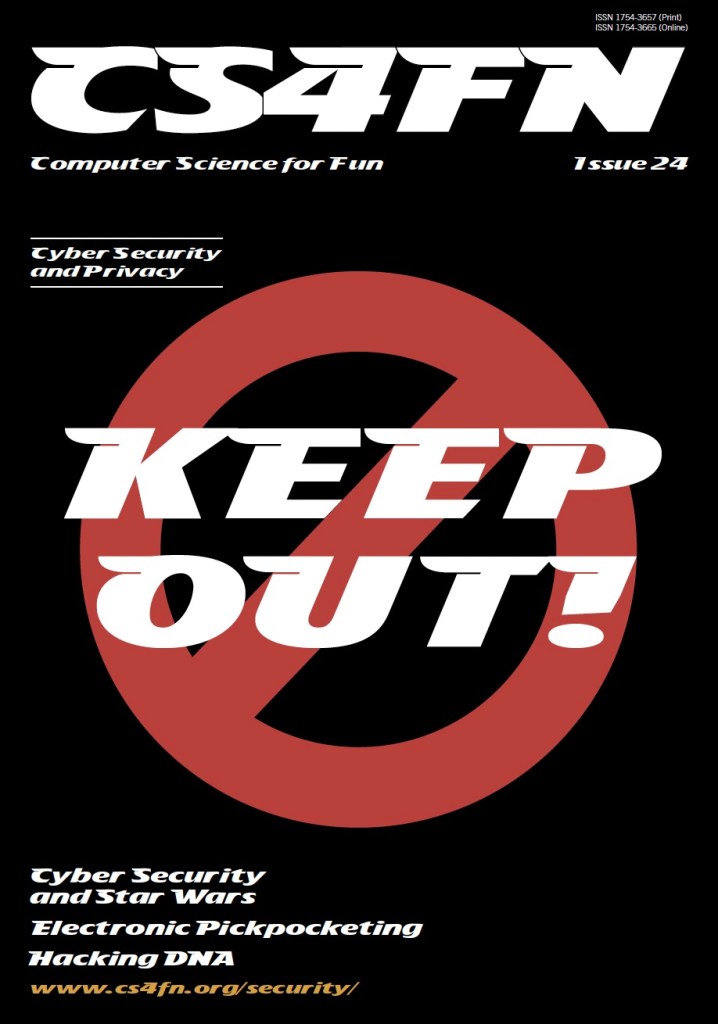
Issue 24 cover Keep Out

Subscribe to be notified whenever we publish a new post to the CS4FN blog.


This page is funded by EPSRC on research agreement EP/W033615/1.

QMUL CS4FN EPSRC logos

Moon and Mind-Body Dualism

**spoiler alert**

Two identical  astronauts facing one another
Image by Mohamed Hassan from Pixabay (duplicated by CS4FN)

The least interesting thing about Duncan Jones is who his superstar father is. He stepped out of the shadow with a vengeance in directing one of the coolest films ever: Moon. It premiered at Sundance in 2009 to brilliant reviews and for me is a classic along the lines of the likes of Silent Running, Outland and 2001. If you are interested in artificial intelligence (which Jones obviously is) then you will undoubtedly love Moon.

What’s most interesting about Duncan is that he finished off his degree in Philosophy by writing a dissertation on Artificial Intelligence. He obviously wasn’t quite so in to snappy titles then as now though as he called it: “How to kill your computer friend: an investigation of the Mind / Body problem and how it relates to the hypothetical creation of a thinking machine.”

What is the mind-body problem all about? Well, it’s probably one of the deepest problems computer scientists, along with philosophers, psychologists and neurobiologists, are grappling with. Its roots date back at least as far as Plato and it has been keeping philosophers in business ever since. It boils down to the question of whether our mind is a physical thing or not, and if not how can our mind affect the physical world at all. Descartes believed they were separate but interacted through the pineal gland – a pea sized gland in the brain. (He was wrong about the pineal gland incidentally. It actually produces melatonin which amongst other things controls sleep patterns). Descartes also thought that only humans, not animals, had both pineal glands and minds (He was wrong about that too, though I’m being a bit harsh on him, making him sound like a bit of a loser – he was pretty smart really, one of the greatest thinkers ever – honest.) A more interesting part of Descartes’ theory of mind and body dualism is that he suggested that the body works like a machine. That is of course where computer scientists get interested.

Fascinating an argument as that over dualism is, it was all a bit, well philosophical, until computers became a practical reality, that is. Suddenly it turned into an important question about what it is possible to engineer. Forget about the AI question of whether a computer can be intelligent. Dualism moves us on to worrying about whether a computer can ever have a mind. Could a computer ever become conscious and have a “self”? No one knows. No machine does either, right now.

After finishing his degree, Duncan actually flirted with studying for a PhD on Artificial Intelligence but packed it in to focus on film directing instead. He seems to have done an awful lot of searching for his “self” before finding his passion as a Director. Luckily for us though he has continued to explore the same philosophical themes in Moon.

It all concerns Sam Bell, who is left alone working at a base on the far side of the moon. He has only a robot called Gerty to keep him company on his three year stint. After an accident he comes across a doppelganger of himself. Is it the real him, or a clone the company have somehow created…? Is his “self” just losing the plot or is there more to his “self” than meets the eye?

Art as film can clearly be just as good a medium as a PhD thesis for exploring the philosophy of computation!

Oh and if you are really interested and didn’t hear from all the media fuss at the time, we will leave you to Google who his father is for yourself. This may be the first article ever written about Duncan Jones that doesn’t tell you!

– Paul Curzon, Queen Mary University of London (from the archive)

More on …

Subscribe to be notified whenever we publish a new post to the CS4FN blog.


This page is funded by EPSRC on research agreement EP/W033615/1.

QMUL CS4FN EPSRC logos

Robot runners

The first ever half marathon allowing humanoid robots to run against humans was held in Beijing this weekend (April 2025). 12,000 humans ran the event alongside 21 robots…and for now the humans definitely are the winners.

A robot called Tiangong Ultra, was the robot winner, one of 6 robots that managed to finish. It completed the half marathon in just over 2 hours, 40 minutes. The fastest human, for comparison, finished in 1 hour 2 minutes and Jacob Kiplimo, of Uganga holds the half-marathon world record at 56 minutes 42 seconds set in Feb 2025 in Barcelona. The first world record from 1960 being 1 hour 7 minutes. The robots, therefore, have a long way to go.

The robots struggled in various ways reminiscent of human runners such as over-heating and finding it hard to even keep standing (though for humans the latter usually only happens towards the end, not on the start line as with one robot!). While humans need to constantly take water and nutrients, the winning robot similarly needed several battery changes. It’s winning performance was put down to it copying the way that human marathon runners run by Tang Jian, chief technology officer from the Beijing Innovation Centre of Human Robotics who built it. It also has relatively long legs which also is certainly an advantage to human runners (given it had mastered standing in the first place on such long legs).

Totally autonomous marathon running is relatively difficult for a machine because it takes physical ability, including dealing with kerbs, rough road surfaces and the like but also navigating the course and avoiding other runners. In this race the robots each had a team of human ‘trainers’ with them, in some cases giving them physical support, but also for safety (though one took out its trainer as it crashed into the side barriers!)

So the robots still have to make a lot of progress before they take the world record and show themselves to be superhuman as runners (as they have already done in games including chess, go, poker, jeopardy and more). Expect the records to tumble quickly, though, now they have entered the race.

Of course, a robot does not need to run on 2 legs at all, apart from due to our human centred preferences. Whilst it is a great, fun challenge for robotics researchers that helps push forward our understanding, it is plausible that the future of robotics is in some other form of locomotion: centipede-like perhaps with hundreds of creepy crawly legs, or maybe we will settle on centaur-like robots in the future (four legs being better than two for stability and speed). After all evolution has only settled on 2 legs because it has to work with what came before and standing upright is a way to free up our hands to do other things…so if designing from scratch why not go for 4 legs and 2 arms.

So the future of robot marathons is likely to involve a large number of categories from centipedal all the way down to humanoid. Of course, expect robot Formula 1 for wheeled self driving robots too in any future robot olympics. Will other robots ever enjoy watching such sport? That remains to be seen.

More on …

Subscribe to be notified whenever we publish a new post to the CS4FN blog.


This page is funded by EPSRC on research agreement EP/W033615/1.

QMUL CS4FN EPSRC logos

Anne-Marie Imafidon’s STEMettes

Anne-Marie Imafidon: Image by Doc Searls, CC BY 2.0 https://creativecommons.org/licenses/by/2.0, via Wikimedia Commons

Anne-Marie Imafidon was recently awarded the Society Medal by the British Computer Society for her work supporting young women and non-binary people of all ages into Science, Technology, Engineering and Maths (STEM) careers.

Born and raised in East London, Anne-Marie became the youngest girl to pass A-Level Computing at the age of 11 and she was only 20 when she passed a Master’s degree in Maths and Computer Science from Oxford University! She went on to work in industry but realised there was a big problem in how few women there were both studying STEM subjects and so taking up careers, despite there being no good reason why they shouldn’t enjoy such subjects and careers.

Using her entrepreneurial skills, and industry contacts, she decided to do something about it. In 2013 she therefore founded STEMettes a social enterprise (a business aiming to do good for society rather than just make money like most companies). It aims to inspire and support young women and non-binary people in STEM now extended to STEAM so including the arts as well. Since then it has reached over 73,000 young people. They do this by running all kinds of events like programming hackathons solving real world problems in teams, STEAM clubs, panel sessions where women share and non-binary role people act as models sharing their experiences and advice, school trips to STEAM offices, run courses in programming and cyber security, run competitions and lots.

Anne-Marie has campaigned tirelessly for equity in the tech workplace, raising the profile of under-represented groups in industry and commerce so is a really deserving winner of the BCS award that recognises people who have made a major contribution to society.

– Jane Waite and Paul Curzon, Queen Mary University of London

This is an extended version of an article that first appeared on our Teaching London Computing Site.

More on …

Magazines …

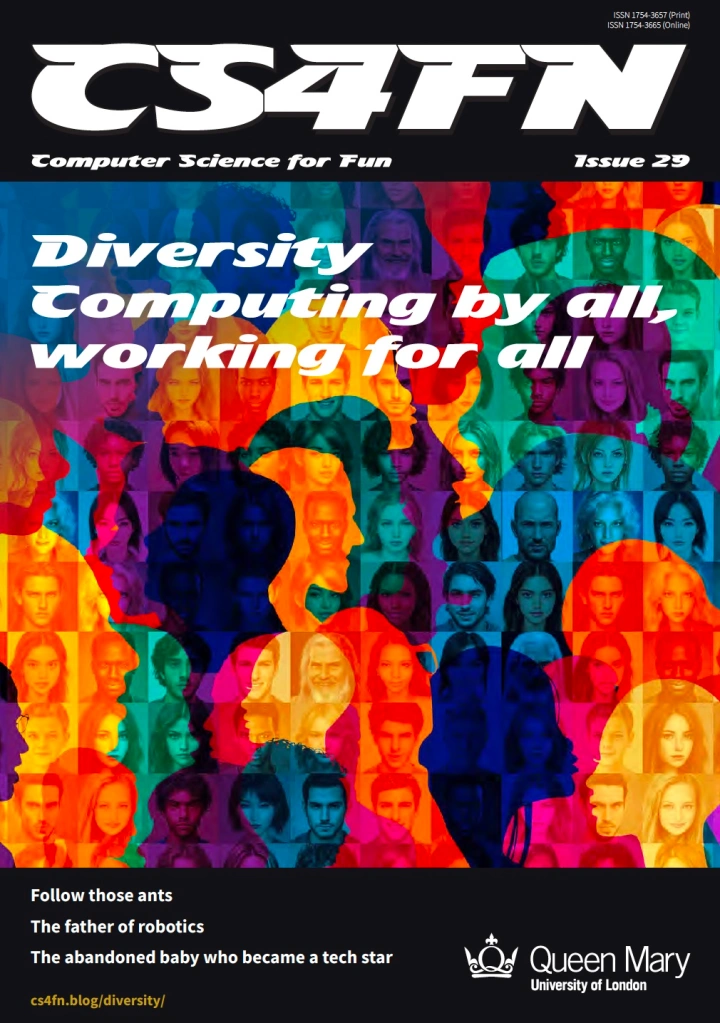
Front cover of CS4FN issue 29 - Diversity in Computing

Subscribe to be notified whenever we publish a new post to the CS4FN blog.


This page is funded by EPSRC on research agreement EP/W033615/1.

QMUL CS4FN EPSRC logos

The CS4FN Easter Egg Hunt

Image by Susanne from Pixabay

Easter eggs can be chocolate but they are also hidden treasures to be found in games, websites, other software (and now even Lego sets). Especially for Easter we have hidden an Easter Egg in one of our diversity linked pages. Can you find it? Enjoy the hunt! (But if you do find it don’t give it away and spoil the fun for others. Just be quietly pleased at how clever you are!)

The term Easter Egg was coined after Warren Robinett hid the message “Created by Warren Robinett” in the Atari game, Adventure, that he created. He did it as part of a plan he hatched to protest against the Atari policy of the time of not crediting the developers of their games – supposedly so their best people wouldn’t get poached by rivals!! The real purpose of the game was to find a hidden chalice, but the hidden message could be found if the player’s avatar (a square block) stopped over one specific pixel (“the gray dot”) in one specific place in the game.

It was only found (by a player) after Warren had left the company (he hadn’t let on to the management what he had done even when he resigned). Originally the company scrambled to try to re-release the game without the message, but given how expensive that would have been to do, instead they turned it into a feature to whip up more excitement around their games and started to hide similar surprises in other games from then on, calling them Easter Eggs.

The Easter Egg was born.

Start your hunt for our Easter Egg here at our diversity portal.

As an aside, the wonderful book, Ready Player One by Ernest Cline is based on a plot around finding Easter Eggs. It is a must read for anyone interested in 1980s technology, easter eggs and what a metaverse might one day be actually like to live in. All computer scientists should read it (and only then watch the film which is good, but not as good.)


Subscribe to be notified whenever we publish a new post to the CS4FN blog.


This page is funded by EPSRC on research agreement EP/W033615/1.

QMUL CS4FN EPSRC logos

Hint – we think you will never see it without some help.

A Sea Hero Quest to understand our navigation skills

A lego minifigure hiking with map and compass
Image by Andrew Martin from Pixabay

Video games can be a very successful way to do citizen science, getting ordinary people involved in research. Sea Hero Quest is an extremely successful example. It involves a boy setting out on a sea quest to recover his father’s memories, lost when he suffers from dementia. The hundreds of thousands of people joining the quest have helped researchers better understand our ability to navigate.

The Sea Hero Quest project was led by Deutsche Telecom, working with both universities and Alzheimer’s Research UK. The first mass-market game of its kind, it has allowed researchers to explore navigation and related cognitive abilities of people throughout their lives. The game has 75 levels, each with different kinds of task in different environments, and has been played by millions of people around the world for over a 100 years of combined game time. The amount of data collected is vast and would have taken researchers centuries to collect by traditional means, if possible at all.

For example, an international team including researchers from UCL, the University of Lyon and the University of Münster used the game to explore how the place people grew up affects their ability to navigate. As well as more general data from around 400,000 people across the world, they also used the data specifically from people who had completed all levels of the game. This amounted to around ten thousand adults of all ages.

They found that people are best at navigating in situations similar to where they grew up (where they lived at the time of playing the game had no effect). So, for example, people who grew up in an American grid-like city such as Chicago, were better at navigating in grid-based levels. Those who grew up in cities such as Prague in Europe, where the streets are more wiggly and chaotically laid out, were better at levels needing similar navigation skills. Throughout, the researchers found that those that grew up in the countryside were better at navigating overall as well as specifically in more unstructured environments.

Sea Hero Quest shows that games designers, if they can create fun but serious games, can help us all help researchers…It is often said that playing video games is bad for growing brains but it also shows that the way we design our cities affects the way we think and can be bad for our brains!

More on …

Magazines …

Front cover of CS4FN issue 29 - Diversity in Computing

Subscribe to be notified whenever we publish a new post to the CS4FN blog.


This page is funded by EPSRC on research agreement EP/W033615/1.

QMUL CS4FN EPSRC logos

Robert Weitbrecht and his telecommunication device for the deaf

Robert Weitbrecht was born deaf. He went on to become an award winning electronics scientist who invented the acoustic coupler (or modem) and a teletypewriter (or teleprinter) system allowing the deaf to communicate via a normal phone call.

A modem telephone: the telephone slots into a teletypewriter here with screen rather than printer.
A telephone modem: Image by Juan Russo from Pixabay

If you grew up in the UK in the 1970s with any interest in football, then you may think of teleprinters fondly. It was the way that you found out about the football results at the final whistle, watching for your team’s result on the final score TV programme. Reporters at football grounds across the country, typed in the results which then appeared to the nation one at a time as a teleprinter slowly typed results at the bottom of the screen. 

Teleprinters were a natural, if gradual, development from the telegraph and Morse code. Over time a different simpler binary based code was developed. Then by attaching a keyboard and creating a device to convert key presses into the binary code to be sent down the wire you code type messages instead of tap out a code. Anyone could now do it, so typists replaced Morse code specialists. The teleprinter was born. In parallel, of course, the telephone was invented allowing people to talk to each other by converting the sound of someone speaking into an electrical signal that was then converted back into sound at the other end. Then you didn’t even need to type, never mind tap, to communicate over long distances. Telephone lines took over. However, typed messages still had their uses as the football results example showed.

Another advantage of the teletypewriter/teleprinter approach over the phone, was that it could be used by deaf people. However, teleprinters originally worked over separate networks, as the phone network was built to take analogue voice data and the companies controlling them across the world generally didn’t allow others to mess with their hardware. You couldn’t replace the phone handsets with your own device that just created electrical pulses to send directly over the phone line. Phone lines were for talking over via one of their phone company’s handsets. However, phone lines were universal so if you were deaf you really needed to be able to communicate over the phone not use some special network that no one else had. But how could that work, at a time when you couldn’t replace the phone handset with a different device?

Robert Weitbrecht solved the problem after being prompted to do so by deaf orthodontist, James Marsters. He created an acoustic coupler – a device that converted between sound and electrical signals –  that could be used with a normal phone. It suppressed echoes, which improved the sound quality. Using old, discarded teletypewriters he created a usable system Slot the phone mouthpiece and ear piece into the device and the machine “talked” over the phone in an R2D2 like language of beeps to other machines like it. It turned the electrical signals from a teletypewriter into beeps that could be sent down a phone line via its mouthpiece. It also decoded beeps when received via the phone earpiece in the electrical form needed by the teleprinter. You typed at one end, and what you typed came out on the teleprinter at the other (and vice versa). Deaf and hard of hearing people could now communicate with each other over a normal phone line and normal phones! The idea of Telecommunications Device for the Deaf that worked with normal phones was born. However, they still were not strictly legal in the US so James Marsters and others lobbied Washington to allow such devices.

The idea (and legalisation) of acoustic couplers, however, then inspired others to develop similar modems for other purposes and in particular to allow computers to communicate via the telephone network using dial-up modems. You no longer needed special physical networks for computers to link to each other, they could just talk over the phone! Dial-up bulletin boards were an early application where you could dial up a computer and leave messages that others could dial up to read there via their computers…and from that idea ultimately emerged the idea of chat rooms, social networks and the myriad other ways we now do group communication by typing.

The first ever (long distance) phone call between two deaf people (Robert Weitbrecht and James Marsters) using a teletypewriter / teleprinter was:

“Are you printing now? Let’s quit for now and gloat over the success.”

Yes, let’s.

– Paul Curzon, Queen Mary University of London

More on …

Magazines …

Front cover of CS4FN issue 29 - Diversity in Computing

Subscribe to be notified whenever we publish a new post to the CS4FN blog.


This page is funded by EPSRC on research agreement EP/W033615/1.

QMUL CS4FN EPSRC logos

The wrong trousers? Not any more!

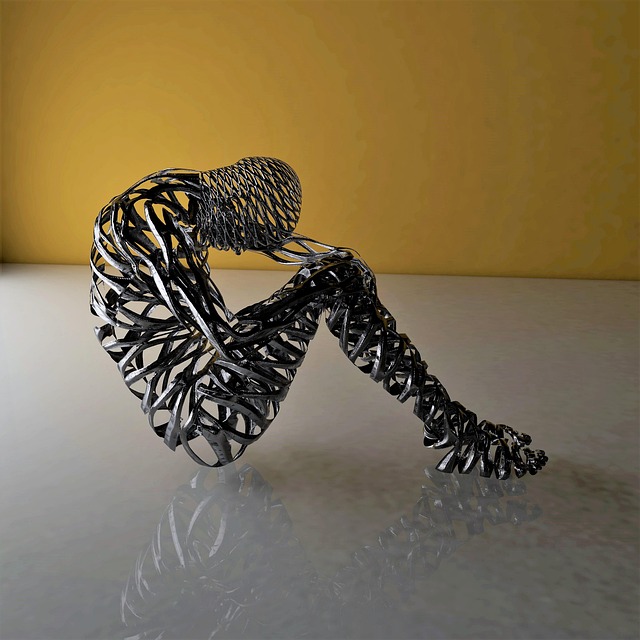
A metal figure sitting on the floor head down
Image by kalhh from Pixabay

Inspired by the Wallace & Gromit film ‘The Wrong Trousers’, Johnathan Rossiter of the University of Bristol builds robotic trousers. We could all need them as we get older.

Think of a robot and you probably think of something metal: something solid and hard. But a new generation of robot researchers are exploring soft robotics: robots made of materials that are squishy. When it comes to wearable robots, being soft is obviously a plus. That is the idea behind Jonathan’s work. He is building trousers to help people stand and walk.

Being unable to get out of an armchair without help can be devastating to a person’s life. There are many conditions like arthritis and multiple sclerosis, never mind just plain old age, that make standing up difficult. It gets to us all eventually and having difficulty moving around makes life hard and can lead to isolation and loneliness. The less you move about, the harder it gets to do, because your muscles get weaker, so it becomes a vicious circle. Soft robotic trousers may be able to break the cycle.

We are used to the idea of walking sticks, frames, wheelchairs and mobility scooters to help people get around. Robotic clothes may be next. Early versions of Jonathan’s trousers include tubes like a string of sausages that when pumped full of air become more solid, shortening as they bulge
out, so straightening the leg. Experiments have shown that inflating trousers fitted with them, can make a robot wearing them stand. The problem is that you need to carry gas canisters around, and put up with the psshhht! sound whenever you stand!

The team have more futuristic (and quieter) ideas though. They are working on designs
based on ‘electroactive polymers’. These are fabrics that change when electricity
is applied. One group that can be made into trousers, a bit like lycra tights, silently shrink with an electric current: exactly what you need for robotic trousers. To make it work you need a computer control system that shrinks and expands them in the right places at the right time to move the leg
wearing them. You also need to be able to store enough energy in a light enough way that the trousers can be used without frequent recharging.

It’s still early days, but one day they hope to build a working system that really can help older people stand. Jonathan promises he will eventually build the right trousers.

– Paul Curzon, Queen Mary University of London (from the archive)

More on …

The rise of the robots [PORTAL]


Related Magazine …

Subscribe to be notified whenever we publish a new post to the CS4FN blog.


This page is funded by EPSRC on research agreement EP/W033615/1.

QMUL CS4FN EPSRC logos

Philippa Gardner bringing law and order to a wild west

Verified Trustworthy Software

Image by Paul Curzon

The computing world is a wild west, with bugs in software the norm, and malicious people and hostile countries making use of them to attack people, companies and other nations. We can do better. Just as in the original wild west, advances have happened faster than law and order can keep up. Rather than catch cyber criminals we need to remove the possibility. In software the complexity of our computers and the programs they run has increased faster than ways have been developed and put in place to ensure they can be trusted. It is important that we can answer precisely questions such as “What does this code do?” and “Does it actually do what is intended?”, but can also assure ourselves of what code definitely does NOT do: it doesn’t include trapdoors for criminals to subvert, for example. Philippa Gardner has dedicated her working life to rectifying this by providing ways to verify software, so mathematically prove such trust-based properties hold of it.

Programs are incredibly complicated. Traditionally, software has been checked using testing. You run it on lots of input scenarios and check it does the right thing in those cases. If it does you assume it works in all the cases you didn’t have time to check. That is not good enough if you want code to really be trustworthy. It is impossible to check all possibilities, so testing alone is just not good enough. The only way to do it properly is to also use engineering methods based on mathematics. This is the case, not just for application programs, but also for the software systems they run within, and that includes programming languages themselves. If you can’t trust the programming language then you can’t trust any programs written in that language. Building on decades of work by both her own team and others, Philippa has helped provide tools and techniques that mean complex industrial software and the programming languages they are written in can now be verified mathematically to be correct. Helping secure the web is one area she is making a massive contribution via the W3C WebAssembly (Wasm) initiative. She is helping ensure that programs of the future that run over the web are trustworthy. 

Programs written in programming languages are compiled (translated) into low level code (ie binary 1s and 0s) that can actually be run on a computer. Each kind of computer has its own binary instructions. Rather than write a compiler for every different machine, compilers often now use common intermediary languages. The idea is you have what is called a virtual machine – an imaginary one that does not really exist in hardware. You compile your code to run on the imaginary machine. A compiler is written for each language to compile it into the common low level language for that virtual machine. Then a separate, much simpler, translator can be written to convert that code into code for a particular real machine. That two step process is much easier than writing compilers for all combinations of languages and machines. It is also a good approach to make programs more trustworthy, as you can separately verify the separate, simpler parts. If programs compile to the virtual machine, then to be sure they cannot do harm (like overwrite areas of memory they shouldn’t be able to write to) you also only have to be sure that programs running on the virtual machine programs cannot , in general, do such harm.

The aim of Wasm is to make this all a reality for web programming, where visiting a web page may run a program you can’t trust. Wasm is a language with linked virtual machine that programming language compilers can be compiled into that itself will be trustworthy even when run over the web. It is based on a published formal specification of how the programming language and the virtual machine should behave.

As Philippa has pointed out, while some companies have good processes for ensuring their software is good enough, these are often kept secret.  But given we all rely on such software we need much better assurances. Processes and tools need to be inspectable by anyone. That has been one of the areas she has focussed on. Working on Wasm is a way she has been doing that. Much of her work over 30 years or so has been around the development and use of logics that can be used to mathematically verify that concurrent programs are correct. Bringing that experience to Wasm has allowed her to work on the formal specification conducting proofs of properties of Wasm that show it is trustworthy in various way, correcting definitions in the specification when problems are found. Her approach is now being adopted as the way to do such checking.

Her work with Wasm continues but she has already made massive steps to helping ensure that the programs we use are safe and can be trusted. As a result, she was recently awarded the BCS Lovelace medal for her efforts.

More on …

Magazines …

Front cover of CS4FN issue 29 - Diversity in Computing

Subscribe to be notified whenever we publish a new post to the CS4FN blog.


This blog and post is funded by EPSRC on research agreement EP/W033615/1.

QMUL CS4FN EPSRC logos

Soft squidgy robots

A smiling octopus
Image by OpenClipart-Vectors from Pixabay

Think of a robot and you probably think of something hard, metal, solid. Bang into one and it would hurt! But researchers are inventing soft robots, ones that are either completely squidgy or have squidgy skins.

Researchers often copy animals for new ideas for robots and lots of animals are soft. Some have no bones in them at all nor even hard shells to keep them safe: think slugs and octopuses. And the first soft robot that was “fully autonomous”, meaning it could move completely on its own, was called Octopod. Shaped like an Octopus, its body was made of silicone gel. It swam through the water by blowing gas into hollow tubes in its arms like a balloon, to straighten them, before letting the gas out again. 

Soft, squidgy animals are very successful in nature. They can squeeze into tiny spaces for safety or to chase prey, for example. Soft squidgy machines may be useful for similar reasons. There are plenty of good reasons for making robots soft, including

  • they are less dangerous around people, 
  • they can squeeze into small spaces,
  • they can be made of material that biodegrades so better for the planet, and
  • they can be better at gently gripping fragile things.

Soft robots might be good around people for example in caring roles. Squeezing into small spaces could be very useful in disaster areas, looking for people who are trapped. Tiny ones might move around inside an ill person’s body to find out what is wrong or help make them better.

Soft robotics is an important current research area with lots of potential. The future of robotics may well be squidgy.

Paul Curzon, Queen Mary University of London

More on …

Magazines …

Front cover of CS4FN issue 29 - Diversity in Computing

Subscribe to be notified whenever we publish a new post to the CS4FN blog.


This page and talk are funded by EPSRC on research agreement EP/W033615/1.
QMUL CS4FN EPSrC logos