Many names stand out as pioneers of electronic music, combining computer science, electronics and music to create new and amazing sounds. Kraftwerk would top many people’s lists of the most influential bands and Jean-Michel Jarre must surely be up there. Giorgio Moroder returned to the limelight with Daft Punk, having previously invented electronic disco in producing Donna Summer’s “I feel love”. Will.i.am, La Roux or Goldfrapp might be on your playlist. One of the most influential creators of electronic music, a legend to those in the know, is barely known by comparison though: Delia Derbyshire.
Delia worked for the BBC radiophonic workshop, the department tasked with producing innovative music to go with the BBC’s innovative programming, and played a major part in its fame. She had originally tried to get a job at Decca records but was told they didn’t employ women in their recording studios (big loss for them!) In creating the sounds and soundscapes behind hundreds of tv and radio programmes, long before electronic music went mainstream, her ideas have influenced just about everyone in the field, whether they have heard of her or not.
The first person to realise that machines would one day be able to not just play music but also be able to compose it, was Victorian programmer, and Countess, Ada Lovelace.
So have you heard her work? Her most famous piece of music you will most definitely know. She created the original electronic version of the Dr Who theme long before pop stars were playing electronic music. Each individual note was created separately, by cutting, splicing, speeding up and slowing down recordings of things like a plucked string and white noise. So why didn’t you know of her? It’s time more people did.
What links James Bond, a classic 1950s radio comedy series and a machine for creating music by drawing? … Electronic music pioneer: Daphne Oram.
Oram was one of the earliest musicians to experiment with electronic music, and was the first woman to create an electronic instrument. She realised that the advent of electronic music meant composers no longer had to worry about whether anyone could actual physically perform the music they composed. If you could write it down in a machine readable way then machines could play it electronically. That idea opened up whole new sounds and forms of music and is an idea that pop stars and music producers still make use of today.
She learnt to play music as a child and was good enough to be offered a place at the Royal College of Music, though turned it down. She also played with radio electronics with her brothers, creating radio gadgets and broadcasting music from one room to another. Combining music with electronics became her passion and she joined the BBC as a sound engineer. This was during World War 2 and her job included being the person ready during a live music broadcast to swap in a recording at just the right point if, for example, there was an air raid that meant the performance had to be abandoned. The show, after all, had to go on.
Composing electronic music
She went on to take this idea of combining an electronic recording with live performance further and composed a novel piece of music called Still Point that fully combined orchestral with electronic music in a completely novel way. The BBC turned down the idea of broadcasting it, however, so it was not played for 70 years until it was rediscovered after her death, ultimately being played at a BBC Prom.
Composers no longer had to worry about whether anyone could actually physically perform the music they composed
She started instead to compose electronic music and sounds for radio shows for the BBC which is where the comedy series link came in. She created sound effects for a sketch for the Goon Show (the show which made the names of comics including Spike Milligan and Peter Sellers). She constantly played with new techniques. Years later it became standard for pop musicians to mess with tapes of music to get interesting effects, speeding them up and down, rerecording fragments, creating loops, running tapes backwards, and so on. These kinds of effects were part of amazing sounds of the Beatles, for example. Oram was one of the first to experiment with these kinds of effects and use them in her compositions – long before pop star producers.
One of the most influential things she did was set up the BBC Radiophonic Workshop which went on to revolutionise the way sound effects and scores for films and shows were created. Oram though left the BBC shortly after it was founded, leaving the way open for other BBC pioneers like Delia Derbyshire. Oram felt she wasn’t getting credit for her work, and couldn’t push forward with some of her ideas. Instead Oram set herself up as an independent composer, creating effects for films and theatre. One of her contracts involved creating electronic music that was used on the soundtracks of the early Bond films starring Sean Connery – so Shirley Bassey is not the only woman to contribute to the Bond sound!
The Music Machine
While her film work brought in the money, she continued with her real passion which was to create a completely new and highly versatile way to create music…by drawing. She built a machine – the Oramics Machine – that read a composition drawn onto film reels. It fulfilled her idea of having a machine that could play anything she could compose (and fulfilled a thought she had as a child when she wondered how you could play the notes that fell between the keys on a piano!).
The 35mm film that was the basis of her system that dates all the way back to the 19th century when George Eastman, Thomas Edison and Kennedy Dixon pioneered the invention film based photography and then movies. It involved a light sensitive layer being painted on strips of film with holes down the side that allowed the film to be advanced. This gave Oram a recording media. She could etch or paint subtle shapes and patterns on to the film. In a movie light was shone through the film, projecting the pictures on the film on to the screen. Oram instead used light sensors to detect the patterns on the film and convert it to electronic signals. Electronic circuitry she designed (and was awarded patents for) controlled cathode ray tubes that showed the original drawn patterns but now as electrical signals. Ultimately these electrical signals drove speakers. Key to the flexibility of the system was that different aspects of the music were controlled by patterns on different films. One for example controlled the frequency of the sound, others the timbre or tone quality and others the volume. These different control signals for the music were then combined by Oram’s circuitry. The result of combining the fine control of the drawings with the multiple tapes meant she had created a music machine far more flexible in the sound it could produce than any traditional instrument or orchestra. Modern music production facilities use very similar approaches today though based on software systems rather than the 1960s technology available to Oram.
Ultimately, Daphne Oram was ahead of her time as a result of combining her two childhood fascinations of music and electronics in a way that had not been done before. She may not be as famous as the great record producers who followed her, but they owe a lot to her ideas and innovation.
Computer-based musical instruments are so flexible and becoming more popular. They have had one disadvantage though. The sound could drag behind the musician in a way that made some digital instruments seem unplayable. Thanks to a new computer called Bela, that problem may now be a thing of the past.
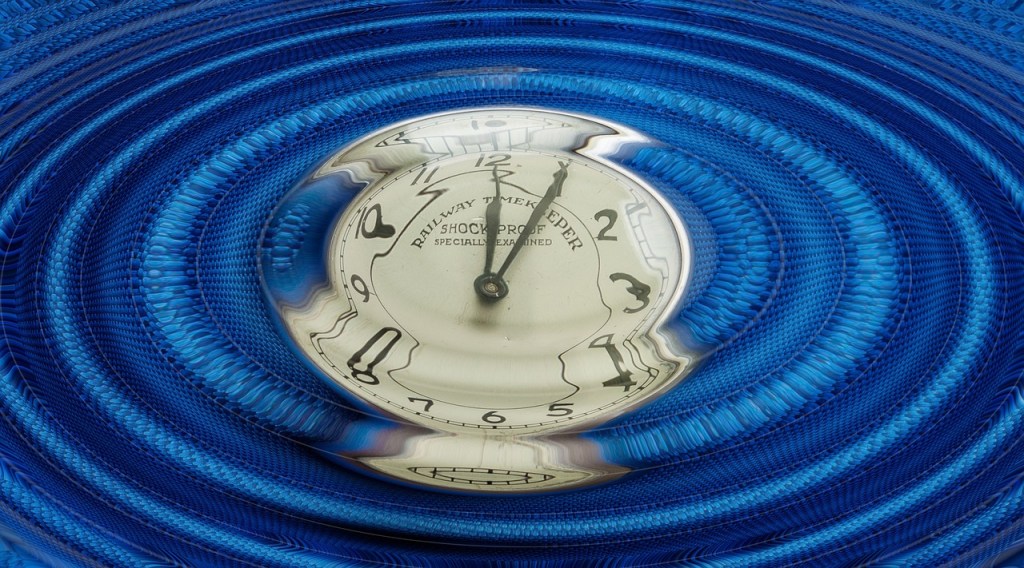
If you pluck a guitar string or thwack a drum the sound you hear is instantaneous. Well, nearly. There’s a tiny delay. The sound still has to leave the instrument and travel to your ear. The vibration of the string or drum skin pushes the air back and forth, and vibrating air is all a sound is. Your ear receives the sound as soon as that vibrating air gets to you. Then your brain has to recognise it as a sound (and tell you what kind of sound it is, which direction it came from, which instrument produced it and so on!). The time it takes for sound and then your brain to do all that is measured in tens of milliseconds – thousandths of a second. It is called ‘latency‘, not because the delay makes it ‘late’ (though it does!), but from the Latin word latens which means hidden or concealed, because the time between the signal being created and being received, it is hidden from us.
Digital instruments take slightly longer than physical instruments, however, because electronic circuitry and computer processing is involved. It’s not just the sound going through air to ear but a digital signal whizzing through a circuit, or being processed by a computer, first to generate the sound which then goes through air to ear.
Your ear (actually your brain) will detect two sounds as being separate if there’s a gap of around 30 milliseconds between them. Drop that gap down to around 10 milliseconds between the sounds and you’ll hear them as a single sound. If that circuit-whizzing adds 10-20 milliseconds then you’re going to notice that the instrument is lagging behind you, making it feel unplayable. Reducing a digital instrument’s latency is therefore a very important part of improving the experience for the musician.
In 2014 Andrew McPherson and colleagues at Queen Mary University of London aimed to solve this problem. They developed Bela, a tiny computer, similar in size to a Raspberry Pi or Arduino, that can be used in a variety of digital instruments but which is special because it has an ultra-low latency of only around 2 milliseconds – super fast.
How does it do it? A computer can seem to run slowly if it is trying to do lots of things at the same time (e.g. lots of apps running or too many windows open at once). That is when the experience for the user can be a bit glitchy. Bela works by prioritising the audio signal above ALL other activities to ensure that, no matter what else the computer is doing, the gap between input (pressing a key) and output (hearing a sound) is barely noticeable. The small size of Bela also makes it completely portable and so easy to use in musical performances without needing the performer to be tethered to a large computer.
There is definitely a demand for such a computer amongst musicians. Andrew and the team wanted to make Bela available, so began fundraising through Kickstarter to create more kits. Their fundraiser reached £5,000 within four hours and within a month they’d raised £54,000, so production could begin and they launched a company, Augmented Instruments Ltd, to sell the Bela hardware kits.
Bela allows musicians to stop worrying about the sounds getting left behind. Instead, they can just get on with playing and creating amazing sounds.
Jo Brodie and Paul Curzon, Queen Mary University of London






 cs4fn
cs4fn 