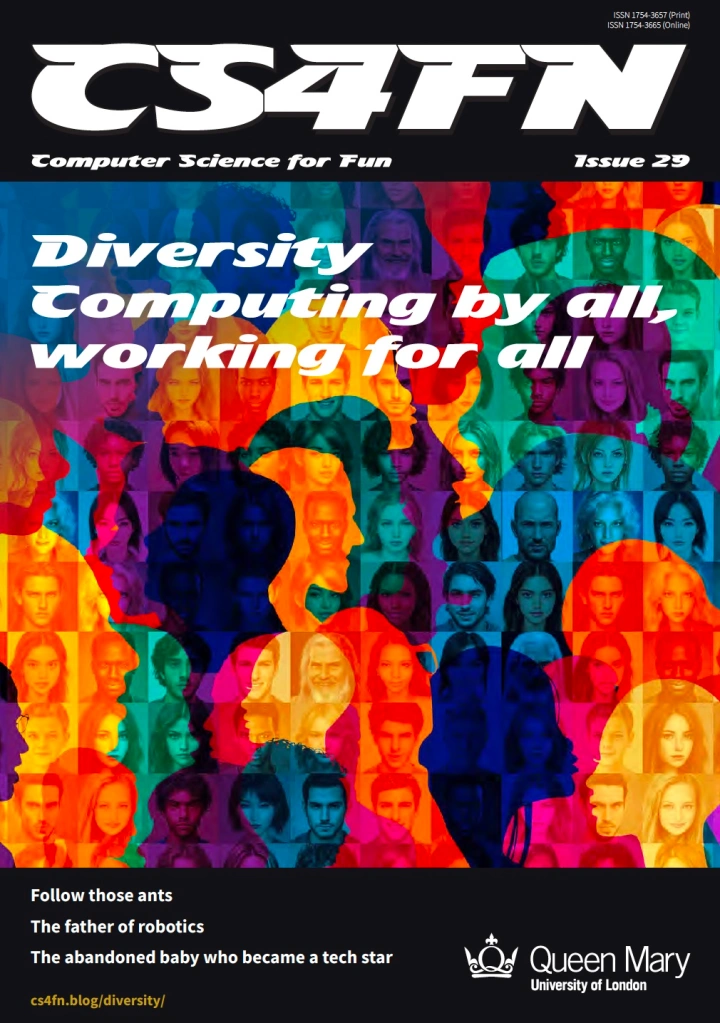
Click on the magazine cover to get a pdf copy of the magazine.
Computer Science by all, for all
The unfortunate, misleading, but self-reinforcing, stereotype that computer science is only for white men is finally being beaten. In fact, from the 1940s when the first computers were built, people from all backgrounds whether male, female, black, white, deaf or blind, gay, straight, and of whatever religion, have been involved, including making key leaps forward. Computing is something anyone can excel at if they put their mind to it and work hard to develop the skills. It is naturally a subject where people from many different disciplines meet and work together, and as we see to get computing right it is important for those of all backgrounds to be involved. The way the world works does make it harder for many to get the breaks that let their abilities shine, but there are people working on that too, providing support for those who need the help. Here we give you a taste of the diversity that has always been there.
Our Full Diversity Pages
Visit our portals on different, diverse groups of computer scientists and the contributions they have made…. (read on)
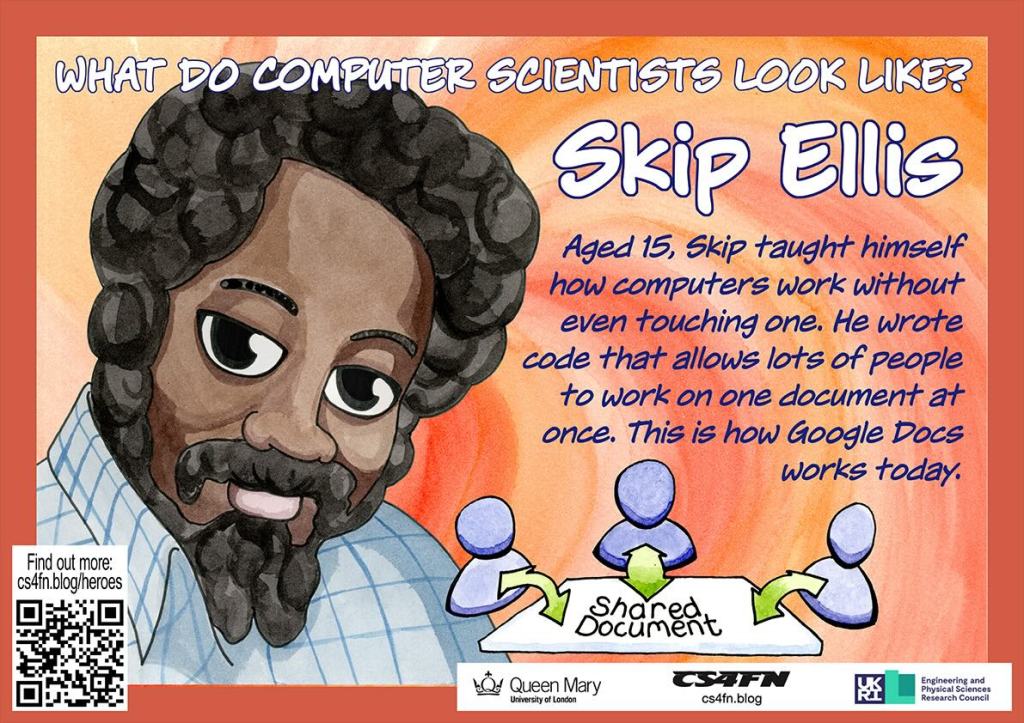
Clarence Ellis: Writing Together
Back in 1956, Clarence Ellis was given a job, at the age of 15, as a “computer operator” … because he was the only applicant. He was also told that under no circumstances should he touch the computer! He went on to pioneer ways for people to use computers together effectively….. (read on)
In space no one can hear you …
Johanna Lucht could do maths before she learned language. Why? Because she was born deaf and there was little support for deaf people where she lived. Despite, or perhaps because of, that she became a computer scientist and works for NASA. (read on)
A PC Success
We have moved on to smartphones, tablets and smartwatches, but for 30 years the desktop computer ruled, and originally not just any desktop computer, the IBM PC. A key person behind its success, particularly for the computer bus, was African American computer scientist, Mark Dean. (read on)
Al-Jazari: the father of robotics
Science fiction films are full of humanoid robots acting as servants, workers, friends or colleagues. The first were created during the Islamic Golden Age, a thousand years ago… (read on)
Protecting your fridge
Ever been spammed by your fridge? It has happened, but Queen Mary’s Gokop Goteng and Hadeel Alrubayyi aim to make it less likely… (read on)
Facing up to ALL faces
How face recognition technology caused the wrong Black man to be arrested… (read on)
The gender shades audit
Face recognition is used widely. But is it as good as claimed? Joy Buolamwini and Timnit Gebru tested 3 commercial systems. They were much more likely to wrongly classify darker skinned female faces… (read on)
Freddie Figgers: the abandoned baby
As a baby, born in the US in 1989, Freddie Figgers was abandoned by his biological parents but he was brought up with love and kindness by two much older adoptive parents who kindled his early enthusiasm for fixing things and inspired his work in smart health. He now runs the first Black-owned telecommunications company in the US.… (read on)
Reclaim your name
In 2021 the Canadian government announced that Indigenous people could use their ancestral family names on identity documents. Because of computers, it wasn’t quite as easy as that though … (read on)
Black in Data
Careers do not have to be decided from day 1. You can end up in a good place in a roundabout way. That happened to Data Analyst, Sadiqah Musa. Now she’s helping make Big Data career paths easier for others to follow..… (read on)
The first computer wizard
Christopher Strachey did a series of firsts in computer programming, and that was just when he was playing… (read on)
Collecting mini-beasts and pocket monsters
Satoshi Tajiri created one of the biggest money-making media franchises of all time. It all started with his love of nature and, in particular, mini-beasts. It also eventually took gamers back into the fresh air. (read on)
Follow those ants
Ant colonies are great at adapting to changing situations: far better than us. Sameena Shah wondered if AI agents might learn intelligent behaviour better from ants rather than from us. She suggests we could learn from the ants too… (read on)
Sameena Shah’s TED talk
Ants adapt easily; they explore and find new food sources when previously successful paths stop being beneficial. In her award winning research, Sameena Shah, an Artificial Intelligence scientist, taught ant behaviors to AI agents enabling them to adapt when better options became available. Yet, we humans still struggle with adaptation, and may remain stuck on previously successful paths, even when better paths are available. In this engaging and inspiring talk, Sameena presents nature’s design to facilitate reaching our purpose in a changing world, and how we can apply the same ideas in our individual and societal journeys….. (watch)
Diversity Day by Day
We are gradually linking our diversity stories to the calendar to give links day by day to relevant stories and people of all backgrounds. It is also helping us find new stories. (To see what we have filled in so far…Read on).
More to come …
This blog is funded by EPSRC on grant EP/W033615/1.








 cs4fn
cs4fn 