
Even the dolphins use pocket switched networks!

(from the archive)

Dolphin leaping in waves off Panama City
Image by Heather Williams from Pixabay

Email, texting, Instant Messaging, Instant response…one of the things about modern telecoms is that they fuel our desire to “talk” to people anytime, anywhere, instantly. The old kind of mail is dismissed as “snail mail”. A slow network is a frustrating network. So why would anyone be remotely interested in doing research into slow networks? Surprisingly, slow networks deserve study. Professor Jon Crowcroft of the University of Cambridge and his team were early researchers of this area, and this kind of network could be the network of the future. The idea is already being used by the dolphins (not so surprising I suppose given according to Douglas Adams’ “The HitchHiker’s Guide to the Galaxy” they are the second most intelligent species on Earth…after the mice).

From node to node

Traditional networks rely on having lots of fixed network “nodes” with lots of fast links between them. These network nodes are just the computers that pass on the messages from one to the other until the messages reach their destinations. If one computer in the network fails, it doesn’t matter too much because there are enough connections for the messages to be sent a different way.

There are some situations where it is impractical to set up a network like this though: in outer space for example. The distances are so far that messages will take a long time – even light can only go so fast! Places like the Arctic Circle are another problem: vast areas with few people. Similarly, it’s a problem under the sea. Signals don’t carry very well through water so messages, if they arrive at all, can be muddled. After major disasters like Hurricane Katrina or a Tsunami there are also likely to be problems.

It is because of situations like these that computer scientists started thinking about “DNTs”. The acronym can mean several similar things: Delay Tolerant Networks (like in space the network needs to cope with everything being slow), Disruption Tolerant Networks (like in the deep sea where the links may come and go) or Disaster tolerant networks (like a Tsunami where lots of the network goes down at once). To design networks that work well in these situations you need to think in a different way. When you also take into account that computers have gone mobile – they no longer just sit on desks but are in our pockets or handbags, this leads to the idea of a “ferrying network” or as Jon Crowcroft calls them: “Pocket Switched Network”. The idea is to use the moving pocket computers to make up a completely new kind of network, where some of the time messages move around because the computers carrying them are moving themselves, not because the message itself is moving. As they move around they pass near other computers and can exchange messages, carrying a message on for someone else until it is near another computer it can jump to.

From Skidoo to you

A skiddo with driver standing next to it
Image by raul olave from Pixabay

How might such networks be useful in reality? Well one was set up for the reindeer farmers in the Arctic Circle. They roam vast icy wastelands on skidoos, following their reindeer. They are very isolated. There are no cell phone masts or internet nodes and for long periods they do not meet other people at all. The area is also too large to set up a traditional network cheaply. How could they communicate with others?

They set up a form of pocket switched network. Each carried a laptop on their skidoo. A series of computers were also set up sitting in tarns spread around the icy landscape. When the reindeer farmers using the network want a service, like delivering a message, the laptop stores the request until they pass within range of one of the other computers perhaps on someone else’s skidoo. The computer then automatically passes the message on. The new laptop takes the message with it and might later pass a tarn, where the message hops again then waits till someone else passes by heading in the right direction. Eventually it makes a hop to a computer that passes within range of a network point connected to the Internet. It may take a while but the mail eventually gets through – and much faster than waiting for the farmer to be back in net contact directly.

Chatting with Dolphins

Even the dolphins got in on the act. US scientists wanted to monitor coastal water quality. They hit on the idea of strapping sensors onto dolphins that measure the quality wherever they go. Only problem is dolphins spend a lot of time in deep ocean where the results can’t easily be sent back. The solution? Give them a normal (well dolphin adapted) cell phone. Their phone stores the results until it is in range of their service provider off the coast. By putting a receiver in the bays the dolphins return to most frequently, they can call home to pass on the data whenever there.

The researchers encountered an unexpected problem though. The dolphin’s memory cards kept inexplicably filling up. Eventually they realised this was because the dolphins kept taking trips across the Atlantic where they came in range of the European cell networks. The European telecom companies, being a friendly bunch, sent lots of text messages welcoming these newly appeared phones to their network. The memory cards were being clogged up with “Hellos”!

The Cambridge team investigated how similar networks might best be set up and used for people on the move, even in busy urban environments. To this end they designed a pocket switched network called Haggle. Using networks like Haggle, it is possible to have peer-to-peer style networks that side-step the commercial networks. If enough people join in then messages can just hop from phone to phone, using bluetooth links say, as they passed near each other. They might eventually get to the destination without using any long distance carriers at all.

The more the merrier

With a normal network, as more people join the network it clogs up as they all try to use the same links to send messages at the same time. Some fundamental theoretical results have shown that with a pocket switched network, the capacity of the network can actually go up as more people join – because of the way the movement of the people constantly make new links.

Pocket switched networks are a bit like gases – the nodes of the network are like gas molecules constantly moving around. A traditional network is like a solid – all the molecules, and so nodes, are stationary. As more people join a gaseous network it becomes more like a liquid, with nodes still moving but bumping into other nodes more often. The Cambridge team explored the benefits of networks that can automatically adapt in this way to fit the circumstances: making phase transitions just like water boiling or freezing.

One of the important things to understand to design such a network is how people pass others during a typical day. Are all people the same when it comes to how many people they meet in a day? Or are there some people that are much more valuable as carriers of messages. If so those are the people the messages need to get to to get to the destination the fastest!

To get some hard data Jon and his students handed out phones. In one study a student handed out adapted phones at random on a Hong Kong street, asking that they be returned a fixed time later. The phones recorded how often they “met” each other before being returned. In another similar experiment the phones were given out to a large number of Cambridge students to track their interactions. This and other research shows that to make a pocket switched network work well, there are some special people you need to get the messages to! Some people meet the same people over and over, and very few others. They are “cliquey” people. Other more “special” people regularly cross between cliques – the ideal people to take messages across groups. Social Anthropology results suggest there are also some unusual people who rather than just networking with a few people, have thousands of contacts. Again those people would become important message carriers.

So the dolphins may have been the “early adopters” of pocket switched networks but humans may follow. If we were to fully adopt them it could completely change the way the telecom industry works…and if we (or the dolphins) ever do decide to head en-mass for the far reaches of the solar system, pocket switched networks like Haggle will really come into their own.

– Paul Curzon, QMUL, based on a talk given by Jon Crowcroft at Queen Mary in Jan 2007.

More on …


Subscribe to be notified whenever we publish a new post to the CS4FN blog.


This blog is funded through EPSRC grant EP/W033615/1.

Virtual reality goggles for mice

by Paul Curzon, Queen Mary University of London

Conjure up a stereotypical image of a scientist and they likely will have a white coat. If not brandishing test tubes, you might imagine them working with mice scurrying around a maze. In future the scientists may well be doing a lot of programming, and the mice for their part will be scurrying around in their own virtual world wearing Virtual Reality goggles.

Scientists have long used mazes as away to test the intelligence of mice, to the point it has entered popular culture as a stereotypical thing that scientists in white lab coats do. Mazes do give ways to test intelligence of animals, including exploring their memory and decision making ability in controlled experiments. That can ultimately help us better understand how our brains work too, and give us a better understanding of intelligence. The more we understand animal cognition as well as human cognition, the more computer scientists can use that improved understanding to create more intelligent machines. It can also help neurobiologists find ways to improve our intelligence too.

Flowers for Algernon is a brilliant short story and later novel based on the idea, there using experiments on mice and humans to test surgery intended to improve intelligence. In a slightly different take on mice-maze experiments, Douglas Adams, in ‘The Hitchhikers Guide to the Galaxy’, famously claimed that the mice were actually pan-dimensional beings and these experiments were really incredibly subtle experiments the mice were performing on humans. Whatever the truth of who is experimenting on who, the experiments just took a great leap forward because scientists at Northwestern University have created Virtual Reality goggles for their mice.

For a long time researchers at Northwestern have used a virtual reality version of maze experiments, with mice running on treadmills with screens around them projecting what the researchers want them to see, whether mazes, predators or prey. This has the advantage of being much easier to control than using physical mazes, and as the mice are actually stationary the whole time , just running on a treadmill, brain-scanning technology can be used to see what is actually happening in their brains while facing these virtual trials. The problem though is that the mice, with their 180 degree vision, can still see beyond the edges of the screens. The screens also give no sense of 3 dimensions, when like us the mice naturally see in 3D. As the screens are not fully immersive, they are not fully natural and that could affect the behaviour of the mice and so invalidate the experimental results.

That is why the Northwestern researchers invented the mousey VR googles, the idea being that they would give a way to totally immerse the mice in their online world, and so improve the reliability of the experiments. In the current version the goggles are not actually worn by the mice, as they are still too heavy. Instead, the mouse’s head is held in place really close to them, but with the same effect of total immersion. Future versions may be small enough for the mice to wear them though.

The scientists have already found that the mice react more quickly to events, like the sight of a predator, than in the old set-up, suggesting that being able to see they were in a lab was affecting their behaviour. Better still, there are new kinds of experiment that can be done with this set up. In particular, the researchers have run experiments where an aerial predator like an owl appears from above the mice in a natural way. Mounting screens above them previously wasn’t possible as it got in the way of the brain scanning equipment. What does happen when a virtual owl appears? The mice either run faster or freeze, just as in the wild. This means that by scanning their brains while this is happening, how their perception of the threat works can be investigated, as well as how decision-making is taking place at the level of their brain activity. The scientists also intend to run similar experiments where the mouse is the predator, for example chasing a virtual fly too. Again this would not have been possible previously.

That in any case is what we think the purpose of these new experiments is. What new and infinitely subtle experiments it is allowing the pan-dimensional mice to perform on us remains to be seen.

More on …

Magazines …


EPSRC supports this blog through research grant EP/W033615/1. 

CS4FN Advent 2023 – Day 2: Pairs: mittens, gloves, pair programming, magic tricks

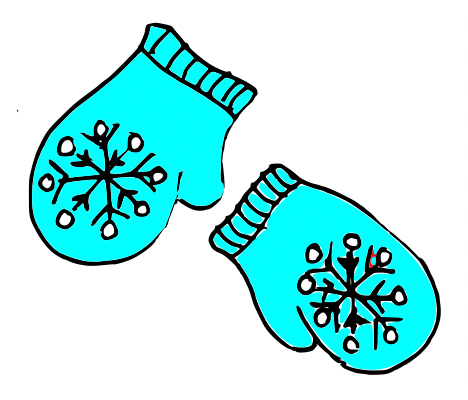
Welcome to the second ‘window’ of the CS4FN Christmas Computing Advent Calendar. The picture on the ‘box’ was a pair of mittens, so today’s focus is on pairs, and a little bit on gloves. Sadly no pear trees though.

A pair of cyan blue Christmas mittens with a black and white snowflake pattern on each. Image drawn and digitised by Jo Brodie.

1. i-pickpocket

In this article, by a pair (ho ho) of computer scientists (Jane Waite and Paul Curzon), you can find out how paired devices can be used to steal money from people, picking pockets at a distance.

A web card for the i-pickpocket article on the CS4FN website.
Click to read the article

2. Gestural gloves

Working with scientists musician Imogen Heap developed Mi.Mu gloves, a wearable musical instrument in glove form which lets the wearer map hand movements (gestures) to a particular musical effect (pairing a gesture to an action). The gloves contain sensors which can measure the speed and position of the hands and can send this information wirelessly to a controlling computer which can then trigger the sound effect that the musician previously mapped to that hand movement.

You can watch Imogen talk about and demo the gloves here and in the video below, which also looks at the ways in which the gloves might help disabled people to make music.

Further reading

The glove that controls your cords… (a CS4FN article by Jane Waite)

3. Pair programming

‘Pair programming’ involves having two people working together on one computer to write and edit code. One person is the ‘Driver’ who writes the code and explains what it’s going to do, the other person is the ‘Navigator’ who observes and makes suggestions and corrections. This is a way to bring two different perspectives on the same code, which is being edited, reviewed and debugged in real-time. Importantly, the two people in the mini-team switch roles regularly. Pair programming is widely used in industry and increasingly being used in the classroom – it can really help people who are learning about computers and how to program to talk through what they’re doing with someone else (you may have done this yourself in class). However, some people prefer to work by themselves and pair programming takes up two people’s time instead of one, but it can also produce better code with fewer bugs. It does need good communication between the two people working on the task though (and good communication is a very important skill in computer science!).

Here’s a short video from Code.org which shows how it’s done.

4. Digital Twins

A digital twin is a computer-based model that represents a real, physical thing (such as a jet engine or car component) and which behaves as closely as possible to the real thing. Taking information from the real-world version and applying it to the digital twin lets engineers and designers test things virtually, to see how the physical object would behave under different circumstances and to help spot (and fix) problems.

5. A magic trick: two cards make a pair

You will need

  • some playing cards
  • your hands (no mittens)
  • another pair of mitten-free hands to do the trick on

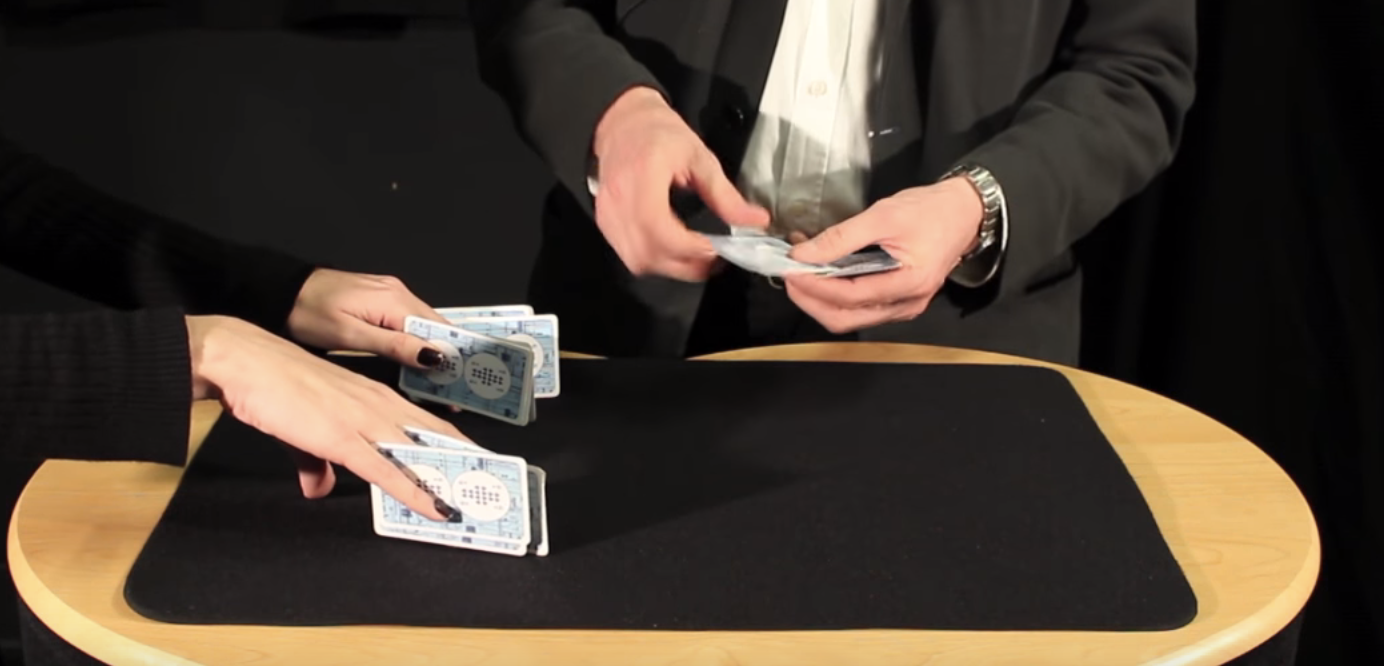
Find a pack of cards and take out 15 (doesn’t matter which ones, pick a card, any card, but 15 of them). Ask someone to put their hands on a table but with their fingers spread as if they’re playing a piano. You are going to do a magic trick that involves slotting pairs of cards between their fingers (10 fingers gives 8 spaces). As you do this you’ll ask them to say with you “two cards make a pair”. Take the first pair and slot them between the first space on their left hand (between their little finger and their ring finger) and both of you say “two cards make a pair”.

The magician puts pairs of cards between the assistant’s fingers. Image credit CS4FN / Teaching London Computing (from the Invisible Palming video linked below)

Repeat with another pair of cards between ring finger and middle finger (“two cards make a pair”) and twice again between middle and index, and between index and thumb – saying “two cards make a pair” each time you do. You’ve now got 8 cards in 4 pairs in their left hand.

Repeat the same process on their right hand saying “two cards make a pair” each time (but you only have 7 cards left so can only make 3 pairs). There’s one card left over which can go between their index finger and thumb.

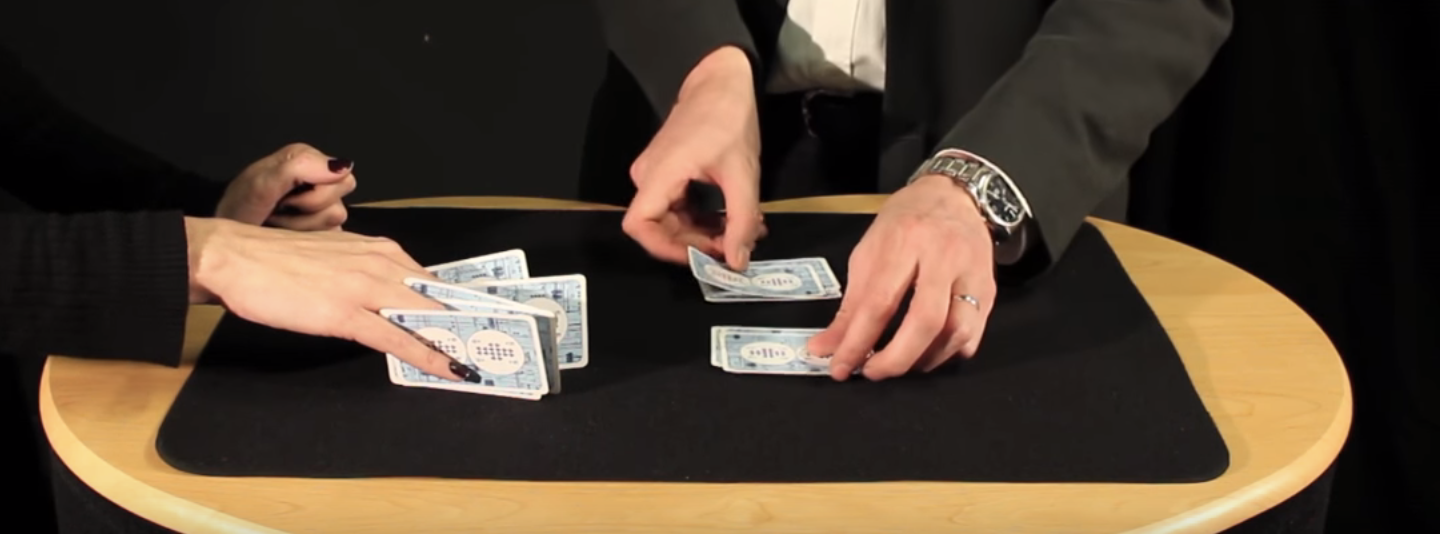
The magician removes the cards and puts them into two piles. Image credit CS4FN / Teaching London Computing (from the Invisible Palming video linked below)

Then you’ll take back each pair of cards and lay them on the table, separating them into two different piles – each time saying “two cards make a pair”. Again you’ll have one left over. Ask the person to choose which pile it goes on. You, the magician, are going to magically move the card from the pile they’ve chosen to the other pile, but you’re going to do it invisibly by hiding the card in your palm (‘palming’). To find out how to do the trick, and how this can be used to think about the ways in which “self-working” magic tricks are like algorithms have a look at the full instructions and video below.

6. Something to print and colour in

Did you work out yesterday’s colour-in puzzle from Elaine Huen? Here’s the answer.

Christmas colour-in puzzle

Today’s puzzle is in keeping with the post’s twins and pairs theme. It’s a symmetrical pixel puzzle so we’ve given you one half and you can use mirror symmetry to fill in the remaining side. This is an example of data compression – you only need half of the numbers to be able to complete all of it. Some squares have a number that tells you the colour to colour in that square. Look up the colours in the key. Other squares have no number. Work out what colour they are by symmetry.

So, for example the colour look up key tells you that 1 is Red and 2 is Orange, so if a row said 11111222 that means colour each of the five ‘1’ pixels in red and each of the three ‘2’ pixels orange. There are another 8 blank pixels to fill in at the end of the row and these need to mirror the first part of the row (22211111), so you’d need to colour the first three in orange and the remaining five in red. Click here to download the puzzle as a printable PDF. Solution tomorrow…


The creation of this post was funded by UKRI, through grant EP/K040251/2 held by Professor Ursula Martin, and forms part of a broader project on the development and impact of computing.


Advert for our Advent calendar
Click the tree to visit our CS4FN Christmas Computing Advent Calendar

EPSRC supports this blog through research grant EP/W033615/1.

Competitive Zen

A hooded woman's intense concentration focussing on the eyes
Image by Walkerssk from Pixabay

To become a Jedi Knight you must have complete control of your thoughts. As you feel the force you start to control your surroundings and make objects move just by thinking. Telekinesis is clearly impossible, but could technology give us the same ability? The study of brain-computer interfaces is an active area of research. How can you make a computer sense and react to a person’s brain activity in a useful way?

Imagine the game of Mindball. Two competitors face each other across a coffee table. A ball sits at the centre. The challenge is to push the ball to your opponent’s end before they push it down to you. The twist is you can use the power of thought alone.

Sound like science fiction? It’s not! I played it at the Dundee Sensation Science Centre many, many years ago where it was a practical and fun demonstration of the then nascent area of brain-computer interfaces.

Each player wears a headband containing electrodes that pick up your brain waves – specifically alpha and theta waves. They are shown as lines on a monitor for all to see. The more relaxed you are, the more you can shut down your brain, the more your brain wave lines fall to the bottom of the screen and start to flatline together. This signals are linked to a computer that drives competing magnets in the table. They pull the metal ball more strongly towards the most agitated person. The more you relax the more the ball moves away from you…unless of course your opponent can out relax you.

Of course it’s not so easy to play. All around the crowd heckle, cheering on their favourite and trying to put off the opponent. You have to ignore it all. You have to think of nothing. Nothing but calm.

The ball gradually edges away from you. You see you are about to win but your excitement registers, and that makes it all go wrong! The ball hurtles back towards you. Relax again. See nothing. Make everything go black around you. Control your thoughts. Stay relaxed. Millimetre by millimetre the ball edges away again until finally it crosses the line and you have won.

Its not just a game of course. There are some serious uses. It is about learning to control your brain – something that helps people trying to overcome stress, addiction and more. Similar technology can also be used by people who are paralysed, and unable to speak, to control a computer. The most recent systems, combining this technology with machine learning to learn what thoughts correspond to different brain patterns can pick up words people are thinking.

For now though it’s about play. It’s a lot of fun, just moving a ball apparently by telekinesis. Imagine what mind games will be like when embedded in more complex gaming experiences!

– Paul Curzon, Queen Mary University of London (updated from the archive)

More on …

Magazines …


Subscribe to be notified whenever we publish a new post to the CS4FN blog.


This blog is funded by EPSRC on research agreement EP/W033615/1.

QMUL CS4FN EPSRC logos

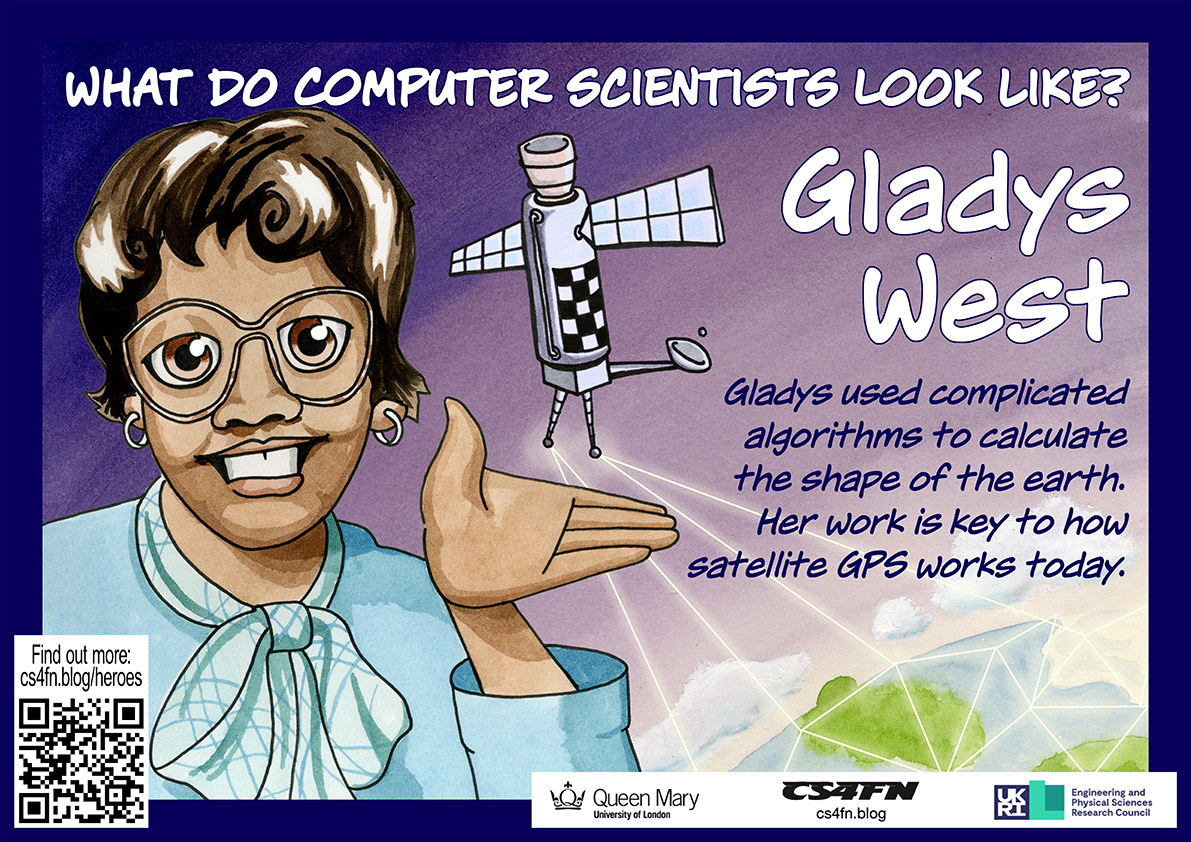
Gladys West: Where’s my satellite? Where’s my child?

Satellites are critical to much modern technology, and especially GPS. It allows our smartphones, laptops and cars to work out their exact position on the surface of the earth. This is central to all mobile technology, wearable or not, that relies on knowing where you are, from plotting a route your nearest Indian restaurant to telling you where a person you might want to meet is. Many, many people were involved in creating GPS, but it was only in Black History Month of 2017 when the critical part Gladys West played became widely known.

Work hard, go far

As a child Gladys worked with her family in the fields of their farm in rural Virginia. That wasn’t the life she wanted, so she worked hard through school, leaving as the top student. She won a scholarship to university, and then landed a job as a mathematician at a US navy base.

There she solved the maths problems behind the positioning of satellites. She worked closely with the programmers to write the code to do calculations based on her maths. Nine times out of ten the results that came back weren’t exactly right so much of her time was spent working out what was going wrong with the programs, as it was vital the results were very accurate.

Seasat and Geosat

Her work on the Seasat satellite won her a commendation. It was a revolutionary satellite designed to remotely monitor the oceans. It collected data about things like temperature, wind speed and wind direction at the sea’s surface, the heights of waves, as well as sensing data about sea ice. This kind of remote sensing has since had a massive impact on our understanding of climate change. Gladys specifically worked on the satellite’s altimeter. It was a radar-based sensor that allowed Seasat to measure its precise distance from the surface of the ocean below. She continued this work on later remote sensing satellites too, including Geosat, a later earth observation satellite.

Gladys West and Sam Smith look over data from the Global Positioning System,
which Gladys helped develop. Image: U.S. Navy, Public domain, via Wikimedia Commons US Navy, 1985,

GPS

Knowing the positions of satellites is the foundation for GPS. The way GPS works is that our mobile receivers pick up a timed signal from several different satellites. Calculating where we are can only be done if you first know very precisely where those satellites were when they sent the signal. That is what Gladys’ work provided.

GPS Watches

You can now buy, for example, buy GPS watches, allowing you to wear a watch that watches where you are. They can also be used by people with dementia, who have bad memory problems, allowing their carers to find them if they go out on their own but are then confused about where they are. They also allow parents to know where their kids are all the time. Do you think that’s a good use?

Since so much technology now relies on knowing exactly where we are, Gladys’ work has had a massive impact on all our lives.

Paul Curzon, Queen Mary University of London

Poster

Poster of Gladys West
Poster by Richard Butterworth

More on …

This article is also republished during Black History Month and is part of our


Subscribe to be notified whenever we publish a new post to the CS4FN blog.


This blog is funded by EPSRC on research agreement EP/W033615/1.

QMUL CS4FN EPSRC logos

Microwave health check

Using wearable tech to monitor elite athletes’ health

Microwaves aren’t just useful for cooking your dinner. Passing through your ears they might help check your health in future, especially if you are an elite athlete. Bioengineer Tina Chowdhury tells us about her multidisciplinary team’s work with the National Physics Laboratory (NPL).  

Lots of wearable gadgets work out things about us by sensing our bodies. They can tell who you are just by tapping into your biometric data, like fingerprints, features of your face or the patterns in your eyes. They can even do some of this remotely without you even knowing you’ve been identified. Smart watches and fitness trackers tell you how fast you are running, how fit you are and whether you are healthy, how many calories you have burned and how well you are sleeping or not sleeping. They also work out things about your heart, like how well it beats. This is done using optical sensor technology, shining light at your skin and measuring how much is scattered by the blood flowing through it.  

Microwave Sensors

With PhD student, Wesleigh Dawsmith, and electronic engineer, microwave and antennae specialist, Rob Donnan, we are working on a different kind of sensor to check the health of elite athletes. Instead of using visible light we use invisible microwaves, the kind of radiation that gives microwave ovens their name. The microwave-based wearables have the potential to provide real-time information about how our bodies are coping when under stress, such as when we are exercising, similar to health checks without having to go to hospital. The technology measures how much of the microwaves are absorbed through the ear lobe using a microwave antenna and wireless circuitry. How much of the microwaves are absorbed is linked to being dehydrated when we sweat and overheat during exercise. We can also use the microwave sensor to track important biomarkers like glucose, sodium, chloride and lactate which can be a sign of dehydration and give warnings of illnesses like diabetes. The sensor sounds an alarm telling the person that they need medication, or are getting dehydrated, so need to drink some water. How much of the microwaves are absorbed is linked to being dehydrated

Making it work

We are working with with Richard Dudley at the NPL to turn these ideas into a wearable, microwave-based dehydration tracker. The company has spent eight years working on HydraSenseNPL a device that clips onto the ear lobe, measuring microwaves with a flexible antenna earphone.

A big question is whether the ear device will become practical to actually wear while doing exercise, for example keeping a good enough contact with the skin. Another is whether it can be made fashionable, perhaps being worn as jewellery. Another issue is that the system is designed for athletes, but most people are not professional athletes doing strenuous exercise. Will the technology work for people just living their normal day-to-day life too? In that everyday situation, sensing microwave dynamics in the ear lobe may not turn out to be as good as an all-in-one solution that tracks your biometrics for the entire day. The long term aim is to develop health wearables that bring together lots of different smart sensors, all packaged into a small space like a watch, that can help people in all situations, sending them real-time alerts about their health.

Tina Chowdhury, Institute of Bioengineering, School of Engineering and Materials Science, Queen Mary University of London

More on …


Subscribe to be notified whenever we publish a new post to the CS4FN blog.


This blog is funded by EPSRC on research agreement EP/W033615/1.

QMUL CS4FN EPSRC logos

Dressing it up

Why it might be good for robots to wear clothes

Even though most robots still walk around naked, the Swedish Institute of Computer Science (SICS) in Stockholm explored how to produce fashion conscious robots.

The applied computer scientists there were looking for ways to make the robots of today easier for us to get along with. As part of the LIREC project to build the first robot friends for humans they examined how our views of simple robots change when we can clothe and customise them. Does this make the robots more believable? Do people want to interact more with a fashionable robot?

How do you want it?

These days most electronic gadgets allow the human user to customise them. For example, on a phone you can change the background wallpaper or colour scheme, the ringtone or how the menus work. The ability of the owner to change the so-called ‘look and feel’ of software is called end-user programming. It’s essentially up to you how your phone looks and what it does.

Dinosaurs waking and sleeping

The Swedish team began by taking current off-the-shelf robots and adding dress-up elements to them. Enter Pleo, a toy dinosaur ‘pet’ able to learn as you play with it. Now add in that fashion twist. What happens when you can play dress up with the dinosaur? Pleo’s costumes change its behaviour, kind of like what happens when you customise your phone. For example, if you give Pleo a special watchdog necklace the robot remains active and ‘on guard’. Change the costume from necklace to pyjamas, and the robot slowly switches into ‘sleep’ mode. The costumes or accessories you choose communicate electronically with the robot’s program, and its behaviour follows suit in a way you can decide. The team explored whether this changed the way people played with them.

Clean sweeps

In another experiment the researchers played dress up with a robot vacuum cleaner. The cleaner rolls around the house sweeping the floor, and had already proven a hit with many consumers. It bleeps happily as its on-board computer works out the best path to bust your carpet dust. The SICS team gave the vacuum a special series of stick-on patches, which could add to its basic programming. They found that choosing the right patch could change the way the humans perceive the robot’s actions. Different patches can make humans think the robot is curious, aggressive or nervous. There’s even a shyness patch that makes the robot hide under the sofa.

What’s real?

If humans are to live in a world populated by robots there to help them, the robots need to be able to play by our rules. Humans have whole parts of their brains given over to predicting how other humans will react. For example, we can empathise with others because we know that other beings have thoughts like us, and we can imagine what they think. This often spills over into anthropomorphism, where we give human characteristics to non-human animal or non-living things. Classic examples are where people believe their car has a particular personality, or think their computer is being deliberately annoying – they are just machines but our brains tend to attach motives to the behaviours we see.

Real-er robots?

Robots can produce very complex behaviours depending on the situations they are in and the ways we have interacted with them, which creates the illusion that they have some sort of ‘personality’ or motives in the way they are acting. This can help robots seem more natural and able to fit in with the social world around us. It can also improve the ways they provide us with assistance because they seem that bit more believable. Projects like the SICS’s ‘actDresses’ one help us by providing new ways that human users can customise the actions of their robots in a very natural way, in their case by getting the robots to dress for the part.

Peter W McOwan and the CS4FN team, Queen Mary University of London (Updated from the archive)

More on …

Related Magazines …


Subscribe to be notified whenever we publish a new post to the CS4FN blog.


This blog is funded by EPSRC on research agreement EP/W033615/1.

QMUL CS4FN EPSRC logos

The naked robot

A naked robot holding a flower
Image by bamenny from Pixabay 

Why are so many film robots naked? We take it for granted that robots don’t wear clothes, and why should they?

They are machines, not humans, after all. On the other hand, the quest to create artificial intelligence involves trying to create machines that share the special ingredients of humanity. One of the things that is certainly special about humans in comparison to other animals is the way we like to clothe and decorate our bodies. Perhaps we should think some more about why we do it but the robots don’t!

Shame or showoff?

The creation story in the Christian Bible suggests humans were thrown out of the Garden of Eden when Adam and Eve felt the need to cover up – when they developed shame. Humans usually wear more than just the bare minimum though, so wearing clothing can’t be all about shame. Nor is it just about practicalities like keeping warm. Turn up at an interview covering your body with the wrong sort of clothes and you won’t get the job. Go to a fancy dress party in the clothes that got you the job and you will probably feel really uncomfortable the moment you see that everyone else is wearing costumes. Clothes are about decorating our bodies as much as covering them.

Our urge to decorate our bodies certainly seems to be a deeply rooted part of what makes us human. After all, anthropologists consider finds like ancient beads as the earliest indications of humanity evolving from apehood. It is taken as evidence that there really was someone ‘in there’ back then. Body painting is used as another sign of our emerging humanity. We still paint our bodies millennia later too. Don’t think we’re only talking about children getting their faces painted – grownups do it too, as the vast make-up industry and the popularity of tattoos show. We put shiny metal and stones around our necks and on our hands too.

The fashion urge

Whatever is going on in our heads, clearly the robots are missing something. Even in the movies the intelligent ones rarely feel the need to decorate their bodies. R2D2? C3PO? Wall-E? The exceptions are the ones created specifically to pass themselves off as human like in Blade Runner.

You can of course easily program a robot to ‘want’ to decorate itself, or to refuse to leave its bedroom unless it has managed to drape some cloth over its body and shiny wire round its neck, but if it was just following a programmed rule would that be the same as when a human wears clothes? Would it be evidence of ‘someone in there’? Presumably not!

We do it because of an inner need to conform more than an inner need to wear a particular thing. That is what fashion is really all about. Perhaps programming an urge to copy others would be a start. In Wall-E, the robot shows early signs of this as he tries to copy what he sees the humans doing in the old films he watches. At one point he even uses a hubcap as a prop hat for a dance. Human decoration may have started as a part of rituals too.

Where to now?

Is this need to decorate our bodies something special, something linked to what makes us human? Should we be working on what might lead to robots doing something similar of their own accord? When archaeologists are hunting through the rubble in thousands of years’ time, will there be something other than beads that would confirm their robot equivalent to self-awareness? If robots do start to decorate and cover up their bodies because they want to rather than because it was what some God-like programmer coded them to do, surely something special will have happened. Perhaps that will be the point when the machines have to leave their Garden of Eden too.

Paul Curzon, Queen Mary University of London (from the archive)

More on …

Related Magazines …


Subscribe to be notified whenever we publish a new post to the CS4FN blog.


This blog is funded by EPSRC on research agreement EP/W033615/1.

QMUL CS4FN EPSRC logos

Shirts that keep score

When you are watching a sport in person, a quick glance at the scoreboard should tell you everything you need to know about what’s going on. But why not try to put that information right in the action? How much better would it be if all the players’ shirts could display not just the score, but how well each individual is doing?

Light up, light up

An Australian research group from the University of Sydney has made it happen. They rigged up two basketball teams’ shirts with displays that showed instant information as they played one another. The players (and everyone else watching the game) could see information that usually stays hidden, like how many fouls and points each player had. The displays were simple coloured bands in different places around the shirt, all connected up with tiny wires sewn into the shirts like thread. For every point a player got, for example, one of the bands on the player’s waist would light up. Each foul a player got made a shoulder band light up. There was also a light on players’ backs reserved for the leading team. Take the lead and all your team’s lights turned on, but lose it again and they went dark with defeat.

Sweaty but safe

All those displays were controlled by an on-board computer that each player harnessed to his or her body. That computer, in turn, was wirelessly connected to a central computer that kept track of winners, losers, fouls and baskets. The designers had to be careful about certain things, though. In case a player fell over and crushed their computer, the units were designed with ‘weak spots’ on purpose so they would detach rather than crumple underneath the player. And, since no one wants to get electrocuted while playing their favourite sport, the designers protected all the gear against moisture and sweat.

Keeping your head in the game

In the end, it was the audience at the game who got the most out of the system. They were able to track the players more closely than they normally would, and it helped those in the crowd who didn’t know much about basketball to understand what was going on. The players themselves had less time to think about what was on everyone’s clothes, as they were busy playing the game, but the system did help them a few times. One player said that she could see when her teammate had a high score, “and it made me want to pass to her more, as she had a ‘hot hand'”. Another said that it was easier to tell when the clock was running down, so she knew when to play harder. Plus, just seeing points on their shirts gave the players more confidence. There’s so much information available to you when you watch a game on television that, in a weird way, actually being in the stadium could make you less informed. Maybe in the future, the fans in the stands will see everything the TV audience does as well, when the players wear all their statistics on their shirts! We’ll see what the sponsors think of that…

the CS4FN team, Queen Mary University of London (From the archive)

More on …

Related Magazines …


Subscribe to be notified whenever we publish a new post to the CS4FN blog.


This blog is funded by EPSRC on research agreement EP/W033615/1.

QMUL CS4FN EPSRC logos