Tony Stockman: Sonification

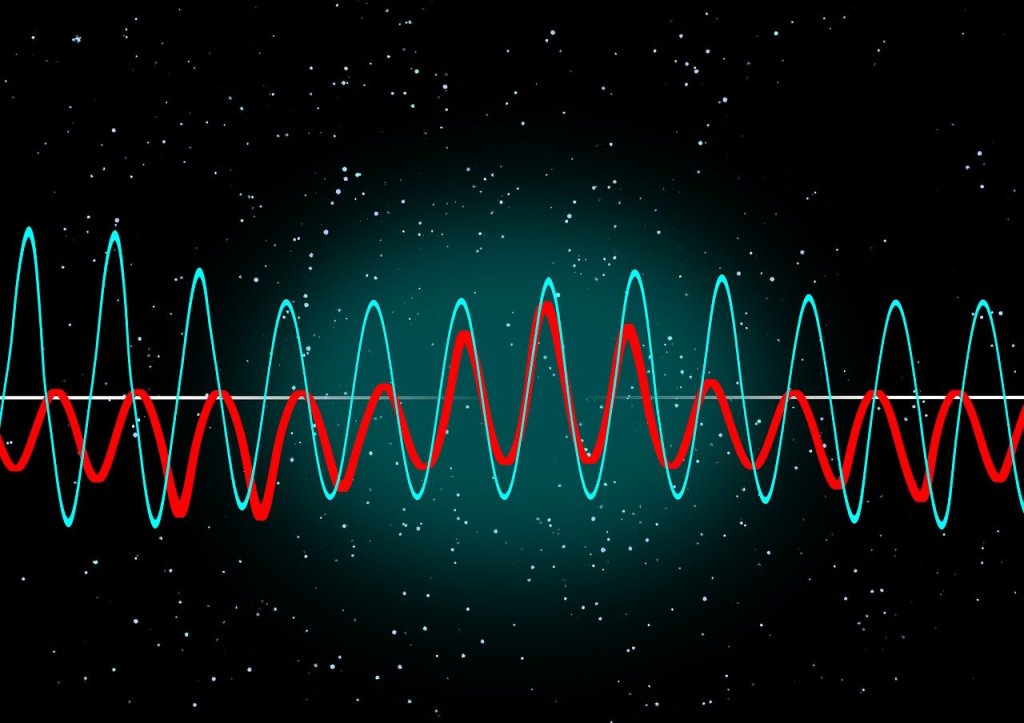
Two different coloured wave patterns superimposed on one anohter on a black background with random dots like a starscape.
Image by Gerd Altmann from Pixabay

Tony Stockman, who was blind from birth, was a Senior Lecturer at QMUL until his retirement. A leading academic in the field of sonification of data, turning data into sound, he eventually became the President of the “International Community for Auditory Display”: the community of researchers working in this area.

Traditionally, we put a lot of effort into finding the best ways to visualise data so that people can easily see the patterns in it. This is an idea that Florence Nightingale, of lady of the lamp fame, pioneered with Crimean War data about why soldiers were dying. Data visualisation is considered so important it is taught in primary schools where we all learn about pie charts and histograms and the like. You can make a career out of data visualisation, working in the media creating visualisations for news programmes and newspapers, for example, and finding a good visualisation is massively important working as a researcher to help people understand your results. In Big Data a good visualisation can help you gain new insights into what is really happening in your data. Those who can come up with good visualisations can become stars, because they can make such a difference (like Florence Nightingale, in fact)

Many people of course, Tony included cannot see, or are partially sighted, so visualisation is not much help! Tony therefore worked on sonifying data instead, exploring how you can map data onto sounds rather than imagery in a way that does the same thing.: makes the patterns obvious and understandable.

His work in this area started with his PhD where he was exploring how breathing affects changes in heart rate. He first needed a way to both check for noise in the recording and then also a way to present the results so that he could analyse and so understand them. So he invented a simple way to turn data into sound using for example frequencies in the data to be sound frequencies. By listening he could find places in his data where interesting things were happening and then investigate the actual numbers. He did this out of necessity just to make it possible to do research but decades later discovered there was by then a whole research community by then working on uses of and good ways to do sonification,

He went on to explore how sonification could be used to give overviews of data for both sighted and non-sighted people. We are very good at spotting patterns in sound – that is all music is after all – and abnormalities from a pattern in sound can stand out even more than when visualised.

Another area of his sonification research involved developing auditory interfaces, for example to allow people to hear diagrams. One of the most famous, successful data visualisations was the London Tube Map designed by Harry Beck who is now famous as a result because of the way that it made the tube map so easy to understand using abstract nodes and lines that ignored distances. Tony’s team explored ways to present similar node and line diagrams, what computer scientist’s call graphs. After all it is all well and good having screen readers to read text but its not a lot of good if all it tells you reading the ALT text that you have the Tube Map in front of you. And this kind of graph is used in all sorts of every day situations but are especially important if you want to get around on public transport.

There is still a lot more to be done before media that involves imagery as well as text is fully accessible, but Tony showed that it is definitely possible to do better, He also showed throughout his career that being blind did not have to hold him back from being an outstanding computer scientists as well as a leading researcher, even if he did have to innovate himself from the start to make it possible.

More on …


Related Magazine …

Subscribe to be notified whenever we publish a new post to the CS4FN blog.


This page is funded by EPSRC on research agreement EP/W033615/1.

QMUL CS4FN EPSRC logos

Pots fixing problematic acoustics

Surface waves
Surface Waves, Image by Roger McLassus, CC BY-SA 3.0 via Wikimedia Commons.

Pots are buried in the walls of medieval churches and monasteries across Europe: in the UK, Sweden, Denmark and Serbia. Why? Are they just a weird form of decoration? Actually, they are there to fix problematic acoustics.

The problem

First of all, what do we mean by ‘problematic’ acoustics? When sound waves move around a room they reflect off the walls in a way that creates strange sound effects when they meet their reflections.

It happens because of what are called ‘standing waves’. Imagine dropping a pebble into a bath. The ripples create patterns in the water where they interfere with those that have bounced off the sides. As the two ripples pass in opposite directions if the movement pushing the molecule up from one ripple exactly cancels out the movement pushing down from the other and keeps doing so, then at that point the molecules remain still. On either side the two ripples reinforce each other rather than cancelling out giving the peaks and troughs of the combined wave. The result is the ripples appear to stop moving forward: a standing wave.

Sound waves are like water waves except that the air molecules vibrate from side to side rather than up and down as water molecules do. The same effects therefore happen when sound waves meet and standing waves can form. This is bad for two reasons. Standing waves take more time to die away after the sound source has been silenced than other sounds. Worse, the sound’s volume varies around the room depending on whether it is a point where the waves cancel out (no sound) or where they enhance each other (loud). That’s ‘problematic’ acoustics!

Standing Wave.By Lucas Vieira – Own work, Public Domain, from WIKIMEDIA

These acoustic problems ultimately come about because of what is known as ‘resonance’. That is where a sound repeatedly bounces back and forth across a space at a particular frequency. Frequencies that are directly tied to the room’s dimensions cause most problems. Called the ‘resonant frequencies’ they involve a whole number of wave troughs and crests fitting in the space between the walls. That is what leads to standing waves as the original and reflected wave coincide exactly. The lowest resonant frequency of a wave is also called the ‘fundamental frequency’. It’s the one where a single wave (a single trough and crest) fits in the space.

There are three different types of resonances developed in a room from sounds bouncing of the walls: called axial, tangential and oblique modes. Axial modes result from a sound bouncing back and forth between two facing walls. Tangential ones happen when the waves reflect around all four walls. Oblique modes are the most complicated and result from sound bouncing off the roof and floor too. Of all these, it turns out the worst are the axial modes. To improve the acoustics of a room you need to absorb the sounds at these resonant frequencies. But how?

The solution

OK, now we know the problem, but how do we deal with it? A solution is the ‘Helmholtz resonator’, named after a device created by Hermann von Helmholtz in the 1850s as part of his studies to identify the ‘tones’ of sounds. A Helmholtz resonator is just the phenomenon of air resonating in a cavity. It is the way you get a tone from blowing across the mouth of an empty bottle. The frequency of the tone is the resonant frequency of the bottle. If you change the volume of the air cavity or the length or diameter of the neck of the bottle you change its resonant frequency and so the tone.

A Helmholtz resonator actually absorbs sound at its resonant frequency and at a small range of nearby frequencies. This happens because when a sound strikes the resonator’s opening, the air mass in the neck starts to vibrate strongly at that resonant frequency and tries to leave. That makes the pressure of the air in the cavity lower than the outside. As a result it draws the air back into the cavity. This process repeats but energy is lost each time, which causes the wave, of this particular resonant frequency, to dissipate. That means that specific sound is absorbed by the resonator. Helmholtz resonators also reradiate the sound that is not absorbed in all directions from the opening. That means any energy that wasn’t absorbed is spread around the room and that improves the room’s acoustics too.

So back to those pots in the walls of medieval churches. What are they for? Well they would have acted as Helmholtz resonators so they presumably were designed to remove low-frequency sounds and so correct the acoustic of the vaults and domes. Ashes have been found in some of the pots. That would have increased the range of sound frequencies absorbed as well as helped spread the unabsorbed sound. St Andrew’s Church in Lyddington, Rutland, built in the 14th Century, has some of the finest examples of this kind of acoustic jars in the UK. Helmholtz resonators obviously predate Helmholtz, actually going back to the ancient Greeks and Romans. The pots in churches are thought to be based on the ideas of Roman architect Vitruvius. He discussed the use of resonant jars in the design of amphitheatres to improve the clarity of the speakers’ voices.

Designers of acoustic spaces like concert halls now use a variety of techniques to fix acoustic problems including Helmholtz resonators, resonant panels and tube traps. They’re all efficient ways for absorbing low-frequency sounds. Helmholtz resonators though have the particular advantage of being able to treat localized ‘problematic’ frequencies.

Those church designers were apparently rather sophisticated acoustic engineers. They had to be, of course. It would have been a little unfortunate to build a church so everyone could hear the word of God, only to have those words resonate with the walls rather than with the congregation.

– Dimitrios Giannoulis, Queen Mary University of London


Magazines …

This article was originally published on the CS4FN archive website and can also be found on pages 8 and 9 of issue 4 of Audio! Mad About Music Technology, our series of magazines celebrating sound and tech.


Subscribe to be notified whenever we publish a new post to the CS4FN blog.