Double or nothing: an extra copy of your software, just in case

Ariane 5 on the launchpad
Ariane 5 on the launch pad. Photo Credit: (NASA/Chris Gunn) Public Domain via Wikimedia Commons.

If you spent billions of dollars on a gadget you’d probably like it to last more than a minute before it blows up. That’s what happened to a European Space Agency rocket. How do you make sure the worst doesn’t happen to you? How do you make machines reliable?

A powerful way to improve reliability is to use redundancy: double things up. A plane with four engines can keep flying if one fails. Worried about a flat tyre? You carry a spare in the boot. These situations are about making physical parts reliable. Most machines are a combination of hardware and software though. What about software redundancy?

You can have spare copies of software too. Rather than a single version of a program you can have several copies running on different machines. If one program goes wrong another can take over. It would be nice if it was that simple, but software is different to hardware. Two identical programs will fail in the same way at the same time: they are both following the same instructions so if one goes wrong the other will too. That was vividly shown by the maiden flight of the Ariane 5 rocket. Less than 40 seconds from launch things went wrong. The problem was to do with a big number that needed 64 bits of storage space to hold it. The program’s instructions moved it to a storage place with only 16 bits. With not enough space, the number was mangled to fit. That led to calculations by its guidance system going wrong. The rocket veered off course and exploded. The program was duplicated, but both versions were the same so both agreed on the same wrong answers. Seven billion dollars went up in smoke.

Can you get round this? One solution is to get different teams to write programs to do the same thing. The separate teams may make mistakes but surely they won’t all get the same thing wrong! Run them on different machines and let them vote on what to do. Then as long as more than half agree on the right answer the system as a whole will do the right thing. That’s the theory anyway. Unfortunately in practice it doesn’t always work. Nancy Leveson, an expert in software safety from MIT, ran an experiment where different programmers were given programs to write. She found they wrote code that gave the same wrong answers. Even if it had used independently written redundant code it’s still possible Ariane 5 would have exploded.

Redundancy is a big help but it can’t guarantee software works correctly. When designing systems to be highly reliable you have to assume things will still go wrong. You must still have ways to check for problems and to deal with them so that a mistake (whether by human or machine) won’t turn into a disaster.

Paul Curzon, Queen Mary University of London


Related Magazine …


More on …


Subscribe to be notified whenever we publish a new post to the CS4FN blog.


This page is funded by EPSRC on research agreement EP/W033615/1.

QMUL CS4FN EPSRC logos

Mary Ann Horton and the invention of email attachments

Mary Ann Horton was transitioning to female at the time that she made one of her biggest contributions to our lives with a simple computer science idea with a big impact: a program that allowed binary email attachments.

Now we take the idea of sending each other multimedia files – images, video, sound clips, programs, etc for granted, whether by email or social networks, Back in the 1970s, before even the web had been invented, people were able to communicate by email, but it was all text. Email programs worked on the basis that people were just sending words, or more specifically streams of characters, to each other. An email message was just a long sequence of characters sent over the Internet. Everything in computers is coded as binary: 1s and 0s, but text has a special representation. Each character has its own code of 1s and 0s, that can also be thought of as a binary number, but that can be displayed as the character by programs that process it. Today, computers use a universally accepted code called Unicode, but originally most adopted a standard code called ASCII. All these codes are just allocations of patterns of 1s and 0s to each character. In ASCII, ‘a’ is represented by 1100001 or the number 97, whereas A is 1000001 or number 65, for example. These are only 7 bits long and as computers store data in bytes of 8 bits at a time this means that not all patterns of binary (so representable numbers) correspond to one of the displayable characters that email messages were expected to contain by the programs that processed them.

That is fine if all you have done is used programs like text editors, that output characters so you are guaranteed to be sending printable characters. The problem was other kinds of data whether images or runnable programs, are not stored as sequences of characters. They are more general binary files, meaning the data is long sequences of byte-sized patterns of 1s and 0s and what those 1s and 0s meant depended on the kind of data and representation used. If email programs were given such data to send, pass on or receive, they would reject or more likely mangle it as not corresponding to characters they could display. The files didn’t even have to be non-character formats, as at the time some computer systems used a completely different code for characters. This meant text emails could also be mangled just because they passed through a computer using a different format of character.

Mary Ann realised that this was all too restrictive for what people would be needing computers to do. Email needed to be more flexible. However, she saw that there was a really easy solution. She wrote a program, called uuencode that could take any binary file and convert it to one that was slightly longer but contained only characters. A second program she wrote, called uudecode converted these files of characters back to the original binary file to be saved by the receiving email program exactly it was originally on the source program.

All the uuencode program did was take 3 bytes (24 bits) of the binary file at a time, split them into groups of 6 bits so effectively representing a number from 0 to 63, add 32 to this number so the numbers are now in the range 32 to 95 and those are the numbers so binary patterns of the printable characters that the email programs expected. Each three bytes were now 4 printable characters. These could be added to the text of an email, though with a special start and end sequence included to identify it as something to decode. uudecode just did this conversion backwards, turning each group of 4 characters back into the orginal three bytes of binary.

Email attachments had been born, and ever since communication programs, whether email, chat or social media, have allowed binary files, so multimedia, to be shared in similar ways. By seeing a coming problem, inventing a simple way to solve it and then writing the programs, Mary Ann Horton had made computers far more flexible and useful.

Paul Curzon, Queen Mary University of London

More on …

Related Magazines …

cs4fn issue 14 cover

Subscribe to be notified whenever we publish a new post to the CS4FN blog.


This page is funded by EPSRC on research agreement EP/W033615/1.

QMUL CS4FN EPSRC logos

Edie Schlain Windsor and same sex marriage

CS4FN Banner
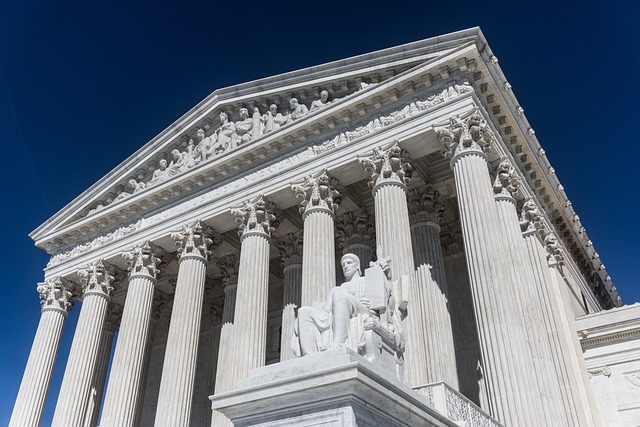
US Supreme court building
Image by Mark Thomas from Pixabay
US Supreme court building Image by Mark Thomas from Pixabay

Edie Schlain Windsor was a senior systems programmer at IBM. There is more to life than computing though. Just like anyone else, Computer Scientists can do massively important things aside from being very good at computing. Civil rights and over-turning unjust laws are as important as anything. She led the landmark Supreme Court Case (United States versus Windsor) that was a milestone for the rights of same-sex couples in the US.

Born to a Jewish immigrant family, Edie worked her way up from an early data entry job at New York University to ultimately become a senior programmer at IBM and then President of her own software consultancy where she helped LGBTQ+ organisations become computerised.

Having already worked as a programmer at an energy company called Combustion Engineering, she joined IBM on completing her degree in 1958 so was one of the early generation of female programmers, before the later idea of the male programmer stereotype took hold. Within ten years she had been promoted to the highest technical position in IBM, that of a Senior Systems Programmer: so one of their top programmers lauded as a wizard debugger. She had started out programming mainframe computers, the room size computers that were IBM ‘s core business at the time. They both designed and built the computers as well as the operating system and other software that ran on them. Edie became an operating systems expert, and a pioneer computer scientist also working on natural language processing programs, aiming to improve the interactivity of computes. Natural Language Processing was then a nascent area but that by 2011 IBM led spectacularly with its program Watson winning the quiz show Jeopardy! answering general knowledge questions playing against human champions.

Before her Supreme Court case overturned it, a law introduced in 1996 banned US federal recognition of same-sex marriages. It made it federal law that marriage could only exist between a man and a woman. Individual states in the US had introduced same-sex marriage but this new law meant that such marriages were not recognised in general in the US. Importantly, for those involved it meant a whole raft of benefits including tax, immigration and healthcare benefits that came with marriage were denied to same-sex couples.

Edie had fallen in love with psychologist Thea Spyer in 1965, and two years later they became engaged, but actually getting married was still illegal. They had to wait almost 30 years before they were even allowed to make their partnership legal, though still at that point not marry. They were the 80th couple to register on the day such partnerships were finally allowed. By this time Thea had been diagnosed with multiple sclerosis, a disease that gradually leads to the central nervous system breaking down, with movement becoming ever harder. Edie was looking after her as a full time carer, having given up her career to do so. They both loved dancing and did so throughout their life together even once Thea was struggling to walk, using sticks to get on to the dance floor and later dancing in a wheelchair. As Thea’s condition grew worse it became clear she had little time to live. Marriage was still illegal in New York, however, so before it was too late, they travelled to Canada and married there instead.

When Thea died she left everything to Edie in her will. Had Edie been a man married to Thea, she would not have been required to pay tax on this inheritance, but as a woman and because same-sex marriages were deemed illegal she was handed a tax bill of hundreds of thousands of dollars. She sued the government claiming the way different couples were treated was unfair. The case went all the way to the highest court, the Supreme Court, who ruled that the 1996 law was itself unlawful. Laws in the US have as foundation a written constitution that dates back to 1789. The creation of the constitution was a key part of the founding of the United States of America itself. Without it, the union could easily have fallen apart, and as such is the ultimate law of the land that new laws cannot overturn. The problem with the law banning same sex marriage was that it broke the 5th amendment of the constitution added in 1791, one of several amendments made to ensure people’s rights and justice was protected by the constitution.

The Supreme Court decision was far more seismic than just refunding a tax bill, however. It overturned the law that actively banned same-sex marriage, as it fell foul of the constitution, and this paved the way for such marriages to be made actively legal. In 2014 federal employees were finally told they should perform same-sex marriages across the US, and those marriages gave the couple all the same rights as mixed-sex marriages. Because Edie took on the government, the US constitution, and so justice for many, many couples prevailed.

Paul Curzon, Queen Mary University of London

More on …

Related Magazines …

cs4fn issue 14 cover

This blog is funded through EPSRC grant EP/W033615/1.