DNA is the molecule of life. Our DNA stores the information of how to create us. Now it can be hacked.
DNA consists of two strands coiling round each other in a double helix. It’s made of four building blocks, or ‘nucleotides’, labelled A, C, G, T. Different orders of letters gives the information of how to build each unique creature, you and me included. Sequences of DNA are analysed in labs by a machine called a gene sequencer. It works out the order of the letters and so tells us what’s in the DNA. When biologists talk of sequencing the human (or another animal or plant’s) genome they mean using a gene sequencer to work out the specific sequences in the DNA for that species. They are also used by forensic scientists to work out who might have been at the scene of a crime, and to predict whether a person has genetic disorders that might lead to disease.
DNA can be used to store information other than that of life: any information in fact. This may be the future of data storage. Computers use a code made of 0s and 1s. There is no reason why you can’t encode all the same information using A, C, G, T instead. For example, a string of 1s and 0s might be encoded by having each pair of bits represented by one of the four nucleotides: 00 = A, 01 = C, 10 = G and 11 = T. The idea has been demonstrated by Harvard scientists who stored a video clip in DNA.
It also leads to whole new cyber-security threats. A program is just data too, so can be stored in DNA sequences, for example. Researchers from the University of Washington have managed to hide a malicious program inside DNA that can attack the gene sequencer itself!
The gene sequencer not only works out the sequence of DNA symbols. As it is a computer, it converts it into a binary form that can then be processed as normal. As DNA sequences are long, the sequencer compresses them. The attack made use of a common bug found in programs that malware often uses: ‘buffer overflow’ errors. These arise when the person writing a program includes instructions to set aside a fixed amount of space to store data, but then doesn’t include code to make sure only that amount of data is stored. If more data is stored then it overflows into the memory area beyond that allocated to it. If executable code is stored there, then the effect can be to overwrite the program with new malicious instructions.
When the gene sequencer reaches that malware DNA, the converted program emerges and is converted back into 1s and 0s. If those bits are treated as instructions and executed, it launches its attack and takes control of the computer that runs the sequencer. In principle, an attack like this could be used to fake results for subsequent DNA tests, subverting court cases, disrupt hospital testing, steal sensitive genetic data, or corrupt DNA-based memory.
Fortunately, the risks of exactly this attack causing any problems in the real world are very low but the team wanted to highlight the potential for DNA based attacks, generally. They pointed out how lax the development processes and controls were for much of the software used in these labs. The bigger risk right now is probably from scientists falling for spear phishing scams (where fake emails pretending to be from someone you know take you to a malware website) or just forgetting to change the default password on the sequencer.
Here is a little science experiment anyone can do to help understand the physics of marine animals and their buoyancy. It helps give insight into how animals such as ancient ammonites and now cuttlefish can move up and down at will just by changing the density of internal fluids.* (See Ammonite propulsion of underwater robots). It also shows how marine robots could do the same with a programmed ammonite brain.
First take a beaker of water and a biro pen top. Put a small piece of blu tack over the the top of the pen top (to cover the holes that are there to hopefully stop you suffocating if you were to swallow one – never chew pen tops!). Next, put a larger blob of blu tack round the bottom of the pen top. You will have to use trial and error to get the right amount. Your aim is to make the pen top float vertically upright in the water, with the smaller blu tack just floating above the surface. Try it, by carefully placing the pen top vertically into the water. If it doesn’t float like that, dry the blu tack then add or remove a bit more until it does float correctly.
It now has neutral buoyancy. The force of gravity pulling it down is the same as the buoyancy force (or upthrust) pushing it upwards, caused by the air trapped in the top of the lid… so it stays put, neither sinking nor rising.
Now fill a drink bottle with water all the way to the top. Then add a little more water so the water curves up above the top of the bottle (held in place by surface tension). Carefully, drop in the weighted pen top and screw on the top of the bottle tightly.
The pen top should now just float in the water at some depth. It is acting just like the swim bladder of a fish, with the air in the pen top preventing the weight of the blue tack pulling it down to the bottom.
Now, squeeze the side of the bottle. As you squeeze, the pen top should suddenly sink to the bottom! Let go and it rises back up. What is happening? The force of gravity is still pulling down the same as it was (the mass hasn’t changed), so if it is sinking the buoyancy force pushing up must be less that it was.
What is happening? We are increasing the pressure inside the bottle, so the water is now compressing the air in the pen top, reducing its volume and increasing its density. The more dense your little diving bell is, the less the buoyancy force pushing up, so it sinks.
That is essentially the trick that ammonites evolved, many, many millions of years ago, squeezing the gas inside their shell to suddenly sink to get away quickly when they sensed danger. It is what cuttlefish still do today squeezing the gas in their cuttlebone so the cuttlefish becomes denser.
So, if you were basing a marine robot on an ammonite (with movement also possible by undulating its arms, and by jet propulsion, perhaps) then your programming task for controlling its movement would involve it being able to internally squeeze an air space by just the right amount at the right time!
In fact, several groups of researchers have created marine robots based on ammonites. For example, a group at Utah have been doing so to better understand the real but extinct ammonites themselves, including how they did actually move. For example, the team have been testing different shell shapes to see if some shapes work better than others, and so just how efficient ammonite shell shapes actually were. By programming an ammonite robot brain, you could similarly, for example, better understand how they controlled their movement and how effective it really was in practice (not just in theory).
Science can now be done in a completely different way to the traditional version of just using discovery, observation and experiment. You can now do computer and robotic modelling too, running experiments on your creations. If you want to study marine biology, or even fancy being a Palaeontologist with a difference, understanding long extinct life, you can now do it through robotics and computer science, not just by watching animals or digging up fossils (but understanding some physics is still important to get you started).
Intending to make a marine robot that will operate under the ocean? Time to start learning, not just engineering and computing, but the physics of marine biology! And, it turns out you can learn a lot from ammonites: marine creatures that ruled the ocean for millennia and died out while dinosaurs ruled the earth. Perhaps your robot needs a shell, not for protection, but to help it move efficiently.
If you set yourself the task of building an underwater robot, perhaps to work with divers in exploring wrecks or studying marine life, you immediately have to solve a problem that is different to traditional land-based robotics researchers. Most of the really cool videos of the latest robots tend to show how great they are at balancing on two legs, doing some martial art, perhaps, or even gymnastics. Or maybe they are hyping how good they are running through the forest like a wolf, now on four legs. Once you go underwater all that exciting stuff with legs becomes a bit pointless. Now its all about floating not balancing. So what do you do?
The obvious thing perhaps is to just look at boats, submarines and torpedoes and design a propulsion system with propellers, maybe using an AI to design the most efficient propellor shape, then write some fancy software to control it as efficiently as possible. Alternatively, you could look at what the fish do and copy them!
What do fish do? They don’t have propellors! The most obvious thing is they have tails and fins and wiggle a lot. Perhaps your marine robot could be streamlined like a fish and well, swim, its way through the sea. That involves the fish using its muscles to make waves ripple along its body pushing against the water. In exerting a force on the water, by Newton’s Laws, the water pushes back and the fish moves forward.
Of course, your robot is likely to be heavy so will sink. That raises the other problem. Unlike on land, in water you need to be able to move up (and down) too. Being heavy, moving down is easy. But then that is the same for fish. All that fishy muscle is heavier than water so sinks too. Unless they have evolved a way to solve the problem, fish sink to the bottom and have to actively swim upwards if they want to be anywhere else. Some live on the bottom so that is exactly what they want. Maybe your robot is to crawl about on the sea floor too, so that may be right for it too.
Many, many other fish don’t want to be at the bottom. They float without needing to expend any energy to do so. How? They evolved a swim bladder that uses the physics of buoyancy to make them naturally float, neither rising or sinking. They have what is called neutral buoyancy. Perhaps that would be good for your robot too, not least to preserve its batteries for more important things like moving forwards. How do swim bladders do it? They are basically bags of air that give the fish buoyancy – a bit like you wearing a life jacket. Get the amount of air right and the buoyancy, which provides an upward force, can exactly counteract the force of gravity that is pushing your robot down to the depths. The result is the robot just floats under the water where it is. It now has to actively swim if it wants to move down towards the sea floor. So, if you want your robot to do more than crawl around on the bottom, designing in a swim bladder is a good idea.
Perhaps, you can save more energy and simplify things even more though. Perhaps, your robot could learn from ammonites. These are long extinct, dying out with the dinosaurs and now found only as fossils, fearsome predators that evolved a really neat way to move up and down in the water. Ammonites were once believed to be curled up snakes turned to stone, but they were actually molluscs (like snails) and the distinctive spiral structure preserved in fossils was their shell. They didn’t live deep in the spiral though, just in the last chamber at the mouth of the spiral with their multi-armed octopus like body sticking out the end to catch prey. So what were the rest of the chambers for? Filled with liquid or gas, they would act exactly like a swim bladder providing buoyancy control. However, it is likely that, as with the similar modern day nautilus, the ammonite could squeeze the gas or liquid of its spiral shell into a smaller volume, changing its density. Doing that changes its buoyancy: with increased density the buoyancy is less, so gravity exerts a greater force than the lift the shell’s content is giving and it suddenly sinks. Decrease the density by letting the gas or liquid expand and it rises again.
You don’t needs a shell of course, other creatures have evolved more sophisticated versions. A cuttlebone does the same job. It is an internal organ of the cuttlefish (which are not fish but cephalopods like octopus and squid, so related to ammonites). They are the white elongated disks that you find washed up on the beach (especially along the south and west coasts in the UK). They are really hard on one side but slightly softer on the other. They act like an adjustable swim bladder. The hard upper side prevents gas escaping (whilst also adding a layer of armour). The soft lower side is full of microscopic chambers that the cuttlefish can push gas into or pull gas out of at will with the same effect as that of the ammonites shell.
This whole mechanism is essentially how the buoyancy tanks of a submarine work. First used in the original practical submarine, the Nautilus of 1800, they are flooded and emptied to make a submarine sink and rise.
Build the idea of a cuttlebone or ammonite shell into your robot and it can rise and sink at will with minimal energy wasted. Cuttlefish, though, also have another method of propulsion (aside from undulating their body) that allows it to escape from danger in a hurry: jet propulsion. By ejecting water stored in their mantle through their syphon (a tube), they can suddenly give themselves lots of acceleration just like a jet engine gives a plane. That would normally be a very inefficient form of propulsion, using lots of energy. However, experiments show that when used with negative buoyancy such as provided by the cuttlebone, this jet propulsion is actually much more efficient than it would be. So the cuttlebone saves energy again. And a rare ammonite fossil with the preserved muscles of the actual animal suggests that ammonites had similar jet propulsion too. Given some ammonites grew as large as several metres across, that would have been an amazing sight to see!
To be a great robotics engineer, rather than inventing everything from scratch, you could do well to learn from biological physics. Some of the best solutions are already out there and may even be older than the dinosaurs, You might then find your programming task is to program the equivalent of the brain of an ammonite.
When The Doctor in Dr Who knows their time is up – usually because they’ve been injured so badly that they are dying – like all Time Lords, they can regenerate. They transform into a completely different body. They ends up with a new personality, new looks, a new gender, even new teeth. Could humans one day regenerate too?
Your body is constantly regenerating itself too. New cells are born to replace the ones that die. Your hair, nails and skin are always growing and renewing. Every year, you lose and regain so much that you could make a pile of dead cells that would weigh the same as your body. And yet with all this change, every morning you look in the mirror and you look and feel the same. No new personality, no new teeth. How does the human body keep such incredible control?
Here’s another puzzler. Even though our cells are always being renewed, you can’t regrow your arm if it gets cut off. We know it’s not impossible to regrow body parts: we do it for small things like cells, including whole toe nails and some animals like lizards can regrow tails. Why can we regrow some things but not others?
Creation of the shape
All of those questions are part of a field in biology called morphogenesis. The word is from Greek, and it means ‘creation of the shape’. Scientists who study morphogenesis are interested in how cells come together to create bodies. It might sound a long way from computing, but Alan Turing became interested in morphogenesis towards the end of his life. He was interested in finding out about patterns in nature – and patterns were something he knew a lot about as a mathematician. A paper he wrote in 1951 described a way that Turing thought animals could form patterns like stripes and spots on their bodies and in their fur. The mechanisms he described explain how uniform cells could end up turning into different things so not only different patttens in different places, but different body parts in different places. That work is now the foundation of a whole sub-discipline of biology.
Up for the chop
Turing died before he could do much work on morphogenesis, but lots of other scientists have taken up the mantle. One of them is Alejandro Sánchez Alvarado, who was born in Venezuela but works at the Stowers Institute for Medical Research in Kansas City, in the US. He is trying to get to the bottom of questions like how we regenerate our bodies. He thinks that some of the clues could come from working on flatworms that can regenerate almost any part of their body. A particular flatworm, called Schmidtea mediterranea, can regenerate its head and its reproductive organs. You can chop its body into almost 280 pieces and it will still regenerate.
A genetic mystery
The funny thing is, flatworms and humans aren’t as different as you might think. They have about the same number of genes as us, even though we’re so much bigger and seemingly more complicated. Even their genes and ours are mostly the same. All animals share a lot of the same, ancient genetic material. The difference seems to come from what we do with it. The good news there is that as the genes are mostly the same, if scientists can figure out how flatworm morphogenesis works, there’s a good chance that it will tell us something about humans too.
One gene does it all
Alejandro Sánchez Alvarado did one series of experiments on flatworms where he cut off their heads and watched them regenerate. He found that the process looked pretty similar to watching organs like lungs and kidneys grow in humans as well as other animals. He also found that there was a particular gene that, when knocked out, takes away the flatworm’s ability to regenerate.
What’s more, he tried again in other flatworms that can’t normally regenerate whole body parts – just cells, like us. Knocking out that gene made their organs, well, fall apart. That meant that the organs that fell apart would ordinarily have been kept together by regrowing cells, and that the same gene that allows for cell renewal in some flatworms takes care of regrowing whole bodies, Dr Who-style, in others. Phew. A lot of jobs for one gene.
Who knows, maybe Time Lords and humans share that same gene too. They’re like the lucky, regenerating flatworms and we’re the ones who are only just keeping things together. But if it’s any consolation, at least we know that our bodies are constantly working hard to keep us renewed. We still regenerate, just in a slightly less spectacular way.
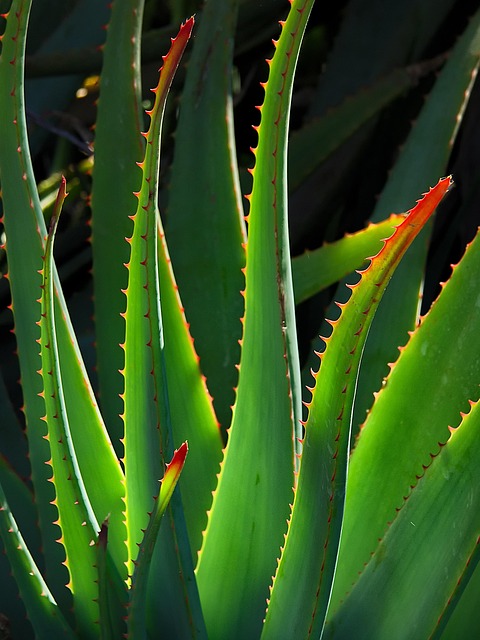
There are a whole range of plants that have been called superfoods for their amazing claimed health benefits because of the nutrients they contain. But plants can have other super powers too. For example, some are better at absorbing Carbon Dioxide to help with climate change, others provide medicines, or can strip our pollutants out of the air or soil. But one, Aloe Vera, is a super-plant in a new way. It can now store electricity that could be used to power portable devices – by plugging them into the plant.
Capacitors are one of the basic electronic components, like resistors and transistors, that electronic circuits are built from. They act a bit like a tiny battery, building up charge on a pair of surfaces with an insulator between so that charge cannot move directly from one to the other. Electrons build up on one plate, storing energy. When the capacitor is discharged that energy is released. They have a variety of uses including evening out power supplies. A supercapacitor is just a capacitor that can store a lot more energy so is a little like a tiny rechargeable battery, though releases the energy faster and can be charged and discharged many more times.
Various teams around the world have explored the use of aloe vera in supercapacitors. A team of researchers, led by Yang Zhao from Beijing Institute of Technology, has succeeded in creating a supercapacitor made completely from materials extracted from the plant (apart from one gold wire). The parts were made by heating a part of the leaf of the plant, and by freezing its juice. The advantage of this is that the supercapacitor is biodegradable unlike traditional ones made from oil-based synthetic materials. It also makes them biocompatible in that they can be inserted into aloe vera and similar plants without doing them harm and potentially make use of electricity generated by the plant. Her team has inserted these tiny capacitors inside other plants including cacti and aloe vera plants to show this idea works in principle.
So plants can be superheroes and aloe vera more than most: it looks nice on your window cill, you can make soap from it, it supposedly has medicinal value, it is being used in research to remove pollutants from the air and soon it could provide you with electricity too. So next time you are lost in a cactus filled wilderness make sure you have aloe vera capacitors with you so you can charge your gadgets while waiting to be rescued.
How much should we change the world to make it easier for our machines to work?
Plant scientists have spotted a problem they can solve. Weeding robots are finding it difficult to weed. It is a hard problem for them. All those weeds look just like the real crop which they aren’t supposed to destroy. So the robots are pulling up the wrong things. What is a robot to do? Should we make it easy for them?
Plant Scientists have seen a need for their technology which is looking for solutions any where it can. Robots are good at distinguishing colour. That is easy. So why not just genetically modify weeds to be blue. This is possible as there are already lots of genes causing blueness in plants (think blueberries). Problem solved. The robots then won’t get it wrong again and the crops are safe.
What could possibly go wrong? Well, to work the genes will need to be spread wildly and perhaps they could escape and get into our crops or other plants that are just there to be plants, or just plants in the food chain, We could end up with a blue planet a bit like the red one the martians brought int he War of the Worlds. Alternatively, evolution might step up and continually produce mutant weeds that subverted that gene, given that gene killed them. Perhaps all the problems can guarantee to be avoided, though the wise person does not bet against natural selection finding a way round problems presented to it in the long term.
Isn’t it time we learnt our lesson and stopped changing the planet to make our machines lives easier? Of course we have been doing that for a long time – think of all the roads scarring the countryside so cars work or rails so trains work. Perhaps we should think more about the needs of the planet as well as of people, rather than the needs of our machines when innovating, especially when undoubtedly eventually (if we don’t destroy ourselves first) we will have machines clever enough to work it out.
There are always lots of ways of solving problems and it is important to think about the planet now not just our machines. Perhaps robots should just not weed until they can do it without us having to change the problem (and the planet) for them so they can!
Biologists often analyse data about the cell biology of living animals to understand their development. A large part of this involves looking for patterns in the data to use to refine their understanding of what is going on. The trouble is that patterns can be hard to spot when hidden in the vast amount of data that is typically collected. Humans are very good at spotting patterns in sound though – after all that is all music is. So why not turn the data into sound to find these biological patterns?
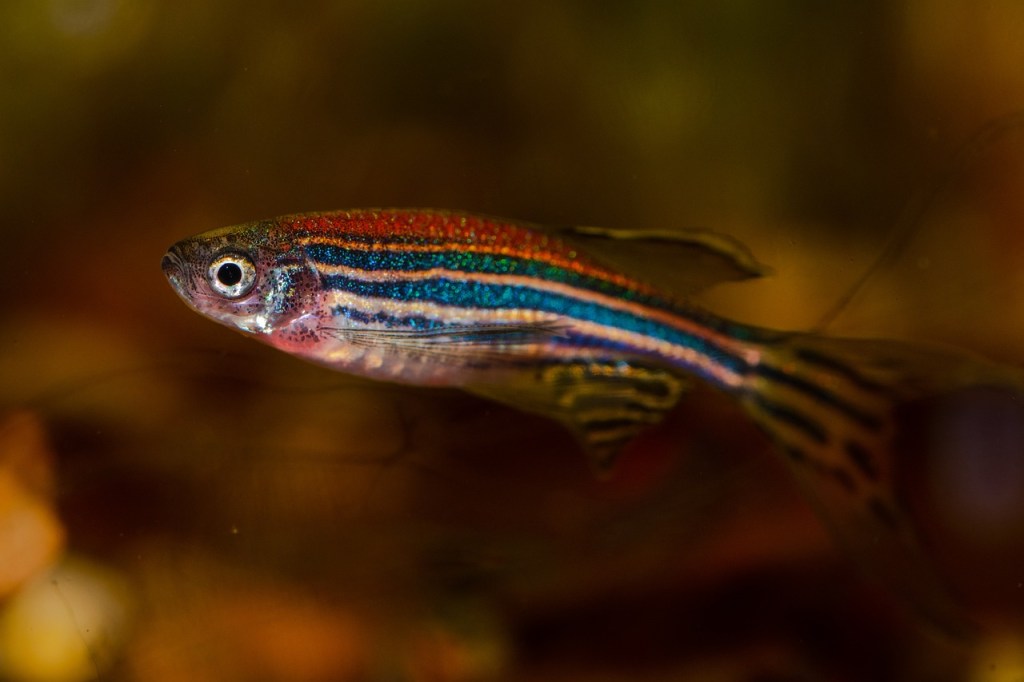
In hospitals, the heartbeats of critically ill patients are monitored by turning the data from heart monitors into sounds. Under the sea, in (perhaps yellow) submarines, “golden ear” mariners use their listening talent to help with navigation and detect potential danger for fish and the submarine. They do this by listening to the soundscapes produced by sonar built up from echoes from the objects round about. This way of using sounds to represent other kinds of data is called ‘sonification’. Perhaps similar ideas can help to find patterns in biological data? An interdisciplinary team of researchers from Queen Mary including biologist Rachel Ashworth, Audio experts Mathieu Barthet and Katy Noland and computer scientist William Marsh tried the idea out on the zebrafish. Why zebrafish? Well, they are used lots for the study of the development of vertebrates (animals with backbones). In fact it is what is called a ‘model organism’: a creature that lots of people do research on as a way of building a really detailed understanding of its biology. The hope is that what you learn about zebrafish will help you understand the biology of other vertebrates too. Zebrafish make a good model organism because they mature very quickly. Their embryos are also transparent. That is really useful when doing experiments because it means you can directly see what is going on inside their bodies using special kinds of microscopes.
The particular aspect of zebrafish biology the Queen Mary team has been investigating is the way calcium signals are used by the body. Changes in the concentration of calcium ions are important as they are used inside a cell to regulate its behaviour. These changes can be tracked in zebrafish by injecting fluorescent dyes into cells. Because the zebrafish embryos are transparent whatever has been fluorescently labelled can then be observed.
Calcium ions are used inside a cell to regulate its behaviour
The Queen Mary team developed software that detects calcium changes by automatically spotting the peaks of activity over time. They relied on a technique that is used in music signal processing to detect the start of notes in musical sequences. Finding the peaks in a zebrafish calcium signal and the notes from the Beatles’ Day Tripper riff may seem to be light years apart, but from a signal processing point of view, the problems are similar. Both involve detecting sudden burst of energy in the signals. Once the positions of the calcium peaks have been found they can then be monitored by sonifying the data.
What the team found using this approach is that the calcium activity in the muscle cells of zebrafish varies a lot between early developmental stages of the embryo and the late ones. You can have a go at hearing the difference yourself – listen to the sonified versions of the data.
Simulators are a common way to train when gaining skills that are dangerous or difficult to practice for real. Pilots, for example, do lots of training on flight simulators. Doctors also use simulators to train for surgery, and the simulators are increasingly accurate. They can even make it feel like you’re working on the real thing by giving you feedback through your sense of touch: haptics. Practicing sinus or eye surgery and your practice sessions will feel real, for example. Haptics can help not just doctors, but vets training too – and it can help not just in the head but, errr, at the other end too.
Trainee vets have to learn how to feel for animals’ organs. In small animals like dogs and cats you can do that just by feeling the outside of their tummies, but in larger animals like cows or horses you have to actually put your hands inside them. That’s right, up there. Now the thing is, this is a very difficult thing to learn how to do properly. A teacher can’t demonstrate it, because the student can’t see what they’re doing. Likewise when the student tries it, the teacher can’t see to know if they’re doing it right. Usually they just rely on describing what they’re doing (and how the animal reacts, of course).
Fortunately for teacher, student and especially animal, Sarah Baillie and her colleagues at the Royal Veterinary College invented a simulator called the Haptic Cow. It’s a haptic model of a cow’s rear end, complete with ‘Ouchometer’ – a graph that shows whether the student’s movements are too gentle to be effective, just right, or too rough to be safe. By using the Haptic Cow, students get an accurate idea of what they’ll be doing in their real jobs, the teachers can see better feedback of how well the student’s doing, and real cows don’t have to worry about being practised on. For doctors, vets and their patients, haptics are helping to make sure that practice doesn’t have to mean petrifying.
For some reason biting flies home in on some people while leaving others (even those walking next to them) alone. What is going on, what does it have to do with the colour blue, and how is computer science helping?
There are lots of reasons biting flies are attracted to some people more than others. Smell is one reason, even possibly made worse if you use smelly soap as it can make you smell like an attractive flower! Another is the colour blue! It turns out many biting flies are attracted to people who wear blue! It sounds bizarre but it is the reason fly traps are coloured blue – to make them more effective. But why would a fly like blue? Scientists have been investigating. One theory was that it was because blue objects look like shade to a fly: once there the eating of you is a separate fortunate advantage (to the fly).
One area of Computer Science is known is biologically-inspired computing. The idea is that evolution, over Millenia of trial and error, has come up with lots of great ways to solve problems, and human designers can learn from them. By making computer systems copy the way animals solve those problems we can create better designs. One of the most successful versions of this is the neural network: a way of creating intelligent machines by copying the way animals’ brains are built from neurones. It has ultimately led to the chatbots that can write almost as well as humans and the game playing machines that can beat us at even the most complex games.
Another use of biologically-inspired computing is as a way of doing Science. By modelling the natural world with computer simulations we can better understand how it works. This computational modelling approach is revolutionising the way lots of Science is done. Aberystwyth University’s Roger Santer applied this idea to biting flies. His team created a computer model of the vision system of different kinds of biting flies to explore how they see the world, testing different theories about what was going on. The models were built from neural networks, trained to see like a fly rather than to be able to write or play games.
What the Aberystwyth team found was that to these kinds of flies, because of the way their vision systems work, areas of blue look just like a tasty meal, like animals that they like to bite. The neural networks could tell leaves from animals, but they often decided, incorrectly, that blue objects were animals. They could also correctly tell the difference between shade and non-shade but never mistook blue objects as shade. If their model is an accurate version of the actual way these flies see, then it suggests that the flies are not attracted to blue because it looks like shade, but because it looks like an animal!
The lesson therefore is, if you don’t want to look like a meat feast then do not wear blue when there are biting flies about!
Gokop has a longstanding interest in improving computing networks and did his PhD on cloud computing (at the time known as grid computing), exploring how computing could be treated more like gas and electricity utilities where you only pay for what you use. His current research is about improving the safety and efficiency of the cloud in handling the vast amounts of data, or ‘Big Data’, used in providing Internet services. Recently he has turned his attention to the Internet of Things.
It is a network of connected devices, some of which you might have in your home or school, such as smart fridges, baby monitors, door locks, lighting and heating that can be switched on and off with a smartphone. These devices contain a small computer that can receive and send data when connected to the Internet, which is how your smartphone controls them. However, it brings new problems: any device that’s connected to the Internet has the potential to be hacked, which can be very harmful. For example, in 2013 a domestic fridge was hacked and included in a ‘botnet’ of devices which sent thousands of spam emails before it was shut down (can you imagine getting spam email from your fridge?!)
A domestic fridge was hacked and included in a ‘botnet’ of devices which sent thousands of spam emails before it was shut down.
The computers in these devices don’t usually have much processing power: they’re smart, but not that smart. This is perfectly fine for normal use, but to run software to keep out hackers, while getting on with the actual job they are supposed to be doing, like running a fridge, it becomes a problem. It’s important to prevent devices from being infected with malware (bad programs that hackers use to e.g., take over a computer) and work done by Gokop and others has helped develop better malwaredetecting security algorithms which take account of the smaller processing capacity of these devices.
One approach he has been exploring with PhD student Hadeel Alrubayyi is to draw inspiration from the human immune system: building artificial immune systems to detect malware. Your immune system is very versatile and able to quickly defend you against new bugs that you haven’t encountered before. It protects you from new illnesses, not just illnesses you have previously fought off. How? Using special blood cells, such as T-Cells, which are able to detect and attack rogue cells invading the body. They can spot patterns that tell the difference between the person’s own healthy cells and rogue or foreign cells. Hadeel and Gokop have shown that applying similar techniques to Internet of Things software can outperform other techniques for spotting new malware, detecting more problems while needing less computing resources.
Gokop is also using his skills in cloud computing and data science to enhance student employability and explore how Queen Mary can be a better place for everyone to do well. Whether a person, organisation or smart fridge Gokop aims to help you reach your full potential!















 cs4fn
cs4fn 