Software for Justice

A jury is given misleading information in court by an expert witness. An innocent person goes to prison as a result. This shouldn’t happen, but unfortunately it does and more often than you might hope. It’s not because the experts or lawyers are trying to mislead but because of some tricky mathematics. Fortunately, a team of computer scientists at Queen Mary, University of London are leading the way in fixing the problem.

The Queen Mary team, led by Professor Norman Fenton, is trying to ensure that forensic evidence involving probability and statistics can be presented without making errors, even when the evidence is incredibly complex. Their solution is based on specialist software they have developed.

Many cases in courts rely on evidence like DNA and fibre matching for proof. When police investigators find traces of this kind of evidence from the crime scene they try to link it to a suspect. But there is a lot of misunderstanding about what it means to find a match. Surprisingly, a DNA match between, say, a trace of blood found at the scene and blood taken from a suspect does not mean that the trace must have come from the suspect.

Forensic experts talk about a ‘random match probability’. It is just the probability that the suspect’s DNA matches the trace if it did not actually come from him or her. Even a one-in-a-billion random match probability does not prove it was the suspect’s trace. Worse, the random match probability an expert witness might give is often either wrong or misleading. This can be because it fails to take account of potential cross-contamination, which happens when samples of evidence accidentally get mixed together, or even when officers leave traces of their own DNA from handling the evidence. It can also be wrong due to mistakes in the way the evidence was collected or tested. Other problems arise if family members aren’t explicitly ruled out, as that makes the random match probability much higher. When the forensic match is from fibre or glass, the random match probabilities are even more uncertain.

The potential to get the probabilities wrong isn’t restricted to errors in the match statistics, either. Suppose the match probability is one in ten thousand. When the experts or lawyers present this evidence they often say things like: “The probability that the trace came from anybody other than the defendant is one in ten thousand.” That statement sounds OK but it isn’t true.

The problem is called the prosecutor fallacy. You can’t actually conclude anything about the probability that the trace belonged to the defendant unless you know something about the number of potential suspects. Suppose this is the only evidence against the defendant and that the crime happened on an island where the defendant was one of a million adults who could have committed the crime. Then the random match probability of one in ten thousand actually means that about one hundred of those million adults match the trace. So the probability of innocence is ninety-nine out of a hundred! That’s very different from the one in ten thousand probability implied by the statement given in court.

Norman Fenton’s work is based around a theorem, called Bayes’ theorem, which gives the correct way to calculate these kinds of probabilities. The theorem is over 250 years old but it is widely misunderstood and, in all but the simplest cases is very difficult to calculate properly. Most cases include many pieces of related evidence – including evidence about the accuracy of the testing processes. To keep everything straight, experts need to build a model called a Bayesian network. It’s like a graph that maps out different possibilities and the chances that they are true. You can imagine that in almost any court case, this gets complicated awfully quickly. It is only in the last 20 years that researchers have discovered ways to perform the calculations for Bayesian networks, and written software to help them. What Norman and his team have done is develop methods specifically for modelling legal evidence as Bayesian networks in ways that are understandable by lawyers and expert witnesses.

Norman and his colleague Martin Neil have provided expert evidence (for lawyers) using these methods in several high-profile cases. Their methods help lawyers to determine the true value of any piece of evidence – individually or in combination. They also help show how to present probabilistic arguments properly.

Unfortunately, although scientists accept that Bayes’ theorem is the only viable method for reasoning about probabilistic evidence, it’s not often used in court, and is even a little controversial. Norman is leading an international group to help bring Bayes’ theorem a little more love from lawyers, judges and forensic scientists. Although changes in legal practice happen very slowly (lawyers still wear powdered wigs, after all), hopefully in the future the difficult job of judging evidence will be made easier and fairer with the help of Bayes’ theorem.

If that happens, then thanks to some 250 year-old maths combined with some very modern computer science, fewer innocent people will end up in jail. Given the innocent person in the dock could one day be you, you will probably agree that’s a good thing.

Paul Curzon, Queen Mary University of London (originally published in 2011)

More on … justice

  • Edie Schlain Windsor and same sex marriage
    • Edie was a computer scientist whose marriage to another woman was deemed ineligible for certain rights provided (at that time) only in a marriage between a man and a woman. She fought for those rights and won.

Related Magazine …


Subscribe to be notified whenever we publish a new post to the CS4FN blog.


This blog is funded by EPSRC on research agreement EP/W033615/1.

QMUL CS4FN EPSRC logos

Designing robots that care

by Nicola Plant, Queen Mary University of London

Think of the perfect robot companion. A robot you can hang out with, chat to and who understands how you feel. Robots can already understand some of what we say and talk back. They can even respond to the emotions we express in the tone of our voice. But, what about body language? We also show how we feel by the way we stand, we describe things with our hands and we communicate with the expressions on our faces. Could a robot use body language to show that it understands how we feel? Could a robot show empathy?

If a robot companion did show this kind of empathetic body language we would likely feel that it understood us, and shared our feelings and experiences. For robots to be able to behave like this though, we first need to understand more about how humans use movement to show empathy with one another.

Think about how you react when a friend talks about their headache. You wouldn’t stay perfectly still. But what would you do? We’ve used motion capture to track people’s movements as they talk to each other. Motion capture is the technology used in films to make computer-animated creatures like Gollum in Lord of the Rings, or the Apes in the Planet of the Apes. Lots of cameras are used together to create a very precise computer model of the movements being recorded. Using motion capture, we’ve been able to see what people actually do when chatting about their experiences.

It turns out that we share our understanding of things like a headache by performing it together. We share the actions of the headache as if we have it ourselves. If I hit my head, wince and say ‘ouch’, you might wince and say ‘ouch’ too – you give a multimodal performance, with actions and words, to show me you understand how I feel.

So should we just program robots to copy us? It isn’t as simple as that. We don’t copy exactly. A perfect copy wouldn’t show understanding of how we feel. A robot doing that would seem like a parrot, repeating things without any understanding. For the robot to show that it understands how you feel it must perform a headache like it owns it – as though it were really theirs! That means behaving in a similar way to you; but adapted to the unique type of headache it has.

Designing the way robots should behave in social situations isn’t easy. If we work out exactly how humans interact with each other to share their experiences though, we can use that understanding to program robot companions. Then one day your robot friend will be able to hang out with you, chat and show they understand how you feel. Just like a real friend.

multimodal = two or more different ways of doing something. With communication that might be spoken words, facial expressions and hand gestures.


Related Magazine …


See also (previous post and related career options)

Click to read about the AMPER project

We have recently written about the AMPER project which uses a tablet-based AI tool / robot to support people with dementia and their carers. It prompts the person to discuss events from their younger life and adapts to their needs. We also linked this with information about the types of careers people working in this area might do – the examples given were for a project based in the Netherlands called ‘Dramaturgy for Devices’ – using lessons learned from the study of theatre and theatrical performances in designing social robots so that their behaviour feels more natural and friendly to the humans who’ll be using them.

Click to see one of the four jobs in this area with another three linked from it

See our collection of posts about Career paths in Computing.


EPSRC supports this blog through research grant EP/W033615/1.

AMPER: AI helping future you remember past you

by Jo Brodie, Queen Mary University of London

Have you ever heard a grown up say “I’d completely forgotten about that!” and then share a story from some long-forgotten memory? While most of us can remember all sorts of things from our own life history it sometimes takes a particular cue for us to suddenly recall something that we’d not thought about for years or even decades. 

As we go through life we add more and more memories to our own personal library, but those memories aren’t neatly organised like books on a shelf. For example, can you remember what you were doing on Thursday 20th September 2018 (or can you think of a way that would help you find out)? You’re more likely to be able to remember what you were doing on the last Tuesday in December 2018 (but only because it was Christmas Day!). You might not spontaneously recall a particular toy from your childhood but if someone were to put it in your hands the memories about how you played with it might come flooding back.

Accessing old memories

In Alzheimer’s Disease (a type of dementia) people find it harder to form new memories or retain more recent information which can make daily life difficult and bewildering and they may lose their self-confidence. Their older memories, the ones that were made when they were younger, are often less affected however. The memories are still there but might need drawing out with a prompt, to help bring them to the surface.

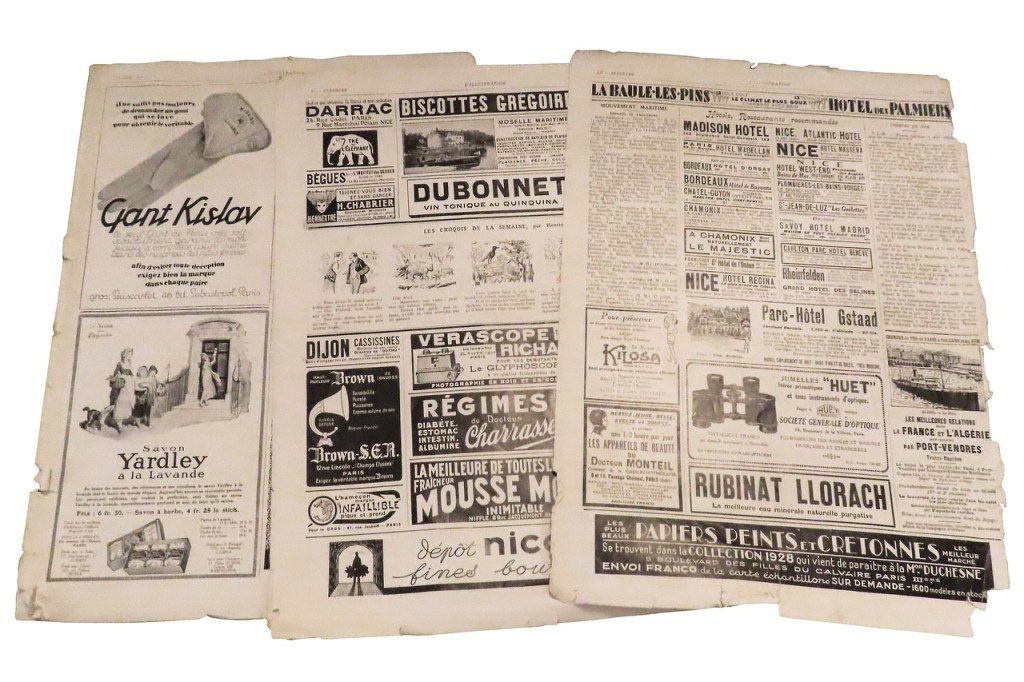
old newspaper
Perhaps a newspaper advert will jog your memory in years to come… Image by G.C. from Pixabay

An EPSRC-funded project at Heriot-Watt University in Scotland is developing a tablet-based ‘story facilitator’ agent (a software program designed to adapt its response to human interaction) which contains artificial intelligence to help people with Alzheimer’s disease and their carers. The device, called ‘AMPER’*, could improve wellbeing and a sense of self in people with dementia by helping them to uncover their ‘autobiographical memories’, about their own life and experiences – and also help their carers remember them ‘before the disease’.

Our ‘reminiscence bump’

We form some of our most important memories between our teenage years and early adulthood – we start to develop our own interests in music and the subjects that we like studying, we might experience first loves, perhaps going to university, starting a career and maybe a family. We also all live through a particular period of time where we’re each experiencing the same world events as others of the same age, and those experiences are fitted into our ‘memory banks’ too. If someone was born in the 1950s then their ‘reminiscence bump’ will be events from the 1970s and 1980s – those memories are usually more available and therefore people affected by Alzheimer’s disease would be able to access them until more advanced stages of the disease process. Big important things that, when we’re older, we’ll remember more easily if prompted.

In years to come you might remember fun nights out with friends.
Image by ericbarns from Pixabay

Talking and reminiscing about past life events can help people with dementia by reinforcing their self-identity, and increasing their ability to communicate – at a time when they might otherwise feel rather lost and distressed. 

AMPER will explore the potential for AI to help access an individual’s personal memories residing in the still viable regions of the brain by creating natural, relatable stories. These will be tailored to their unique life experiences, age, social context and changing needs to encourage reminiscing.”

Dr Mei Yii Lim, who came up with the idea for AMPER(3).

Saving your preferences

AMPER comes pre-loaded with publicly available information (such as photographs, news clippings or videos) about world events that would be familiar to an older person. It’s also given information about the person’s likes and interests. It offers examples of these as suggested discussion prompts and the person with Alzheimer’s disease can decide with their carer what they might want to explore and talk about. Here comes the clever bit – AMPER also contains an AI feature that lets it adapt to the person with dementia. If the person selects certain things to talk about instead of others then in future the AI can suggest more things that are related to their preferences over less preferred things. Each choice the person with dementia makes now reinforces what the AI will show them in future. That might include preferences for watching a video or looking at photos over reading something, and the AI can adjust to shorter attention spans if necessary. 

Reminiscence therapy is a way of coordinated storytelling with people who have dementia, in which you exercise their early memories which tend to be retained much longer than more recent ones, and produce an interesting interactive experience for them, often using supporting materials — so you might use photographs for instance

Prof Ruth Aylett, the AMPER project’s lead at Heriot-Watt University(4).

When we look at a photograph, for example, the memories it brings up haven’t been organised neatly in our brain like a database. Our memories form connections with all our other memories, more like the branches of a tree. We might remember the people that we’re with in the photo, then remember other fun events we had with them, perhaps places that we visited and the sights and smells we experienced there. AMPER’s AI can mimic the way our memories branch and show new information prompts based on the person’s previous interactions.

​​Although AMPER can help someone with dementia rediscover themselves and their memories it can also help carers in care homes (who didn’t know them when they were younger) learn more about the person they’re caring for.

*AMPER stands for ‘Agent-based Memory Prosthesis to Encourage Reminiscing’.


Suggested classroom activities – find some prompts!

  • What’s the first big news story you and your class remember hearing about? Do you think you will remember that in 60 years’ time?
  • What sort of information about world or local events might you gather to help prompt the memories for someone born in 1942, 1959, 1973 or 1997? (Remember that their reminiscence bump will peak in the 15 to 30 years after they were born – some of them may still be in the process of making their memories the first time!).

See also

If you live near Blackheath in South East London why not visit the Age Exchange and reminiscence centre which is an arts charity providing creative group activities for those living with dementia and their carers. It has a very nice cafe.

Related careers

The AMPER project is interdisciplinary, mixing robots and technology with psychology, healthcare and medical regulation.

We have information about four similar-ish job roles on our TechDevJobs blog that might be of interest. This was a group of job adverts for roles in the Netherlands related to the ‘Dramaturgy^ for Devices’ project. This is a project linking technology with the performing arts to adapt robots’ behaviour and improve their social interaction and communication skills.

Below is a list of four job adverts (which have now closed!) which include information about the job description, the types of people that the employers were looking for and the way in which they wanted them to apply. You can find our full list of jobs that involve computer science directly or indirectly here.

^Dramaturgy refers to the study of the theatre, plays and other artistic performances.

Dramaturgy for Devices – job descriptions

More on …

1. Agent-based Memory Prosthesis to Encourage Reminiscing (AMPER) Gateway to Research
2. The Digital Human: Reminiscence (13 November 2023) BBC Sounds – a radio programme that talks about the AMPER Project.
3. Storytelling AI set to improve wellbeing of people with dementia (14 March 2022) Heriot-Watt University news
4. AMPER project to improve life for people with dementia (14 January 2022) The Engineer


Subscribe to be notified whenever we publish a new post to the CS4FN blog.


This blog is funded by EPSRC on research agreement EP/W033615/1.

QMUL CS4FN EPSRC logos

Singing bird – a human choir, singing birdsong

Image by Dieter from Pixabay

“I’m in a choir”. “Really, what do you sing?” “I did a blackbird last week, but I think I’m going to be woodpecker today, I do like a robin though!”

This is no joke! Marcus Coates a British artist, got up very early, and working with a wildlife sound recordist, Geoff Sample, he used 14 microphones to record the dawn chorus over lots of chilly mornings. They slowed the sounds down and matched up each species of bird with different types of human voices. Next they created a film of 19 people making bird song, each person sang a different bird, in their own habitats, a car, a shed even a lady in the bath! The 19 tracks are played together to make the dawn chorus. See it on YouTube below.

Marcus didn’t stop there, he wrote a new bird song score. Yes, for people to sing a new top ten bird hit, but they have to do it very slowly. People sing ‘bird’ about 20 times slower than birds sing ‘bird’ ‘whooooooop’, ‘whooooooop’, ‘tweeeeet’. For a special performance, a choir learned the new song, a new dawn chorus, they sang the slowed down version live, which was recorded, speeded back up and played to the audience, I was there! It was amazing! A human performance, became a minute of tweeting joy. Close your eyes and ‘whoop’ you were in the woods, at the crack of dawn!

Computationally thinking a performance

Computational thinking is at the heart of the way computer scientists solve problems. Marcus Coates, doesn’t claim to be a computer scientist, he is an artist who looks for ways to see how people are like other animals. But we can get an idea of what computational thinking is all about by looking at how he created his sounds. Firstly, he and wildlife sound recordist, Geoff Sample, had to focus on the individual bird sounds in the original recordings, ignore detail they didn’t need, doing abstraction, listening for each bird, working out what aspects of bird sound was important. They looked for patterns isolating each voice, sometimes the bird’s performance was messy and they could not hear particular species clearly, so they were constantly checking for quality. For each bird, they listened and listened until they found just the right ‘slow it down’ speed. Different birds needed different speeds for people to be able to mimic and different kinds of human voices suited each bird type: attention to detail mattered enormously. They had to check the results carefully, evaluating, making sure each really did sound like the appropriate bird and all fitted together into the Dawn Chorus soundscape. They also had to create a bird language, another abstraction, a score as track notes, and that is just an algorithm for making sounds!

Fun to try

Use your computational thinking skills to create a notation for an animal’s voice, a pet perhaps? A dog, hamster or cat language, what different sounds do they make, and how can you note them down. What might the algorithm for that early morning “I want my breakfast” look like? Can you make those sounds and communicate with your pet? Or maybe stick to tweeting? (You can follow @cs4fn on Twitter too).

Enjoy the slowed-down performance of this pet starling which has added a variety of mimicked sounds to its song repertoire.

Jane Waite, Queen Mary University of London


Watch …


Related Magazine …


EPSRC supports this blog through research grant EP/W033615/1.

Eggheads: helping us to visualise objects and classes

Ada the Egghead: a purple face with pinky purple hair
Ada the Egghead
Image by Daniel Gill for CS4FN

Past CS4FN articles have explored object-oriented programming through self-aware pizza and Strictly Come Dancing judges. But, if you’re one of those people who like to learn visually, it can be challenging to imagine what an object or class looks like. This article will hopefully help you to both think more about what makes this paradigm so useful as well as to give you a way to visualise objects.

To begin this adventure, I’d like to introduce Ada. Ada is an example of the newly discovered species egghead. Every egghead has very distinctive hair and eye colours. For example, Ada’s hair is a delightfully bright pink, and their eyes, a deep red. Despite their appearance, the egghead has a vicious roar intended to ward off predators, or indeed poachers.

Classes

As computer scientists, we might want to represent different eggheads in a program, but we don’t really want to store information about the eggheads with a written description or an image, because this would be harder than need-be for a computer to ‘understand’ (or rather to process as they don’t understand as such). Instead, we can store lots of individual features together, so that the computer can find out exactly what it needs from each egghead.

Egghead
Name
Hair
Eyes

Roar button
Egghead class. Image by Daniel Gill for CS4FN

One way to achieve this is by using a class. A class is a template which contains spaces for us to fill in details for the thing we want to represent. For the egghead, we might want to store data about their name, hair colour, and eye colour – then we can fill in the template for each of the eggheads we find. These individual features are often called attributes. In a program, these attributes would be represented with variables: a place where a value, a piece of data, is stored. We can visualise a class therefore as a box with gaps to fill in for the attributes like the one on the left.

From this image, you will see alongside the attributes, we also have an image of a button for roaring. As well as storing attributes, we also define behaviours. These are actions that we can perform on the thing being represented. We visualise any behaviour as such a button. For this example, we could imagine that pressing this button might provoke the egghead causing them to roar. In programming, a behaviour is represented by a procedure, some pre-defined code that when executed makes something happen. A button that causes something to happen is a simple way to visualise such procedures.

A key point to realise is that this class is simply a template – it isn’t storing any information, nor will the roar button work. We have no actual eggheads yet… That is where objects come in.

Objects

You may have noticed that I have been using the word thing to represent the actual thing (here eggheads) that we are representing with the class. This is to avoid using the word object, which has its own special meaning, in, you guessed it, object-oriented programming. If we want to actually use our class, we need to make an instance. That just means filling in the relevant details about the specific egghead we want to store. This instance is called an object.

Let’s imagine we want to store a representation of Ada in our program. We would take an instance of the Egghead class and fill in their details. The resulting object would represent Ada, whereas the class we started with represents all and any egghead that might ever exist. Below, you can see the objects for Ada and some of Ada’s friends; Alan and Edsger. We still visualise objects as boxes, just like classes, except now the gaps are all filled in.

Eggheads with values for the fields eg
Ada
Pink
Red
Objects representing Ada, Alan and Edsger. Image by Daniel Gill for CS4FN

We (or a computer) could even take the given features of Alan and Edsger and generate an image of what they might look like. We have everything we need here to create something that looks and behaves like an egghead. This method of storing data means that a program can take whatever information it might want directly from the object. Likewise, it can do the equivalent of pressing the roar button and make each individual egghead roar.

Hiding the Details

Egghead with blue changed to orange
Trying to change Alan’s eye colour. Image by Daniel Gill for CS4FN

One thing we should consider while making the class is the integrity of the data. In its current form, any other part of our program, or another program using our class, can directly edit the attributes stored. Another part of the program (perhaps representing a virtual world for a virtual egghead to live in) might accidentally change the eye colour attribute for Alan, for example. This wouldn’t change Alan’s actual eye colour (which couldn’t happen anyway!), so our data would then be wrong. We can’t have that!

We can fix this by hiding the eye colour from the rest of the program, so it is stored within the object, but not accessible outside of it. But we still need a way for the program to read it: for this we use a button in our picture of the Egghead class. The existence of the eye colour attribute can then only be seen by other parts of the program by a procedure that gets the eye colour. No similar procedure is given for changing the eye colour, so there is no way to do it by mistake. Let’s build this new version of our class.

Sequence as values change
(a) Our new class, (b) An object representing Edsger, with eye colour hidden, (c) Pressing GetEyes gives us the eye colour. Image by Daniel Gill for CS4FN

This concept of hiding details is sometimes called encapsulation or information hiding, but computer scientists disagree about what these terms refer to exactly. Encapsulation is broader in its meanings, whereas information hiding is closer to what we are trying to do here. This video by ArjanCodes (see below) explains this distinction further.

We could change our class to include this concept for the name and hair colour, too. Whilst it is entirely possible for these attributes to change, it turns out that it is a good idea to hide them too: so hide name and use SetName and GetName buttons. That allows us to control the type of data we have going into that attribute (for example, checking the given name isn’t a number, which as all egghead names are made of letters would be a mistake).

Where next?

Now we have a class that represents all eggheads, we can store the details of any new egghead efficiently and safely. Hold on… some last-minute breaking news: scientists have found a new sub-species of egghead they are calling a rainbow egghead. All rainbow eggheads have rainbow hair, and a unique roar. Next time, we’ll use the concept of inheritance to give a more efficient way to write programs that store information about eggheads.

Daniel Gill, Queen Mary University of London

More on …

Watch…


Subscribe to be notified whenever we publish a new post to the CS4FN blog.


This blog is funded by EPSRC on research agreement EP/W033615/1.

QMUL CS4FN EPSRC logos

Ethics – What would you do?

Signs pointing RIGHT to right and WRONG to the left
Right / Wrong image by Tumisu from Pixabay

You often hear about unethical behaviours, be it in politicians or popstars, but getting to grips with ethics, which deals with issues about what behaviours are right and wrong, is an important part of computer science too. Find out about it and at the same time try our ethical puzzle below and learn something about your own ethics…

Is that legal?

Ethics are about the customs and beliefs that a society has about the way people should be treated. These beliefs can be different in different countries, sometimes even between different regions of the same country, which is why it’s always important to know something about the local area when going on holiday. You don’t want to upset the local folk. Ethics tend to form the basis of countries’ laws and regulations, combining general agreement with practicality. Sticking your tongue out may be rude and so unethical, but the police have better things to do than arrest every rude school kid. Similarly, slavery was once legal, but was it ever ethical? Laws and ethics also have other differences; individuals tend to judge unethical behaviour, and shun those who behave inappropriately, while countries judge illegal behaviour – using a legal system of courts, judges and juries to enforce laws with penalties.

Dilemmas, what to do?

Now imagine you have the opportunity to go treading on the ethical and legal toes of people across the world from the PC in your home. Suddenly the geographical barriers that once separated us vanish. The power of computer science, like any technology, can be used for good or evil. What is important is that those who use it understand the consequences of their actions, and choose to act legally and ethically. Understanding legal requirements, for example contracts, computer misuse and data protection are important parts of a computer scientist’s training, but can you learn to be ethical?

Computer scientists study ethics to help them prepare for situations where they have to make decisions. This is often done by considering ethical dilemmas. These are a bit like the computer science equivalent of soap opera plots. You have a difficult problem, a dilemma, and have to make a choice. You suddenly discover you have a unknown long lost sister living on the other side of the Square, do you make contact or not, (on TV this choice is normally followed by a drum roll as the episode ends).

Give it a go

Here is your chance to try an ethical dilemma for yourself. Read the alternatives and choose what you would do in this situation. Then click on the poll choice. Like all good ‘personality tests’ you find out something about yourself: in this case which type of ethical approach you have in the situation according to some famous philosophers. There are also some fascinating facts to impress your mates. We’ll share the answers tomorrow.

Your Dilemma and your ethical personality

You are working for a company who are about to launch a new computer game. The adverts have gone out, the newspapers and TV are ready for the launch … then the day before you are told that there is a bug, a mistake, in the software. It means players sometimes can’t kill the dragon at the end of the game. If you hit the problem the only solution is to start the final level again. It can be fixed they think but it will take about a week or so to track it down. The computer code is hard to fix as it’s been written by 10 different people and 5 of them have gone on a back-packing holiday so can’t be contacted.

Peter McOwan, Queen Mary University of London

What the answers mean about you at the end!


Related Magazine …


Subscribe to be notified whenever we publish a new post to the CS4FN blog.


This blog is funded by EPSRC on research agreement EP/W033615/1.

QMUL CS4FN EPSRC logos

The answers

If you picked Option 1

1) Go ahead and launch. After all, there are still plenty of parts to the game that do work and are fun, there will always be some errors, and for this game in particular thousands have been signing up for text alerts to tell them when it’s launched. It will make many thousands happy.

That means you follow an ethical approach called ‘Act utilitarianism’.

Act Happy

The main principle of this theory, put forward by philosopher John Stuart Mill, is to create the most happiness (another name for happiness here is utility thus utilitarianism). For each situation you behave (act) in a way that increases the happiness of the largest number of people, and this is how you decide what is wrong or right. You may take different actions in similar situations. So you choose to launch a flawed game if you know that you have pre-sales of a hundred thousand, but another time decide to not launch a different flawed game where there are only one thousand pre-sales, as you wont be making so many people unhappy. It’s about considering the utility for each action you take. There is no hard and fast rule.

If you picked Option 2

2) Cancel the launch until the game is fixed properly, no one should have to buy a game that doesn’t work 100 per cent.

That means you follow an ethical approach called ‘Duty Theory’

Do your Duty

Duty theories are based on the idea of there being universal principles, such as ‘you should never ever lie, whatever the circumstances’. This is also known as the dentological approach to ethics (philosophers like to bring in long words to make simple things sound complicated!). The German philosopher Emanuel Kant was one of the main players in this field. His ‘Categorical Imperative’ (like I said long words…) said “only act in a way that you would want everyone else to act” (…simple idea!). So if you don’t think there should ever be mistakes in software then don’t make any yourself. This can be quite tough!

If you picked Option 3

3) Go ahead and launch. After all it’s almost totally working and the customers are looking forward to it. There will always be some errors in programs: it’s part of the way complicated software is, and a delay to game releases leads to disappointment.

You would be following the approach called ‘Rule utilitarianism’.

Spread a little happiness

Say something nice to everyone you meet today…it will drive them crazy

The main principle of this flavour of utilitarianism theory, put forward by philosopher Jeremy Bentham, is to create the most happiness (happiness here is called utility thus utilitarianism). You follow general rules that increase the happiness of the largest number of people, and this is how you decide what’s wrong or right. So in our dilemma the rule could be ‘even if the game isn’t 100% correct, people are looking forward to it and we can’t disappoint them’. Here the rule increases happiness, and we apply it again in the future if the same situation occurs.

Collaborative community coding & curating

Equality, diversity and inclusion in the R Project

You might not think of a programming language like Python or Scratch as being an ‘ecosystem’ but each language has its own community of people who create and improve its code (compilers, library code,…), flush out the bugs, introduce new features, document any changes and write the ‘how to’ guides for new users. 

R is one such programming language. It’s named after its two co-inventors (Ross Ihaka and Robert Gentleman) and is used by around two million people around the world. People working in all sorts of jobs and industries (for example finance, academic research, government, data journalists) use R to analyse their data. The software has useful tools to help people see patterns in their data and to make sense of that information. 

It’s also open source which means that anyone can use it and help to improve it, a bit like Wikipedia where anyone can edit an article or write a new one. That’s generally a good thing because it means everyone can contribute but it can also bring problems. Imagine writing an essay about an event at your school and sharing it with your class. Then imagine your classmates adding paragraphs of their own about the event, or even about different events. Your essay could soon become rather messy and you’d need to re-order things, take bits out and make sure people hadn’t repeated something that someone had already said (but in a slightly different way). 

When changes are made to software people also want to keep a note not just of the ‘words’ added (the code) but also to make a note of who added what and when. Keeping good records, also known as documentation, helps keep things tidy and gives the community confidence that the software is being properly looked after.

Code and documentation can easily become a bit chaotic when created by different people in the community so there needs to be a core group of people keeping things in order. Fortunately there is – the ‘R Core Team’, but these days its membership doesn’t really reflect the community of R users around the world. R was first used in universities, particularly by more privileged statistics professors from European countries and North America (the Global North), and so R’s development tended to be more in line with their academic interests. R needs input and ideas from a more diverse group of active developers and decision-makers, in academia and beyond to ensure that the voices of minoritised groups are included. Also the voices of younger people, particularly as many of the current core group are approaching retirement age.

Dr Heather Turner from the University of Warwick is helping to increase the diversity of those who develop and maintain the R programming language and she’s been given funding by the EPSRC* to work on this. Her project is a nice example of someone who is bringing together two different areas in her work. She is mixing software development (tech skills) with community management (people skills) to support a range of colleagues who use R and might want to contribute to developing it in future, but perhaps don’t feel confident to do so yet

Development can involve things like fixing bugs, helping to improve the behaviour or efficiency of programs or translating error messages that currently appear on-screen in the English language into different languages. Heather and her colleagues are working with the R community to create a more welcoming environment for ‘newbies’ that encourages participation, particularly from people who are in the community but who are not currently represented or under-represented by the core group and she’s working collaboratively with other community organisations such as R-Ladies, LatinR and RainbowR. Another task she’s involved in is producing an easier-to-follow ‘How to develop R’ guide.

There are also people who work in universities but who aren’t academics (they don’t teach or do research but do other important jobs that help keep things running well) and some of them use R too and can contribute to its development. However their contributions have been less likely to get the proper recognition or career rewards compared with those made by academics, which is a little unfair. That’s largely because of the way the academic system is set up. 

Generally it’s academics who apply for funding to do new research, they do the research and then publish papers in academic journals on the research that they’ve done and these publications are evidence of their work. But the important work that supporting staff do in maintaining the software isn’t classified as new research so doesn’t generally make it into the journals, so their contribution can get left out. They also don’t necessarily get the same career support or mentoring for their development work. This can make people feel a bit sidelined or discouraged. 

To try and fix this and to make things fairer the Society of Research Software Engineering was created to champion a new type of job in computing – the Research Software Engineer (RSE). These are people whose job is to develop and maintain (engineer) the software that is used by academic researchers (sometimes in R, sometimes in other languages). The society wants to raise awareness of the role and to build a community around it. You can find out what’s needed to become an RSE below. 

Heather is in a great position to help here too, as she has a foot in each camp – she’s both an Academic and a Research Software Engineer. She’s helping to establish RSEs as an important role in universities while also expanding the diversity of people involved in developing R further, for its long-term sustainability.

Further reading


Related careers

QMUL

Below is an example of a Research Software Engineer role which was advertised at QMUL in April 2024 – you can read the original advert and see a copy of the job description / person specification information which is archived at the “Jobs in Computer Science” website. This advert was looking for an RSE to support a research project “at the intersection of Natural Language Processing (NLP) and multi-modal Machine Learning, with applications in mental health.”

QMUL also has a team of Research Software Engineers and you can read about what they’re working on and their career here (there are also RSEs attached to different projects across the university, as above).

Archived job adverts from elsewhere

Below are some examples of RSE jobs (these particular vacancies have now closed but you can read about what they were looking for and see if that sort of thing might interest you in the future). The links will take you to a page with the original job advert + any Job Description (JD – what the person would actually be doing) and might also include a Person Specification (PS – the type of person they’re looking for in terms of skills, qualifications and experience) – collectively these are often known as ‘job packs’.

Note that these documents are written for quite a technical audience – the people who’d apply for the jobs will have studied computer science for many years and will be familiar with how computing skills can be applied to different subjects.

1. The Science and Technology Facilities Council (STFC) wanted four Research Software Engineers (who’d be working either in Warrington or Oxford) on a chemistry-related project (‘computational chemistry’ – “a branch of chemistry that uses computer simulation to assist in solving chemical problems”) 

2. The University of Cambridge was looking for a Research Software Engineer to work in the area of climate science – “Computational modelling is at the core of climate science, where complex models of earth systems are a routine part of the scientific process, but this comes with challenges…”

3. University College London (UCL) wanted a Research Software Engineer to work in the area of neuroscience (studying how the brain works, in this case by analysing the data from scientists using advanced microscopy).


Subscribe to be notified whenever we publish a new post to the CS4FN blog.


This blog is funded by EPSRC on research agreement EP/W033615/1.

QMUL CS4FN EPSRC logos

CS4FN Advent Calendar – Day 25 bonus Christmas crackers: have you ever seen this cracker joke?

If you’re pulling a Christmas cracker today look out for this now famous but fairly puzzling ‘joke’ –

Q: What kind of cough medicine does Dracula take?
A: Con medicine

Apart from the fact that the joke is more suited to Hallowe’en (I wonder when someone will invent Hallowe’en crackers!) ‘con medicine’ doesn’t make any sense as an answer. Over the years lots of people found this joke in their cracker then posted a photograph on social media asking if anyone got the joke and could explain it.

From 2015

From 2016
Still baffling folk in 2018…

An explanation from Andrew Taylor seems to have solved the mystery. The answer is probably coffin medicine (though even then it’s still not a particularly great joke, in keeping with the traditions of Christmas cracker jokes). Where has the ‘ffi‘ gone though? Read Andrew’s 2018 blog post ‘Con Medicine‘ to find out how a typographical quirk in the way some fonts / typefaces display those letters probably resulted in a simple error in printing.

Perhaps the error has been fixed and no-one will find it in their crackers this year!


Advert for our Advent calendar
Click the tree to visit our CS4FN Christmas Computing Advent Calendar

EPSRC supports this blog through research grant EP/W033615/1.

CS4FN Advent 2023 – Day 25: Merry Christmas! Today’s post is about the ‘wood computer’

Today is the final post in our CS4FN Christmas Computing Advent Calendar – it’s been a lot of fun rummaging in the CS4FN back catalogue, and also finding out about some new things to write about.

Advert for our Advent calendar
Image drawn and digitised by Jo Brodie.

Each day we’ve published a blog post about computing with the theme suggested by the picture on the advent calendar’s ‘door’. Our first picture was a woolly jumper so the accompanying post was about the links between knitting and coding, the door with a picture of a ‘pair of mittens’ on led to a post about pair programming and gestural gloves, a patterned bauble to an article about printed circuit boards, and so on. It was fun coming up with ideas and links and we hope it was fun to read too.

We hope you enjoyed the series of posts (click on any of the Christmas trees in this post to see them all) and that you are already having a very Merry Christmas.

And on to today’s post which is inspired by the picture of a Christmas Tree, so it’ll be a fairly botanically-themed post. The suggestion for this post came from Prof Ursula Martin of Oxford University, who told us about the ‘wood computer’.

It’s a Christmas tree! Image drawn and digitised by Jo Brodie.

The Wood Computer

by Jo Brodie, QMUL.

Other than asking someone “do you know what tree this is?” as you’re out enjoying a nice walk and coming across an unfamiliar tree, the way of working out what that tree is would usually involve some sort of key, with a set of questions that help you distinguish between the different possibilities. You can see an example of the sorts of features you might want to consider in the Woodland Trust’s page on “How to identify trees“.

Depending on the time of year you might consider its leaves – do they have stalks or not, do they sit opposite from each other on a twig or are they diagonally placed etc. You can work your way through leaf colour, shape, number of lobes on the leaf and also answer questions about the bark and other features of your tree. Eventually you narrow things down to a handful of possibilities.

What happens if the tree is cut up into timber and your job is to check if you’re buying the right wood for your project. If you’re not a botanist the job is a little harder and you’d need to consider things like the pattern of the grain, the hardness, the colour and any scent from the tree’s oils.

Wooden bridge image by Peter H from Pixabay

Historically, one way of working out which piece of timber was in front of you was to use a ‘wood computer’ or wood identification kit. This was prepared (programmed!) from a series of index cards with various wood features printed on all the cards – there might be over 60 different features.

Every card had the same set of features on it and a hole punched next to every feature. You can see an example of a ‘blank’ card below, which has a row of regularly placed holes around the edge. This one happens to be being used as a library card rather than a wood computer (though if we consider what books are made of…).

Image of an edge-notched card (actually being used as a library card though), from Wikipedia. Edge-notched Card (without the edges notched) by Daniel MacKay, image has been released into the public domain (CC0).

I bet you can imagine inserting a thin knitting needle into any of those holes and lifting that card up – in fact that’s exactly how you’d use the wood computer. In the tweet below you can see several cards that made up the wood computer.

One card was for one tree or type of wood and the programmer would add notch the hole next to features that particularly defined that type. For example you’d notch ‘has apples’ for the apple tree card but leave it as an intact hole on the pear tree card.  If a particular type of timber had fine grained wood they’d add the notch to the hole next to “fine-grained”. The cards were known, not too surprisingly, as edge-notched cards.

You can see what one looks like here with some notches cut into it. You might have spotted how knitting needles can help you in telling different woods apart.

Holes and notches

Edge-notched card overlaid on black background, with two rows of holes. On the top a hole in the first row is notched, on the right hand side two holes are notched. Image from Wikipedia. Randlochkarte mit zwei Schlitzungen (handgemalt) [Perforated card with two slots (hand-painted)] by Peter Frankfurt, image has been released into the public domain (CC0).

Each card would end up with a slightly different pattern of notched holes, and you’d end up with lots of cards that are slightly different from each other.

Example ‘wood computer’. At the end of your search (to find out which tree your piece of wood came from) you are left with two cards for fine-grained wood. If your sample has a strong scent then it’s likely it’s the tree in the card on the right (though you could arrive at the same conclusion by using the differences in colour too). The card at the top is the blank un-notched card.

How it works

Your wood computer is basically a stack of cards, all lined up and that knitting needle. You pick a feature that your tree or piece of wood has and put your needle through that hole, and lift. All of the cards that don’t have that feature notched will have an un-notched hole and will continue to hang from your knitting needle. All of the cards that contain wood that do have that feature have now been sorted from your pile of cards and are sitting on the table.

You can repeat the process several times to whittle (sorry!) your cards down by choosing a different feature to sort them on.

The advantage of the cards is that they are incredibly low tech, requiring no electricity or phone signal and they’re very easy to use without needing specialist botanical knowledge.

You can see a diagram of one on page 8 of the 20 page PDF “Indian Standard: Key for identification of commercial timbers”, from 1974.

The word ‘card’ features over 30 times on this page and the word Christmas over 10 times but this post isn’t actually about Christmas cards! We hope you had plenty of those 🙂 Merry Christmas.

Teachers: we have a classroom sorting activity that uses the same principles as the wood computer. Download our Punched Card Searching PDF from our activity page.

The creation of this post was funded by UKRI, through grant EP/K040251/2 held by Professor Ursula Martin, and forms part of a broader project on the development and impact of computing.


Advert for our Advent calendar
Click the tree to visit our CS4FN Christmas Computing Advent Calendar

EPSRC supports this blog through research grant EP/W033615/1.

CS4FN Advent 2023 – Day 24: Santa’s Sleigh – track its progress through the skies

We are nearly coming to the end of our CS4FN Christmas Computing Advent Calendar with one more post to come tomorrow. If you’ve missed any you can catch up by scrolling to the end and click on the Christmas Tree in the panel for the complete list so far.

Today’s advent calendar window shows Father Christmas’ sleigh with a sack full of presents ready for delivery. Today’s theme is about the many different online ways that you can now ‘track’ his movements around the world. You may be able to see (cloud permitting) his sleigh ‘in person’ as it flies over. In reality it’s International Space Station (ISS) whizzing past – but other interpretations are available 🙂

Visit this page https://www.astroviewer.net/iss/en/observation.php and type in your city to see when and where you might spot the ISS. On Christmas Day 2025 the ISS will pass over the South of England from around 6.17am to 6.22am, reaching its highest point at around 6.19am, so you’ll have to get up early!

You can track Father Christmas as he dashes through the sky, delivering presents. Image drawn and digitised by Jo Brodie.

1. NORAD Santa tracker

https://www.noradsanta.org/en/ for games
https://www.noradsanta.org/en/map (you can also track him on NORAD’s apps too)

Vintage photo image by Alexa from Pixabay

In 1955, so the story goes, an American department store published a newspaper advert with a phone number for children to call so that they could speak to Father Christmas. Unfortunately a misprint meant that the wrong number was given and instead people found they were talking to the US military’s Air Defense Command (now called North America Air Defense Command or NORAD).

Realising the mistake, but also spotting a great public relations opportunity, the team capitalised on this and began to make an annual event of it.

NORAD uses radar and geosynchronous* satellites to monitor Father Christmas. The satellites are able to detect infrared (heat) radiation and apparently Rudolph’s red nose gives quite a strong signal. This data is then shared with everyone via their website, though they don’t know in advance what route he’ll take.

If you’re visiting the website hover over the different bits of the picture as there are linked activities and extra information too.

*geo = Earth, synchronous = matching / following (like when you sync devices), the satellite follows the Earth’s orbit and is always above the same spot, so effectively (from the Earth’s point of view) the satellite appears not to move (it is moving but it follows the Earth’s rotation).

2. FlightRadar24 Santa tracker

https://www.flightradar24.com/R3DN053/335a9682

FlightRadar24 is a great website for telling you the answer to “what was that aircraft that’s just flown by?” It tracks the flight of aircraft all over the globe in real time, using a signal transmitted by the aircraft’s beacon (called a transponder) which announces where it is. Father Christmas’ sleigh has its own transponder too which is transmitting its location to receivers around the world.

An aircraft, or Santa’s sleigh, gets information about where it is from a GPS satellite (very similar to using a maps app on a smartphone and it telling you where you are and whether you should go left or right) and it then transmits this location info, along with other data, through its transponder.

There are thousands of receivers here on Earth, many of them in people’s homes and gardens (you can even apply to host a receiver antenna, or build your own with a Raspberry Pi) and whenever Santa’s sleigh passes over one of these ‘ground stations’ its signal is picked up and collected by FlightRadar24. The receivers are in different places so they are receiving the same signal at slightly different times and this information can be used to work out (by triangulation) how fast the sleigh is moving and in what direction.

Apparently Santa has been “able to extend the reach of his transponder by using the reindeer antlers as additional antenna” so the tracking should be fairly accurate.

3. Google Santa tracker

https://santatracker.google.com/

Google’s Santa Tracker has lots of games to play while you wait for Santa and his sleigh to take flight, including Code Boogie where you can try and program some dancing elves. You move little blocks (a bit like Scratch) to copy the dance moves and, if you get it right, it will show you the underlying JavaScript code.

Dave Holmes, a developer who works at Google and who works on the Santa Tracker project says “Santa Tracker launched in 2004, and has been an important project at Google ever since. While there’s a small core team dedicated to Santa, up to 20 or so Googlers volunteer to help make it happen every year, and it’s become a true community effort. It’s also a way for our developers to try things and see what Google products can do … I like to say that everything I’ve learned at Google, I learned from Santa.”

Google has also added some ‘Easter eggs‘ to its search page – try typing in Christmas or where is Santa to https://www.google.com/. You can also colour in some images online at their Christmas-themed Art Coloring Book, from Google’s Arts and Culture.

Further reading

The Googlers who help track Santa each Christmas (22 December 2021) Google Blog

4. Early internet Santa-themed humour

Image by Jo Brodie for CS4FN.

Back in the early 1990s email was very new but right from the start people used it to send each other amusing things. One of them was a rather literal consideration of the physics of a sleigh that is laden with gifts and a traditionally overweight Santa, led by a team of reindeer moving at unlikely speeds (after all Father Christmas has to get around the entire world to deliver presents, in just one day). The author (unknown) began –

No known species of reindeer can fly. BUT there are 300,000 species of living organisms yet to be classified, and while most of these are insects and germs, this does not COMPLETELY rule out flying reindeer which only Santa has ever seen.”

But then goes on to point out that such a gift-delivery system would be working far beyond normal levels and would probably end in disaster, suggesting that –

In short, they will burst into flame almost instantaneously, exposing the reindeer behind them, and create deafening sonic booms in their wake. The entire reindeer team will be vaporized within 4.26 thousandths of a second. Santa, meanwhile, will be subjected to centrifugal forces 17,500.06 times greater than gravity. A 250-pound Santa (which seems ludicrously slim) would be pinned to the back of his sleigh by 4,315,015 pounds of force.”

Fortunately Father Christmas has his own magic, meaning that we don’t need to worry too much about him disobeying the laws of physics. But he and his reindeer really deserve those cookies, milk and carrots!

You can read the full post here: The Physics of Santa and His Reindeer Snopes.com

The creation of this post was funded by UKRI, through grant EP/K040251/2 held by Professor Ursula Martin, and forms part of a broader project on the development and impact of computing.


Advert for our Advent calendar
Click the tree to visit our CS4FN Christmas Computing Advent Calendar

EPSRC supports this blog through research grant EP/W033615/1.