Encrypted Deckchairs

Lots of stripy deckchairs on a beach in the setting sun
Image by Dean Moriarty from Pixabay  

Summer is here so it is time to start looking for secret messages on the beach. All those stripy deckchairs and windbreaks seem a great place to hide messages.

How might a deckchair contain a message? Well, the Mars Perseverance Rover famously showed how. It encoded “DARE MIGHTY THINGS” along with the GPS coordinates of NASA’s Jet Propulsion Laboratory in its parachute that allowed it to land safely on the surface of Mars. The pattern in the parachute involves a series of rings of orange stripes. Within each ring are groups of 7 stripes. Each group encodes a binary version of a letter: so A is 1 or 0000001. In the pattern this becomes 6 yellow stripes and then an orange one. G, being the 7th letter of the alphabet is encoded as 0000111 or four yellow stripes followed by three orange. Each letter is encoded using the same pattern. In this way, with enough stripes you can spell out any message.

Back to deckchairs, you can code patterns in a similar way in the stripes of a deckchair. One deckchair could have fourteen stripes, say, with a choice from two colours for each stripe. Perhaps thin stripes of a different colour could separate them. That would be enough to encode a pair of characters per deckchair using the NASA code (your initials perhaps). Line up a long row of such deckchairs on the beach and you could spell out a whole message. An alternative would be to use Morse code, with two different coloured stripes for dots and dashes…or invent your own stripy code.

Alternatively, if you have dress making skills, make a stripy dress that really makes a statement.

Sadly, so far, all the deckchairs I’ve tried to decode appear to have only contained gobbledygook though perhaps I’ve just not tried the right code yet, or found the right deckchair. Or maybe, so far no one has actually coded a message in a deckchair. If you have an old deckchair and some sewing skills, perhaps you could be the first and re-skin it with a message.


Steganographic Origami

If making a deckchair is a bit much for you, more simply you could make an origami deckchair, as we (Ho) did and hide a message in your origami. These videos show how he did it (note his are luxury deckchairs): (template below)

Making an origami encoded deckchair, Step one.

Making an origami encoded deckchair, Step two.

Making an origami encoded deckchair, Step three.

– Paul Curzon and Kok Ho Huen, Queen Mary University of London


Templates and written instructions

More on …


This article was funded by UKRI, through Professor Ursula Martin’s grant EP/K040251/2 and grant EP/W033615/1.


QMUL CS4FN EPSRC logos

Back (page) to the drawing board

Dart in bullseye of dartboard
Image by Tim Bastian from Pixabay

Here are some more cunning contraptions, with and without a purpose…

– Jo Brodie, Queen Mary University of London

More on …

Related Magazines …


This article was funded by UKRI, through Professor Ursula Martin’s grant EP/K040251/2 and grant EP/W033615/1.

QMUL CS4FN EPSRC logos

Tempest Prognosticator: look out, leeches!

raindrops on a window
Image by Michaela 💗 from Pixabay

When we leave our homes we might check a weather app to give us predictions from number-crunching computers, to see if we’ll need an umbrella, but in the mid-1800s the appropriately named George Merryweather thought he’d make use of the alleged weather predicting properties of leeches to create a ‘leech barometer’ to measure the weather. His notion relied on the belief that leeches, kept inside small glass bottles, would try and escape when a storm was due (because they might be more sensitive to subtle changes in electrical conditions in the air that we humans would miss). The escaping leeches would trigger a small hammer placed above the bottles which would strike a bell and alert everyone in earshot that a storm might be imminent and also that your living room was about to be overrun with leeches. Not surprisingly it wasn’t very popular, though Merryweather claimed to have great success with it.

– Jo Brodie, Queen Mary University of London

More on …

Related Magazines …


This article was funded by UKRI, through Professor Ursula Martin’s grant EP/K040251/2 and grant EP/W033615/1.

QMUL CS4FN EPSRC logos

Quipu: tie a knot in it

A string with lots of multicoloured strings attached to it, each with knots tied down them
Quipu in the Museo Machu Picchu, Casa Concha, Cusco
Image by Pi3.124 from Wikimedia CC-BY-SA-4.0

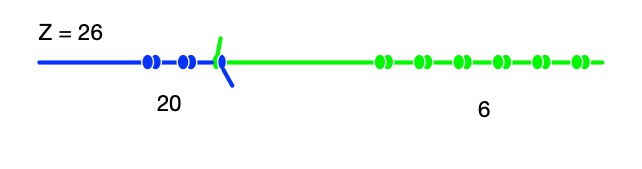
Quipu (the Quechua word for ‘knot’) are knotted, and sometimes differently coloured, strings, made from the hair fibres of llamas or alpacas. They were used by people, such as the Incas, living hundreds of years ago in Andean South America. They used the quipu to keep numeric trade or military records. An external memory or ‘database’ was formed of several of the strings tied together at one end. Each string stored numbers as different kinds of knots at different positions along the strings, with positions for ones, tens, hundreds, etc. It worked a bit like an abacus, but with much less danger of losing your work if you turn it upside down. The number ‘1’ was represented as a figure-of-eight knot in the ones position and ‘40’ could be indicated by four simple knots in the tens position. Not many quipu survive and even fewer have been decoded, but anthropologists have begun to find evidence that they might contain not just numbers but a written (well, a tactile) form too.

Some have been identified as playing a role a bit like our bar codes on objects we buy or postcodes for places. Rather than representing numbers, the Quipu seem to be using numbers as codes to represent objects or places.


Make your own Quipu

Make your own Quipu decoration or necklace that represents something by tying knots in coloured string or ribbons.

  1. It could keep track of important numbers for you, such as how much pocket money you have at the end of each week, making a new string (or ribbon) for each week, or
  2. Store some sequence of numbers in a sequence of quipu like the 3 times table or the square numbers or the Fibonacci numbers…, or
  3. Invent a code such as A=1, B=2, … and store a message on your Quipu by spelling it out in numbers and so knots.
A Quipu showing 26 or if using a simple number-letter code, Z
Image by Paul Curzon

To make your Quipu more colourful tie different coloured strings together end to end to make a single Quipu. One colour string then represents ones and the next tied to it represents tens for a single number and so letter (and so on). Use different colours for your next Quipu.

– Jo Brodie, Queen Mary University of London

More on …

Related Magazines …


This article was funded by UKRI, through Professor Ursula Martin’s grant EP/K040251/2 and grant EP/W033615/1.
QMUL CS4FN EPSRC logos

Bullseye! The intelligent dart board

A dart in the bulls eye of a dartboard
Image by Tim Bastian from Pixabay

Mark Rober, an engineer and YouTuber who worked for NASA, has created a dartboard that jumps in front of your dart to land you the best score. Throw a dart at his board and infra-red motion capture cameras track its path, and, software (and some maths) predicts where it will land. Motors then move the dartboard into a better position to up the score in real time!

– Jo Brodie, Queen Mary University of London

More on …

Related Magazines …


This article was funded by UKRI, through Professor Ursula Martin’s grant EP/K040251/2 and grant EP/W033615/1.

QMUL CS4FN EPSRC logos
