


Click on the magazine cover to get a pdf copy of the magazine.
Too important to be left to men
Women have been at the forefront of computer science and electronic engineering from the outset. Does that surprise you? It shouldn’t but if it does it’s probably due in great part to the power of stereotypes. Too many girls have believed the stereotypes, which just leads to a self-fulfilling prophecy. Fortunately many ignore them and are continuing to be as successful as the women of history.
Here we celebrate some of the great women of the past, highlight the work of current top researchers and also profile some students who are set to continue the trend. Women may not always shout about their achievements, but boy do they do it well!
As leading computer scientist Karen Spärk Jones said: “Computing is too important to be left to men”.
See also: our free posters for you to download at the end of this post.
Find more diverse diversity in Computer Science here.
A gendered timeline of technology
Women have played a gigantic role in the history of computing. Their ideas form the backbone to modern technology, though that has not always been obvious. Here is a gendered timeline of technology innovation.… (read on)
Ursula Martin: The Social Machine of Maths
Breakthroughs in Mathematics are no longer the preserve of lone geniuses. The maths of the future is a social, team enterprise as Ursula Martin’s research explored (read on)
Avoiding loneliness with StudyBuddy

University has always been a place where you make great friends for life. And yet many students suffer from loneliness while at university. Klara Brodahl realised there was a novel need here that no one was addressing well and decided to try to solve it for the final year project of her QMUL computer science degree. Her solution was StudyBuddy and with the support of an angel investor she has now set up a startup company and is rolling it out for real…. (read on)
Sabine Hauert: Swarm engineer
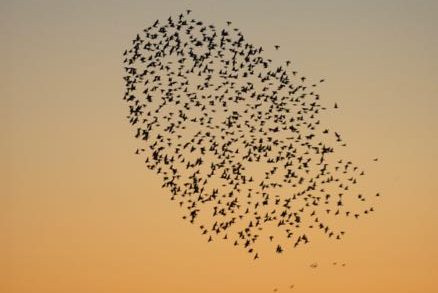
Sabine Hauert is a swarm engineer. She is fascinated by the idea of making use of swarms of robots. Watch a flock of birds and you see that they have both complex and beautiful behaviours that help them evade predators, for example. Sabine’s team are exploring how we can solve our own engineering problems: from providing communication networks in a disaster zone to helping treat cancer, all based on the behaviours of swarms of animals … (read on)
Maria Cunitz: astronomer and algorithmic thinker

Women have contributed to the subject we now call Computer Science: developing useful algorithms, for example, for centuries. In 1650, Maria Cunitz improved an algorithm published by the astronomer Kepler and then applied it to create a work more accurate than his. … (read on)
What the real Pros say
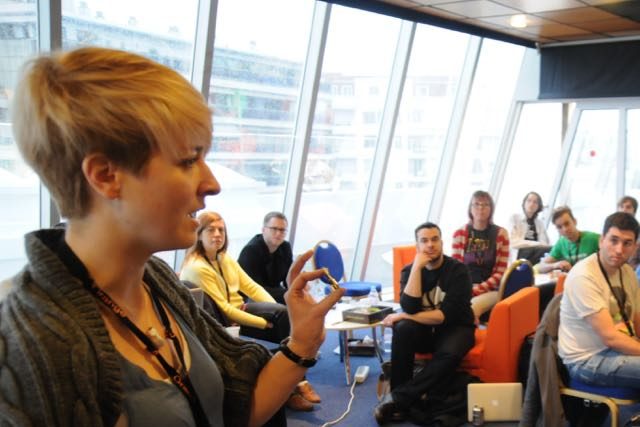
Here is what some (female) computer scientists and electronic engineers said that they most liked about their job and the subject.… (read on)
Mary Clem: getting it right
Mary Clem was a pioneer of dependable computing long before the first computers existed. She was a computer herself, but became more like a programmer…. (read on)
Sameena Shah: News you can trust

Having reliable news matters. Artificial Intelligence expert Sameena Shah gave news provider Thomson Reuters a head start with her Artificial Intelligence system for detecting fake news automatically. … (read on)
Joyce Weisbecker: a teenager the first indie games developer?
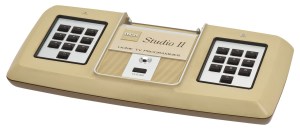
Joyce Weisbecker was the first female commercial games developer as a teenager. She sold her first commercial game TV School House I for $250 in 1976 for the RCA Studio II games console… (read on)
Yvonne Rogers: if you go down to the woods today…

Yvonne Rogers and her team built an ambient wood aiming to add excitement to a walk in the woods. It explored her vision that, rather than letting computers take over devaluing our role, they would spark our imagination, challenging us to think, filling us with delight (read on)
Grace Hopper: Sorry to bug you
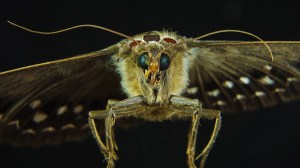
Sadly, there are far too many programs with mistakes in them. These mistakes are known as bugs because back in 1945 Grace Hopper, one of the female pioneers of computer science, found an error caused by a moth trapped between the points at Relay 70, Panel F, of the Mark II Aiken Relay Calculator being tested at Harvard University… (read on)
Philippa Gardner bringing law and order to a wild west
The computing world is a wild west, with bugs in software the norm, and malicious people and hostile countries making use of them to attack people, companies and other nations. We can do better. Philippa Gardner has dedicated her working life to rectifying this by providing ways to verify software, so mathematically prove such trust-based properties hold of it. (read on)
Annie Easley: putting rockets into space
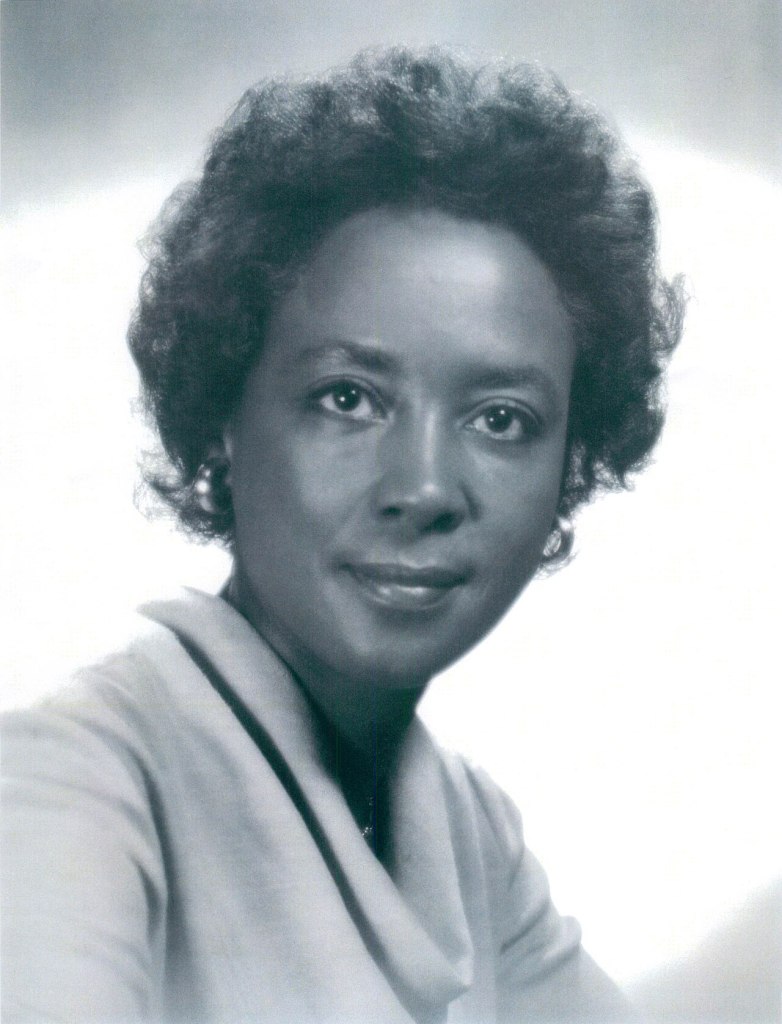
Annie Easley was a pioneer both as a computer programmer but also as a champion of women and minorities into computer science. She went from being a human computer doing calculations for the rocket scientists (in the days before computers were machines), to becoming a programmer whose programs were integral to many NASA projects…(read on)
Byte Queens

Ilenia Maietta, a computer science student at Queen Mary, talks about her experiences of studying in a male-dominated field and how she is helping to build a network for other women in tech…(read on)
Vanessa Pope: studying comedy with computers

Comedians are experts at sounding both funny and exciting, even when they’ve told the same joke hundreds of times. Maybe speech technology could learn a thing or two from comedians… that is what Vanessa Pope’s research was about.…(read on)
Mary Coombs, teashops and Leo the computer
Tea shops played a big role in the history of computing. J. Lyons & Co. bought one of the first computers to use for payroll. Except they had a problem. Their computer needed programs and the job of programmer didn’t exist. One person they found, Mary Coombs, became the first female commercial programmer. … (read on)
Karen Spärck Jones: Playing the weighting game
Imagine having a reality TV show where yet again Simon Cowell is looking for talent. This time it’s talent with a difference though, not stars to entertain us but ones with the raw ability to help find webpages. Yes, this time the budding stars are all words. Word Idol (real name IDF weighting) is here! … (read on)
Margaret Hamilton: Apollo Emergency! Count to 5

You have no doubt heard of Neil Armstrong, first human on the moon. But have you heard of Margaret Hamilton? She was the lead engineer, responsible for the Apollo mission software that got him there, and ultimately for ensuring the lunar module didn’t crash land due to a last minute emergency. (read on)
Sue Sentance: Teaching the world to program
How do you learn to program? How do you best teach programming. When the English school curriculum changed, requiring even primary school students to learn programming, suddenly this became an important question for teachers. Sue Sentance came to the rescue with PRIMM, a simple framework for how to teach programming suitable for schools.. … (read on)
1700s: Mary and Eliza Edwards: the mother and daughter human computers

Mary Edwards was a computer, a human computer. Even more surprisingly for the time (the 1700s), she was a female computer (and so was her daughter Eliza). They helped computer entries for the Nautical Almanac that helped sailors navigate for over 50 years… (read on)
Kavin Narasimhan: Understanding parties

Kavin Narasimhan studied how people move and form groups at parties, creating realistic computer models of what is going on. Her work could help avatars and robots behave more realistically, for example. … (read on)
Inspiring Wendy Hall
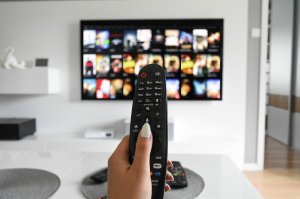
What inspires researchers to dedicate their lives to study one area? In the case of computer scientist Dame Wendy Hall it was a TV programme called Hyperland starring former Dr Who Tom Baker and writer Douglas Adams of Hitchhiker’s Guide to the Galaxy fame that inspired her to become one of the most influential researchers of her area. … (read on)
Kickstarting a new software industry

Back in its early days, after the war, women played a pivotal role in the computing industry, as skilled programmers. Dina St Johnston was one such early programmer. And as an entrepreneur she personally went on to kick-start the whole independent UK software industry!…(read on)
Ada Lovelace: Visionary

It is 1843, Queen Victoria is on the British throne. The industrial revolution has transformed the country. Steam, cogs and iron rule. The first computers won’t be successfully built for a hundred years. Through the noise and grime one woman sees the future. A digital future that is only just being realised…(read on)
Christine Farion: Smart Bags

In our stress-filled world with ever increasing levels of anxiety, it would be nice if technology could sometimes reduce stress rather than just add to it. That is the problem that QMUL’s Christine Farion set out to solve for her PhD. She wanted to do something stylish too, so she created a new kind of bag: a smart bag … (read on)
Polina Bayvel: The optical pony express
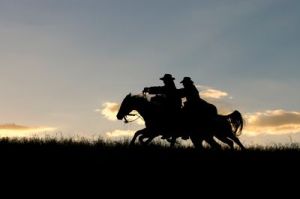
Suppose you want to send messages as fast as possible. What’s the best way to do it? That is what Polina Bayvel, a Professor at UCL has dedicated her research career to: exploring the limits of how fast information can be sent over networks. It’s not just messages that it’s about nowadays of course, but videos, pictures, money, music, books – anything you can do over the Internet. (read on)
Jean Bartik: ENIAC
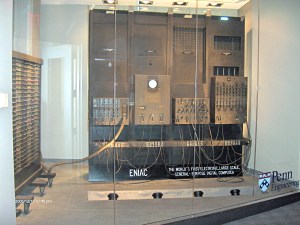
Jean Bartik (born Betty Jean Jennings) was one of six women who programmed “ENIAC” (the Electronic Numerical Integrator and Computer), one of the earliest electronic programmable computers built in the 1940s. Their contribution went largely unrecognised for 40 years. (read on)
Jasmin Fisher: Executable biology

Can a robot get cancer? Cancer occurs when cells go rogue and reproduce in an uncontrolled way. A computer can’t get cancer, but you can allow virtual diseases to attack virtual cells inside a computer. Doing that may just help find cures. That is what Jasmin Fisher does. (read on)
Future Friendly: Focus on Kerstin Dautenhahn
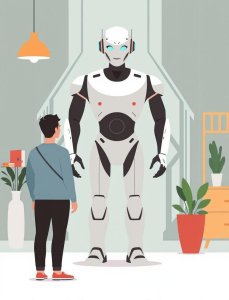
Kerstin Dautenhahn is a biologist with a mission: to help us make friends with robots. She did research on the leg reflexes in stick insects and that led to an interest in biological cybernetics. This interest in trying to understand biology made her want to build things to test her understanding, based on ideas copied from biological animals but run by computers: robots. (read on)
Antonella Mazzoni: Mood Gloves
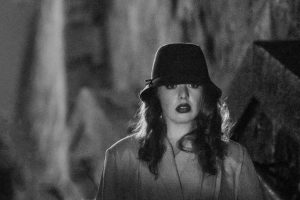
The music and sound effects play a big part in setting the mood of a film. If you are to feel the shivers down your spine, it’s probably the music. QMUL’s Antonella Mazzoni wondered if other senses could contribute too … and designed a Mood Glove to find out…. (read on)
Fran Allen: Smart Translation

Computers don’t understand the instructions they are given in programs. They have to translate them in to actual computer languages first. Fran Allen won the top prize in computing for work on how to do this in a smart way that produces fast code… (read on)
Hidden Figures: NASA’s brilliant calculators
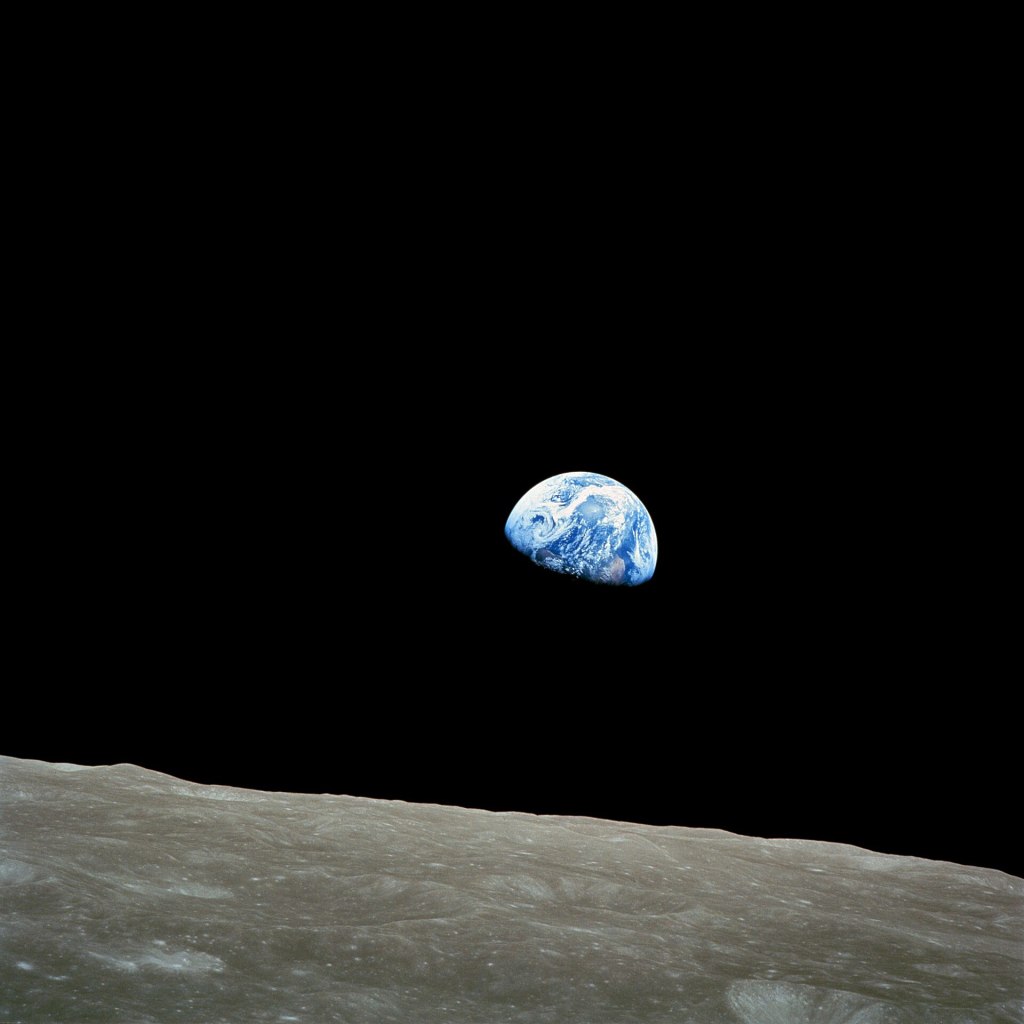
NASA Langley was the birthplace of the U.S. space program where astronauts like Neil Armstrong learned to land on the moon. Everyone knows the names of astronauts, but behind the scenes a group of African-American women were vital to the space programme: Katherine Johnson, Mary Jackson and Dorothy Vaughan… (read on)
Jiayu Song and Maria Liakata: Opinions, opinions, opinions

Social media is full of people’s opinions, whether about politics, movies, things they bought, celebrities or just something in the news. However, sometimes there is just too much of it. Sometimes, you just want an overview. PhD student Jiayu Song is working on automatically summarising opinions with her supervisor, Professor Maria Liakata. It is all about finding a point that represents the “central” meaning… (read on)
Blanca Rodriguez: Understanding matters of the heart
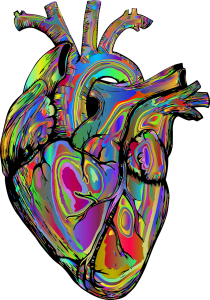
Ada Lovelace mused that one day we might be able to create mathematical models of the human nervous system, essentially describing how electrical signals move around the body. University of Oxford’s Blanca Rodriguez is interested in matters of the heart. She’s a bioengineer creating accurate computer models of human organs… (read on)
Joyce Wheeler: the life of a star

The first computers transformed the way research is done. One of the very first computers, EDSAC, contributed to the work of three Nobel prize winners: in Physics, Chemistry and Medicine. Astronomer, Joyce Wheeler was an early researcher to make use of the potential of computers to aid the study of other subjects in this way… (read on)
Lourdes Agapito: Making sense of squishiness

Look out the window at the human-made world. It’s full of hard, geometric shapes – our buildings, the roads, our cars. They are made of solid things like tarmac, brick and metal that are designed to be rigid and stay that way. The natural world is nothing like that though. Things bend, stretch and squish. That provides a whole bunch of fascinating problems for computer scientists like Lourdes Agapito to solve…. (read on)
Jacquie Lawson: the multi-million pound greeting

There is real money to be made out there in the virtual world – if you are willing to put in the effort to develop appropriate skills.
You don’t have to be young or a geek either. At the age of 62, grandmother Jacquie Lawson turned a hobby into a multi-million pound business…(read on)
Daphne Oram: the dawn of music humans can’t play

Daphne Oram was one of the earliest musicians to experiment with electronic music, and was the first woman to create an electronic instrument. She realised that the advent of electronic music meant composers no longer had to worry about whether anyone could actual physically perform the music they composed… (read on)
Ingrid Daubechies: Wiggly lines help catching crime
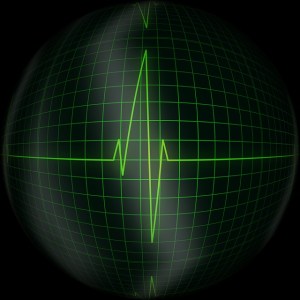
Mathematicians who are interested in computing and how to make practical use of their maths are incredibly valuable. Ingrid Daubechies is like that. Her work has transformed the way we store images and much besides. She works on the maths behind digital signal processing – how best to manipulate things like music and images in computers. It boils down to wiggly lines...(read on)
Polona Tomašic: only the fittest slogans survive
Being creative isn’t just for fun. Marketing folk are paid vast amounts to come up with slogans for products and soundbites to turn an election. Coming up with great slogans needs a mastery of language and a creative streak. Algorithms are in on the act…(read on)
Bonnie John & Annie Lu Luo: Cognitive Crash Test Dummies

Wherever you turn people are using gadgets, and those gadgets are guzzling energy – energy that we desperately need to save. We are all doomed, doomed…unless of course a hero rides in on a white charger to save us from ourselves. That is where cognitive crash dummies come in! It is the idea of Bonnie John, and Annie Lu Luo: designing tools to predict in advance which interface designs are easiest to use but also how much energy different designs will use … (read on)
Hedy Lamarr: The movie star, the piano player and the torpedo

Hedy Lamarr was a movie star. Back in the 1940’s, in Hollywood’s Golden Age, she was considered one of the screen’s most beautiful women and appeared in several blockbusters. But Hedy was more than just good looks and acting skills. Even though many people remembered Hedy for her pithy quote “Any girl can be glamorous. All she has to do is stand still and look stupid”, at the outbreak of World War 2 she and composer George Antheil invented an encryption technique for a torpedo radio guidance system! … (read on)
Shafi Goldwasser and the Zero Knowledge Proof
Shafi Goldwasser, one of the greatest living computer scientists, won the Turing Award in 2012 (equivalent to a Nobel Prize). Her work helped turn cryptography from a dark art into a science. If you’ve ever used a credit card through a web browser, for example, her work was helping you stay secure. Her greatest achievement, with Silvio Micali and Charles Rackoff, is the “Zero knowledge proof”…. (read on)
Ada Lovelace and the music machine
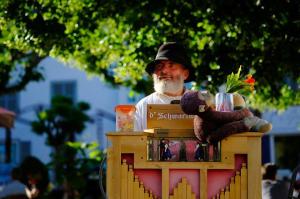
Charles Babbage found barrel organs so incredibly irritating that he waged a campaign to clear them from the streets, even trying to organise an act of parliament to have them banned. He hated the irritating noise preventing him from concentrating. His hatred, however, may have led to Ada Lovelace’s greatest idea … (read on)
Ada Lovelace in her own words
Charles Babbage invented wonderful computing machines. But he was not very good at explaining things. That’s where Ada Lovelace came in. She is famous for writing a paper in 1843 explaining how Charles Babbage’s Analytical Engine worked – including a big table of formulas which is often described as “the first computer program”… (read on)
Edith Windsor: gay marriage

Edie Schlain Windsor, who was a senior systems engineer at IBM and founding president of a software consulting company, led the landmark Supreme Court Case (United States versus Windsor) that led to gay marriage becoming legal in the US…. (read on)
Jane Webb: The Mummy in an AI world

Inspired by Mary Shelley’s Frankenstein, 17-year old Victorian orphan, Jane Webb secured her future by writing the first ever Mummy story. The 22nd century world in which her novel was set is perhaps the most amazing thing about the three volume book though. Her world included AIs there doing good as standard for the first time…. (read on)
Rebecca Stewart and Sophie Skach: Let buttons be buttons

We are used to the idea that we use buttons with electronics to switch things on and off, but Rebecca Stewart and Sophie Skach decided to use real buttons in the old-fashioned sense of a fashionable way to fasten up clothes….. (read on)
Susan Kare: Icon Draw
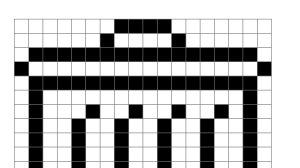
GUIs changed the way we use computers. A key idea was to click on icons not type commands creating the design principle of “recognition rather than recall”. That needs instantly recognised icons to work…Susan Kare was responsible for creating them… (read on)
Sarah Baillie: Putting your hand up a cow’s bottom
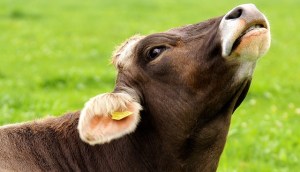
Pilots use simulators to practice, so do surgeons…& so do vets. 1 simulator helps them practice putting their hand up a cow’s bottom giving them realistic haptic feedback, so an accurate sense of what they should feel…. (read on)
Chrystie Myketiak: Screaming Headline Kills!!!!

Medical mistakes can make a big news story with screaming headlines vilifying those ‘responsible’. It may sell papers. Research by Chrystie Myketiak suggested it could also make things worse as…. (read on)
Mary Shelley: Pass the screwdriver, Igor

Shortly after Ada Lovelace was born, and long before she made predictions about future “creative machines”, Mary Shelley, a friend of her father (Lord Byron), was writing a novel. In her book, Frankenstein, inanimate flesh is brought to life. Perhaps Shelley foresaw what is actually to come, what computer scientists might one day create: artificial life… (read on)
Julie Freeman: Naked mole-rats go digital

Where does a naked mole-rat wear its computing gadgetry? Under its skin….One colony wear tags to allow their behaviour to be studied despite them living permanently underground. Julie Freeman turned their data into interactive art… (read on)
Maria Kirch: human computer of the 1600s and 1700s

Maria Kirch was a very early female human computer. Working in the late 1600s into the early 1700s, she created astronomical tables that while mainly used for astrological purposes were also useful for navigation…Im a different timeline, would she have become the first programmer? (read on)
Chrystie Myketiak, Alexis Lewis: Oh no! not again…

Oh no, not again … What a mess. There’s flour all over the kitchen floor. A fortnight ago … From a kitchen accident we see how to save lives in hospitals it is all about good no-blame incident reporting. Find out about the work of Chrystie Myketiak and Alexis Lewis on a project run by Ann Blandford… (read on)
Florence Nightingale: Rebel with a cause

Florence Nightingale is known for her nursing, in the Crimean War. She rebelled against convention to become a nurse when nursing was seen as a lowly job, not suitable for ‘ladies’. She broke convention in another less well-known, but much more significant way too. She was a mathematician and pioneered the use of pictures to present her statistical data about causes of war deaths and issues of sanitation and health: a Victorian version of the Big Data revolution … (read on)
Temple Grandin: The Devil is in the Detail: Lessons from Animal Welfare

What can Computer Scientists learn from a remarkable woman and the improvements she made to animal welfare and the meat processing industry? Temple Grandin is an animal scientist – an animal welfare specialist and a remarkable innovator on top. She has extraordinary abilities that allow her to understand animals in ways others can’t … (read on)
Mary Ann Horton: email attachments
Mary Ann Horton, was one of the key people developing the UNIX operating in the 1970s and 80s. One of her many innovations that have made all our lives easier was the creation of programs that allowed emails to have binary attachments, allowing us to attach images, sound, videos and programs to our emails…. (read on)
Yang Zhao: Super-plant supercapacitors

Plants can have many super powers. For example, some are better at absorbing Carbon Dioxide to help with climate change, others provide medicines, or can strip our pollutants out of the air or soil. But thanks to Yang Zhao and her team, one, Aloe Vera, is a super-plant in a new way. It can now store electricity that could be used to power portable devices – by plugging them into the plant. … (read on)
Anne-Marie Imafidon’s STEMettes

Anne-Marie Imafidon was recently awarded the Society Medal by the British Computer Society for her work supporting young women and non-binary people of all ages into Science, Technology, Engineering and Maths (STEM) careers. (read on)
Return of the killer robot? Evil scientist?! Helpless woman?!?
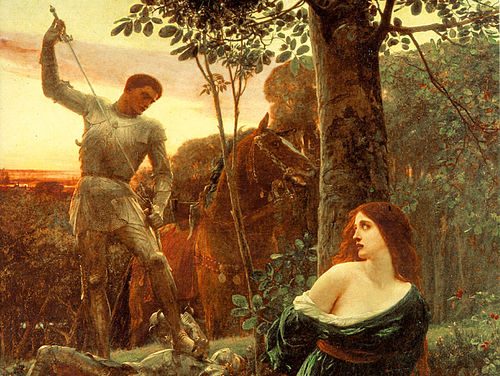
‘Geeky male computer scientist’ is just a stereotype, like ‘helpless female in need of rescue by male hunk’, ‘scientist as mad eccentric in white coat’, or ‘evil robot wanting to take over the world’. Where do false stereotypes come from? … (read on)
More to come (of course)
Find more diverse diversity on our diversity pages here.
Click the Portals image below to uncover our other themed pages.

Subscribe to be notified whenever we publish a new post to the CS4FN blog.
This blog is funded by EPSRC on research agreement EP/W033615/1.

 cs4fn
cs4fn 