
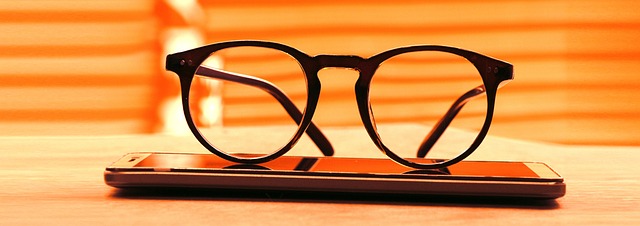
Emotional glasses

Image by Km Nazrul Islam from Pixabay

It’s fun to add emoticons to messages, and they help ensure people understand our feelings. They are helping some people understand feelings face-to-face too, with a bit of help from an Artificial Intelligence.

Reading faces

We take it for granted that we can look at someone’s face and tell whether they are happy or sad, angry or surprised. Autistic children, however, often struggle to understand people’s expressions. When anxious we also all tend to avoid eye contact. Some autistic children do that all the time. They are then even less likely to see the clues in people’s faces, and so start to understand emotions. This can make it harder to make friends.

From robots to glasses

Many hi-tech ways have been tried to help autistic children learn about emotions. One, for example, involves letting them play with robot ‘friends’ as some find the cartoon-like expressions on a robot face more comfortable and easier to follow. A different approach is based on wearable technology. Researchers at Stanford University have created a program for autistic children that works out a person’s expression and displays an emoticon of it in a pair of smart glasses.

An AI reading faces for you

A camera in the glasses records what the wearer sees and the Artificial Intelligence (AI) program detects any faces. This kind of technology is also used in smartphones to detect faces in your photo collection. It uses ‘machine learning’: the program learns what a face is by being shown lots of images, some with and some without faces. The program uses all that data to work out the patterns in an image that mean there is a face. It then uses that pattern to spot new faces.

In a similar way it can be trained on faces with different expressions. A training set of faces are used that are labelled with the emotion in that image. This allows the program to spot what pattern in a face makes a happy face, what makes a sad face, and so on. Having recognised an expression, the glasses finally act as a screen and show an emoticon, such as a smiley, corresponding to that expression. Superimposing digital images on the real world like this is called augmented reality. It makes looking at faces like a game and means that the child can use the emoticon to understand what the person in front of them is feeling. It also means they can start to learn for themselves – almost like the AI! The AI is labelling the faces for them, just as people had done for it. With the glasses, autistic children can be sure what each face is actually saying rather than having to guess. Eventually they might then form their own rules and so do it on their own.

Making a difference

The Stanford system was trialled with autistic children in their own homes. They used the system for several months and their parents found it made a clear difference. By the end many of the children were engaging much more with their family including making a lot more eye contact.

Emoticons are making a real difference to their lives.

Paul Curzon, Queen Mary University of London


More on…


Related Magazine …


Subscribe to be notified whenever we publish a new post to the CS4FN blog.


Pepper’s Ghost: an 1860s illusion used in ‘head-up displays’

A ghostly illustration including a woman in historic garb, an ornate candlestick, a grand chair and a mirror with grey curtains pulled back.
Ghostly stage Image by NoName_13 from Pixabay

When Pepper’s Ghost first appeared on the stage as part of one of Professor Pepper’s shows on Christmas Eve, 1862 it stunned the audiences. This was more than just magic: it was miraculous. It was so amazing that some spiritualists were convinced Pepper had discovered a way of really summoning spirits. A ghostly figure appeared on the stage out of thin air, interacted with the other characters on the stage and then disappeared in an instant. This was no dark seance where ghostly effects happen in a darkened room: who knows what tricks are then being pulled in the dark to cause the effects. Neither was it modern day special effects where it is all done on film or in the virtual world of a computer. This was on a brightly lit stage in front of everyone’s eyes…

Stage setup for Pepper’s Ghost, from Wikipedia, Public Domain

Switch to the modern day and similar ghostly magic is now being used by fighter pilots. Have the military been funding X-files research? Well maybe, but there is nothing supernatural about Pepper’s Ghost. It is just an illusion. The show it first appeared in was a Science show, though it went on to amaze audiences as part of magic shows for years to come, and can still be found, for example in Disney Theme Parks, and onstage to make virtual band Gorillaz come to life.

Today’s “supernatural” often becomes tomorrow’s reality, thanks to technology. With Pepper’s ghost, 19th century magic has in fact become enormously useful 21st century hi-tech. 19th century magicians were more than just showmen, they were inventors, precision engineers and scientists, making use of the latest scientific results, frequently pushing technology forward themselves. People often think of magicians as being secretive, but they were also businessmen, often patenting the inventions behind their tricks, making them available for all to see but also ensuring their rivals could not use them without permission. The magic behind Pepper’s ghost was patented by Henry Dircks, a Liverpudlian engineer, in 1863 as a theatrical effect though it was probably originally invented much earlier – it was described in an Italian book back in 1558 by Baptista Porta.

Through the looking glass

So what was Pepper’s ghost? It’s a cliche to say that “it’s all done with mirrors”, but it is quite amazing what you can do with them if you both understand their physics and are innovative enough to think up extraordinary ways to use old ideas. Pepper’s ghost worked in a completely different way to the normal way mirrors are used in tricks though. It was done using a normal sheet of glass, not a silvered mirror at all. If you have ever looked at your image reflected in a window on a dark night you have seen a weak version of Pepper’s Ghost. The trick was to place a large, spotlessly clean sheet of glass at an angle in front of the stage between the actors and the audience. By using the stage lights in just the right way, it becomes a half mirror. Not only can the stage be seen through the glass, but so can anything placed at the right position off the stage where the glass is pointing. Better still, because of the physics of reflection, the reflected images don’t seem to be on the surface of the glass at all, but the same distance behind as the objects are in front. The actor playing the ghost would perform in a hidden black area so that he or she was the only thing that reflected light from that area. When the ghost was to appear a very strong light was shone on the actor. Suddenly the reflection would appear – and as long as they were standing the right distance from the mirror, they could appear anywhere desired on the stage. To make them disappear in an instant the light was just switched off.

Jump to the 21st century and a similar technique has reappeared. Now the ghosts are instrument panels. A problem with controlling a fighter plane is you don’t have time to look down. You really want the data you need to keep control of your plane wherever you are looking outside the plane. It needs not just to be in the right position on the screen but at the right depth so you don’t need to refocus your eyes. Most importantly you must also be able to see out of the plane in an unrestricted way…You need the Peppers Ghost effect. That is all “Head-up” displays display do, though the precise technology used varies.

Satnav systems in cars are very dangerous if you have to keep looking down to see where the thing atually means you to turn. “What? This left turn or the next one?” Use a Head-up display and the instructions can hover in front of you, out on the road where your eyes are focussed. Better still you can project a yellow line (say) as though it was on the road, showing you the way off into the distance: Follow the Yellow Brick Road … Oh and wasn’t the Wizard of Oz another great magician who used science and engineering rather than magic dust.

Paul Curzon, Queen Mary University of London (first published in 2007)

Make…

Watch…

You can download ALL of our free material here.

Subscribe to be notified whenever we publish a new post to the CS4FN blog.


This blog is funded by EPSRC on research agreement EP/W033615/1.

QMUL CS4FN EPSRC logos
