Singing bird – a human choir, singing birdsong

by Jane Waite, Queen Mary University of London

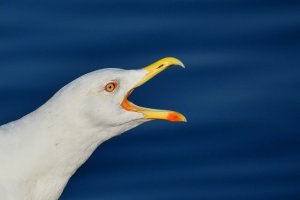
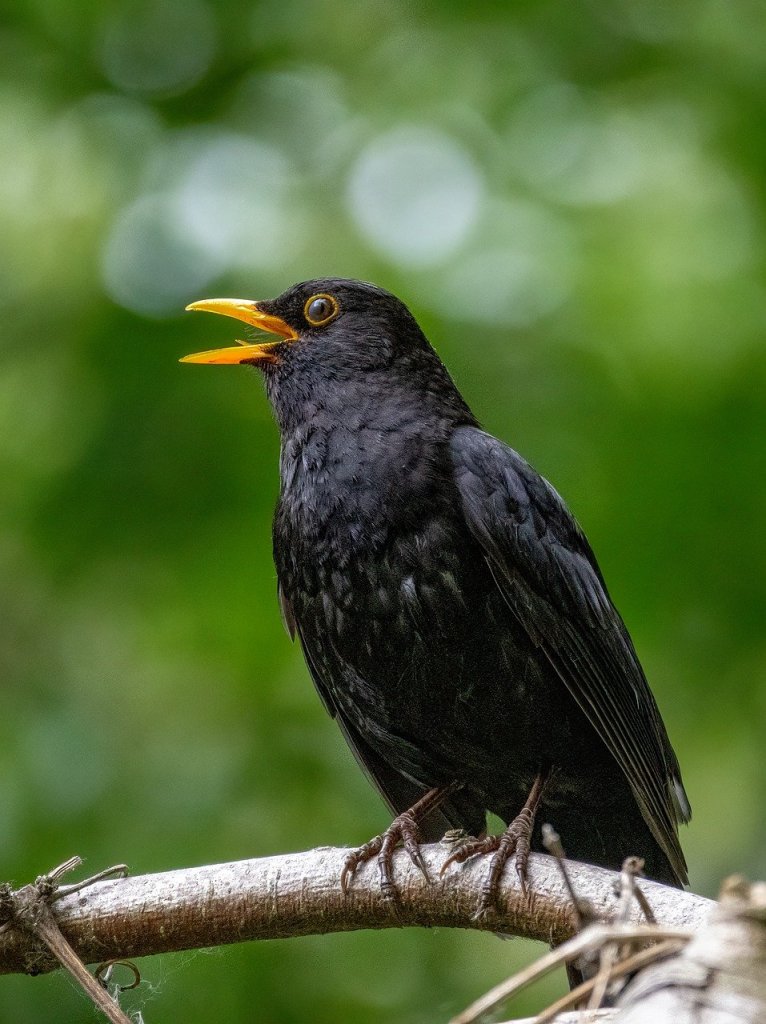
Image by Dieter from Pixabay

“I’m in a choir”. “Really, what do you sing?” “I did a blackbird last week, but I think I’m going to be woodpecker today, I do like a robin though!”

This is no joke! Marcus Coates a British artist, got up very early, and working with a wildlife sound recordist, Geoff Sample, he used 14 microphones to record the dawn chorus over lots of chilly mornings. They slowed the sounds down and matched up each species of bird with different types of human voices. Next they created a film of 19 people making bird song, each person sang a different bird, in their own habitats, a car, a shed even a lady in the bath! The 19 tracks are played together to make the dawn chorus. See it on YouTube below.

Marcus talks about his work, and the installation at Brighton Fabrica.

Marcus didn’t stop there, he wrote a new bird song score. Yes, for people to sing a new top ten bird hit, but they have to do it very slowly. People sing ‘bird’ about 20 times slower than birds sing ‘bird’ ‘whooooooop’, ‘whooooooop’, ‘tweeeeet’. For a special performance, a choir learned the new song, a new dawn chorus, they sang the slowed down version live, which was recorded, speeded back up and played to the audience, I was there! It was amazing! A human performance, became a minute of tweeting joy. Close your eyes and ‘whoop’ you were in the woods, at the crack of dawn!

Computationally thinking a performance

Computational thinking is at the heart of the way computer scientists solve problems. Marcus Coates, doesn’t claim to be a computer scientist, he is an artist who looks for ways to see how people are like other animals. But we can get an idea of what computational thinking is all about by looking at how he created his sounds. Firstly, he and wildlife sound recordist, Geoff Sample, had to focus on the individual bird sounds in the original recordings, ignore detail they didn’t need, doing abstraction, listening for each bird, working out what aspects of bird sound was important. They looked for patterns isolating each voice, sometimes the bird’s performance was messy and they could not hear particular species clearly, so they were constantly checking for quality. For each bird, they listened and listened until they found just the right ‘slow it down’ speed. Different birds needed different speeds for people to be able to mimic and different kinds of human voices suited each bird type: attention to detail mattered enormously. They had to check the results carefully, evaluating, making sure each really did sound like the appropriate bird and all fitted together into the Dawn Chorus soundscape. They also had to create a bird language, another abstraction, a score as track notes, and that is just an algorithm for making sounds!

Fun to try

Use your computational thinking skills to create a notation for an animal’s voice, a pet perhaps? A dog, hamster or cat language, what different sounds do they make, and how can you note them down. What might the algorithm for that early morning “I want my breakfast” look like? Can you make those sounds and communicate with your pet? Or maybe stick to tweeting? (You can follow @cs4fn on Twitter too).

Enjoy the slowed-down performance of this pet starling which has added a variety of mimicked sounds to its song repertoire.


This article was originally published on the CS4FN website and can also be found on page 15 in the magazine linked below. It also featured on Day 7 of our CS4FN Christmas Computing Advent Calendar.


Related Magazine …


EPSRC supports this blog through research grant EP/W033615/1.
What’s that bird? Ask your phone – birdsong-recognition apps

by Dan Stowell, Queen Mary University of London

Could your smartphone automatically tell you what species of bird is singing outside your window? If so how?

Mobile phones contain microphones to pick up your voice. That means they should be able to pick up the sound of birds singing too, right? And maybe even decide which bird is which?

Smartphone apps exist that promise to do just this. They record a sound, analyse it, and tell you which species of bird they think it is most likely to be. But a smartphone doesn’t have the sophisticated brain that we have, evolved over millions of years to understand the world around us. A smartphone has to be programmed by someone to do everything it does. So if you had to program an app to recognise bird sounds, how would you do it? There are two very different ways computer scientists have devised to do this kind of decision making and they are used by researchers for all sorts of applications from diagnosing medical problems to recognising suspicious behaviour in CCTV images. Both ways are used by phone apps to recognise bird song that you can already buy.

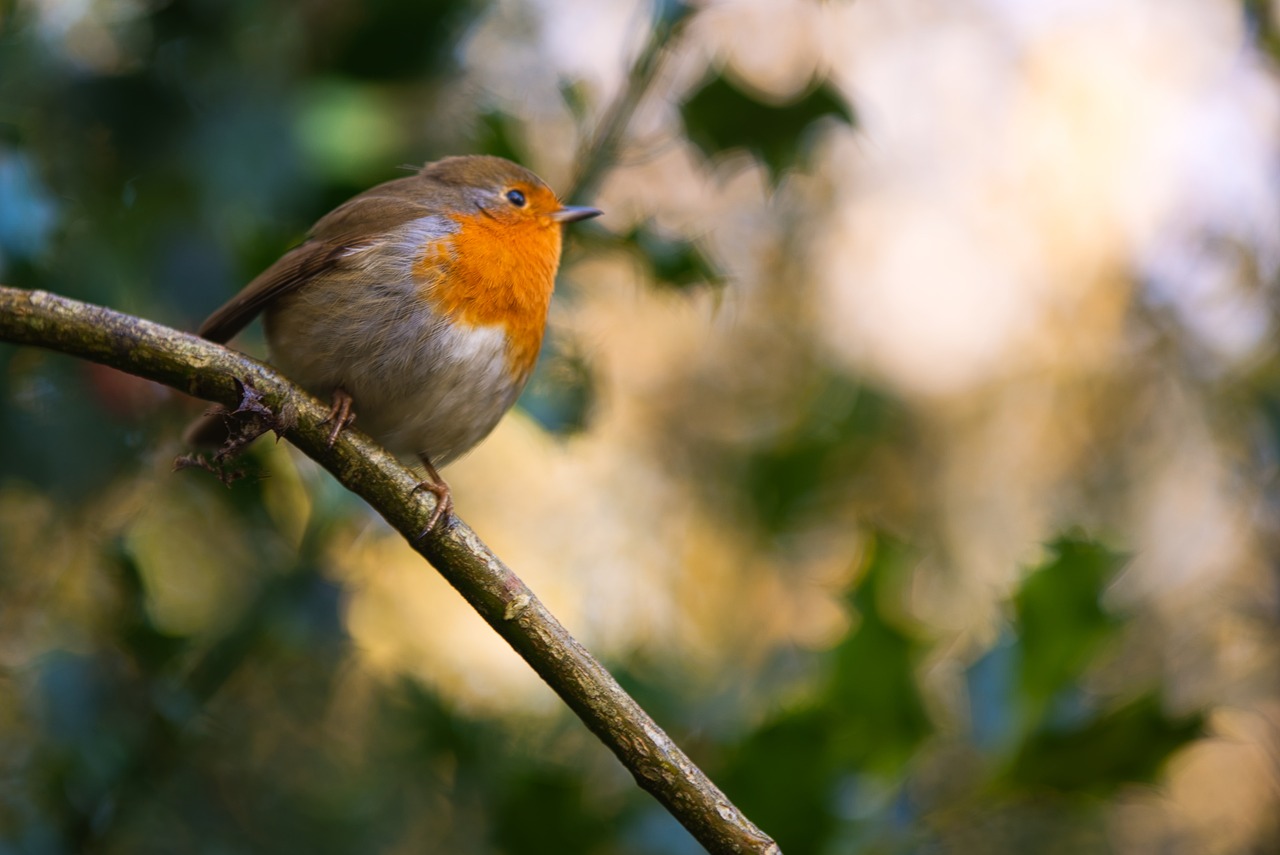
The sound of the European robin (Erithacus rubecula) better known as robin redbreast, Recorded by
Vladimir Yu. Arkhipov, Arkhivov CC BY-SA 3.0 via wikimedia

Write down all the rules

Blackbird singing
Blackbird Image by Ian Lindsay from Pixabay

If you ask a birdwatcher how to identify a blackbird’s sound, they will tell you specific rules. “It’s high-pitched, not low-pitched.” “It lasts a few seconds and then there’s a silent gap before it does it again.” “It’s twittery and complex, not just a single note.” So if we wrote down all those rules in a recipe for the machine to follow, each rule a little program that could say “Yes, I’m true for that sound”, an app combining them could decide when a sound matches all the rules and when it doesn’t.

This is called an ‘expert system’ approach. One difficulty is that it can take a lot of time and effort to actually write down enough rules for enough birds: there are hundreds of bird species in the UK alone! Each would need lots of rules to be hand crafted. It also needs lots of input from bird experts to get the rules exactly right. Even then it’s not always possible for people to put into words what makes a sound special. Could you write down exactly what makes you recognise your friends’ voices, and what makes them different from everyone else’s? Probably not! However, this approach can be good because you know exactly what reasons the computer is using when it makes decisions.

The sound of a European blackbird (Turdus merula) singing merrily in Finland, from Wikipedia (song 1). Public Domain via wikimedia

This is very different from the other approach which is…

Show it lots of examples

A lot of modern systems use the idea of ‘machine learning’, which means that instead of writing rules down, we create a system that can somehow ‘learn’ what the correct answer should be. We just give it lots of different examples to learn from, telling it what each one is. Once it has seen enough examples to get it right often enough, we let it loose on things we don’t know in advance. This approach is inspired by how the brain works. We know that brains are good at learning, so why not do what they do!

One difficulty with this is that you can’t always be sure how the machine comes up with its decisions. Often the software is a ‘black box’ that gives you an answer but doesn’t tell you what justifies that answer. Is it really listening to the same aspects of the sound as we do? How would we know?

On the other hand, perhaps that’s the great thing about this approach: a computer might be able to give you the right answer without you having to tell it exactly how to do that!

It means we don’t need to write down a ‘recipe’ for every sound we want to detect. If it can learn from examples, and get the answer right when it hears new examples, isn’t that all we need?

Which way is best?

There are hundreds of bird species that you might hear in the UK alone, and many more in tropical countries. Human experts take many years to learn which sound means which bird. It’s a difficult thing to do!

So which approach should your smartphone use if you want it to help identify birds around you? You can find phone apps that use one approach or another. It’s very hard to measure exactly which approach is best, because the conditions change so much. Which one works best when there’s noisy traffic in the background? Which one works best when lots of birds sing together? Which one works best if the bird is singing in a different ‘dialect’ from the examples we used when we created the system?

One way to answer the question is to provide phone apps to people and to see which apps they find most useful. So companies and researchers are creating apps using the ways they hope will work best. The market may well then make the decision. How would you decide?


This article was originally published on the CS4FN website and can also be found on pages 10 and 11 of Issue 21 of the CS4FN magazine ‘Computing sounds wild’. You can download a free PDF copy of the magazine (below), or any of our other free material at our downloads site.


Further bird- (& computing-) themed reading
🐦🐤🦜🦉


Related Magazine …


EPSRC supports this blog through research grant EP/W033615/1.
What are birds actually saying?

Birds make so much noise, and it’s very complex. Is it just babble, or are they saying complicated things to each other? If so, could we work out what they are saying, what it means? Could we learn their language and speak to the birds?

We know that bird communication is not as complicated as the words and sentences in human speech. So far, no one has been able to find grammatical patterns like those we find in human language. There apparently aren’t rules for birds like the ones we have about verbs and nouns. Birds don’t have to learn grammar! Exactly how complex bird languages are is still hotly debated, though.

Sometimes they’re passing on information about predators, or food, or sometimes just advertising their own fitness – showing off to get a mate (a bit like karaoke nights). Scientists have proved that such specific kinds of information are in the sounds birds make by observing bird behaviour. By playing recordings of birds and seeing how other birds react, they can see what information was communicated by a particular sound. If you play a ‘predator near’ call, for example, then other birds flee, but they stay put if you play other calls. They get the message.

Birds are definitely passing on
specific information when they sing.

It turns out some birds have even learnt the languages of other animals and use it both to help those other animals and to support a life of crime. Many animals listen for the alarm calls of the animals around them, and so flee when others see a problem. Birds called Drongos, for example, act as lookouts for Meerkats, giving warning calls when they see Meerkat predators, allowing them to return to the safety of their burrows. However, the Drongos also sound false alarms every so often. They do it when they see a Meerkat with some juicy morsel. As the Meerkats run, the Drongo swoops in to steal the abandoned food.

Unfortunately for the Drongo, Meerkats are quite clever and get wise to the con. Eventually, they start to ignore the Drongo and only listen for their own Meerkat sentry’s call. The Drongo has another trick though. They are really good at mimicking sounds they hear, just like parrots. They have learnt to speak Meerkat just like the scientists do in experiments. So when the Meerkats stop reacting, the Drongos just switch tactics and start making perfect Meerkat language alarm calls instead. Once again the food is theirs.

Drongos give false alarms so they can steal food.

While most of us can’t reproduce bird sounds ourselves, and so talk directly to animals, we can certainly write programs to do it. In Star Wars, C3PO is a master of languages, speaking millions. Real robots of the near future will be able to mimic the sounds of whatever animals they wish and communicate with them in at least the simple ways that animals of different species listen and talk to each other. Perhaps something like this might be used to help protect endangered species from their predators, for example, watching for hawks and issuing timely warnings. We just have to hope they don’t turn to the Dark Side, like the Drongos, and use these skills to support a life of crime.

Dan Stowell and Paul Curzon, Queen Mary University of London


This article was originally published on CS4FN and in issue 21 of the CS4FN magazine ‘Computing Sounds Wild’ on p3. You can download a PDF copy of Issue 21, as well as all of our previous published material, free, at the CS4FN downloads site.

Front cover of CS4FN Issue 21 – Computing sounds wild

Computing Sounds Wild explores the work of scientists and engineers who are using computers to understand, identify and recreate wild sounds, especially those of birds. We see how sophisticated algorithms that allow machines to learn, can help recognize birds even when they can’t be seen, so helping conservation efforts. We see how computer models help biologists understand animal behaviour, and we look at how electronic and computer generated sounds, having changed music, are now set to change the soundscapes of films. Making electronic sounds is also a great, fun way to become a computer scientist and learn to program.


QMUL CS4FN EPSrC logos