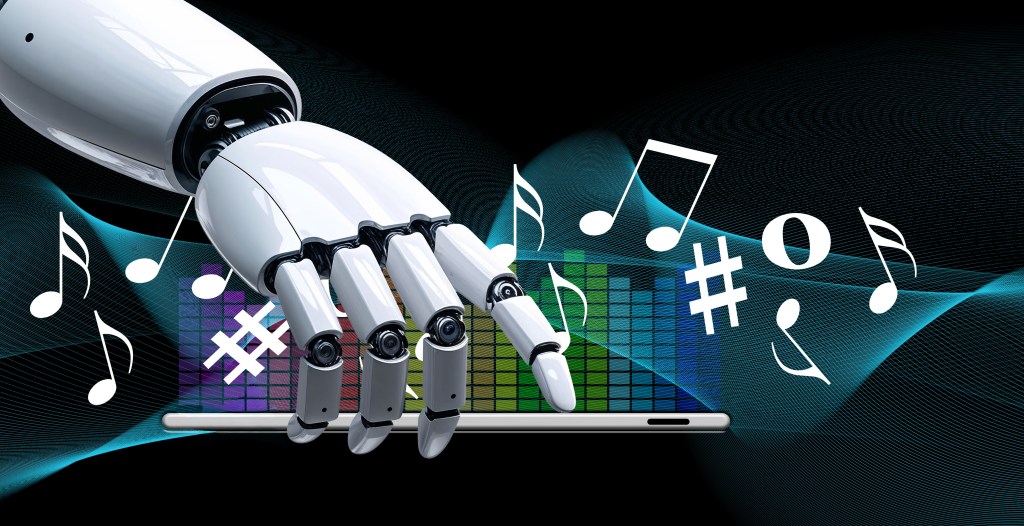
In November, 2025, this catchy new country music song received lots of media attention. There’s nothing very unusual about that but what made this song unusual was that the whole thing (the words, the tune, even the singer) was created entirely by an artificial intelligence. There is no ‘Breaking Rust’, it’s all computer-generated. Now that you know that, does it make a difference to what you think of the song?
Lots of people are uneasy about a piece of music that had almost no direct human input into its creation. Music is a creative thing, designed and created by people and it feels unsettling to have computers doing that: for many it feels a bit like cheating. This song sounds human but if you listen carefully the singer seems to be performing the super-human feat of singing long stretches of the tune without taking a breath! A computer can do that, but people need oxygen!
And what is the future, if we are happy to listen to machine created things, that can be cheaply generated? Far less work, so livelihood, for human creatives. This is already happening in the world of the illustrator where it is harder than ever for newly graduated illustrators to get a foot on the ladder. Is that what we want for song writers and musicians too? Eventually, even the people running the programs to initiate the creation won’t be needed. If you want to listen to a new country song, or a new band, you will be able to click a button (pay some cash) and get one tailored for you. The money will go direct to a tech billionaire, of course.
Another thing people are very uneasy about is how the AI learned to write in that style of music in the first place. Music AI tools have been trained on vast amounts of other people’s music and, not surprisingly, many of those musicians are angry that their hard work has been re-used without permission or payment. Some musicians and music companies are now fighting back. They’ve asked lawyers to help them work with the AI companies so that they won’t lose out – they can instead opt in to allow their music be used to train AI tools, and this time they’ll be paid. This is basically what happens when musicians use the ideas of other musicians. Famously, “I’ll Be Missing You” by American rapper Puff Daddy and American singer Faith Evans, for example, used a sample without asking from the Police song, “Every Breath You Take”. Sting sued and as a result gets all the royalties from the song (though then had similar disputes with the other members of the Police!
A share of royalties might be a win for some of the musicians, and for the people who own the AI tools… but it still doesn’t solve how we might feel about AI music created by machines, or for future human musicians who might never get a break because new song writers can’t get a foot in the door. If you value people, you need to show it in what you watch, read and listen to!
Jo Brodie and Paul Curzon, Queen Mary University of London
More on …
- Music and AI
- The article above was inspired by BBC Tech Life’s 2nd December 2025 episode which had a 12min segment on AI-generated music. You can listen to the programme at https://www.bbc.co.uk/sounds/play/w3ct6zps [EXTERNAL]
Related Magazines
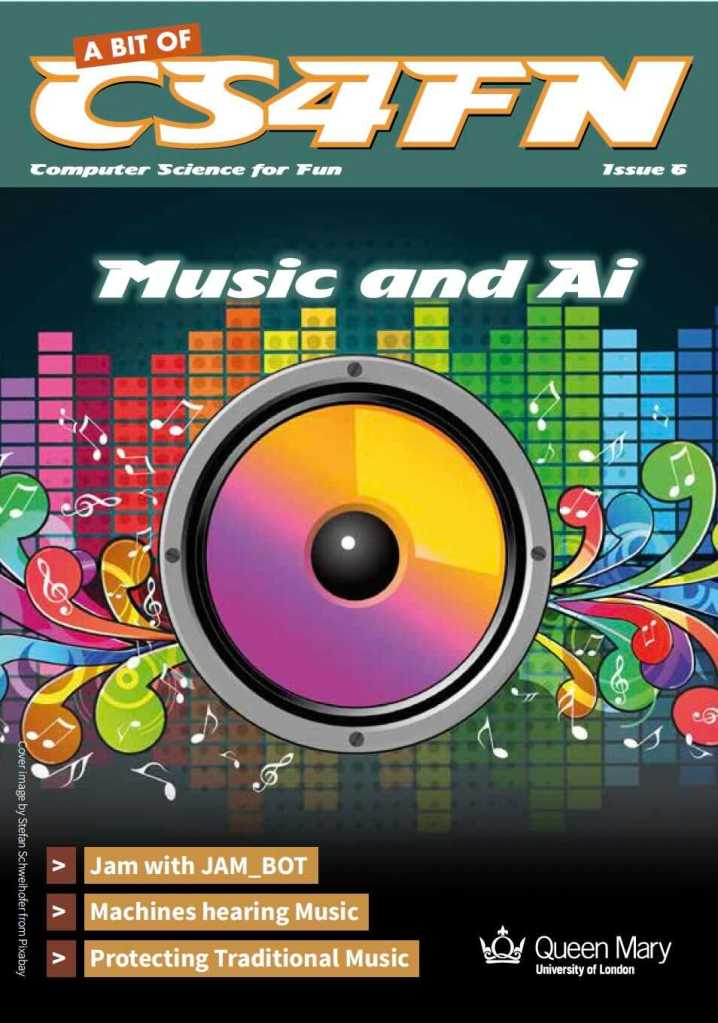
- Music and AI: A Bit of CS4FN, issue 6
- Our new magazine, which you can also read online, on Music and AI

Subscribe to be notified whenever we publish a new post to the CS4FN blog.
.png)

 cs4fn
cs4fn 