
Click on the magazine cover to get a pdf copy of the magazine.
Helping with healthcare
The trouble with healthcare is that it’s becoming ever more expensive: new drugs, new treatments, more patients, the ever-increasing time needed with experts. We want everyone to get the care they need, but the costs are growing. Perhaps computer scientists can help? Perhaps they can find new ways to help save lives. Research groups worldwide are exploring ways to help.
One way might be to create intelligent programs that can support patients at home, helping monitor them and make decisions about what to do.
Machines already fill hospitals so how can we make them safer. That is another way researchers might improve things.
Other researchers are helping in other ways, creating virtual versions of organs or of diseases.
There are many, many ways computer scientists can work with medics to help save lives.
The illusion of good software design

When disasters involving technology occur, human error is often given as the reason, including in healthcare, but even experts make mistakes using poor technology. Rather than blame the person, human error should be seen as a design failure. Bad design can make mistakes more likely and good design can often eliminate them. … (read on)
Oh no! not again…

Oh no, not again … What a mess. There’s flour all over the kitchen floor. A fortnight ago … From a kitchen accident we see how to save lives in hospitals it is all about good no-blame incident reporting. … (read on)
Screaming Headline Kills!!!!

Medical mistakes can make a big news story with screaming headlines vilifying those ‘responsible’. It may sell papers. Research by Chrystie Myketiak suggested it could also make things worse as…. (read on)
Understanding matters of the heart

Ada Lovelace mused that one day we might be able to create mathematical models of the human nervous system, essentially describing how electrical signals move around the body. University of Oxford’s Blanca Rodriguez is interested in matters of the heart. She’s a bioengineer creating accurate computer models of human organs… (read on)
How do you solve a problem like arthritis?
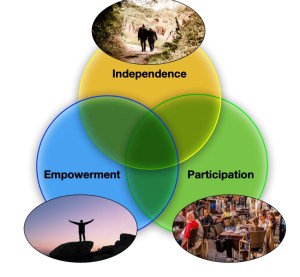
Some diseases can’t be cured. Doctors and nurses just try to control the disease to stop them ruining people’s lives. Perhaps smartphone apps can pull off the trick of giving patients better care while giving clinicians more time to spend with the patients who most need them? A Venn diagram is at the centre of the Queen Mary team’s prototype…. (read on)
What are the chances of that? The church minister’s hobby and clever machines

The hobby of a church minister over 250 years ago is helping computers make clever decisions including in healthcare… (read on)
A simple Bayesian network for having a virus
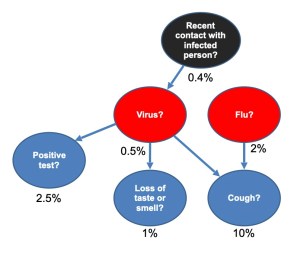
Computer tools based on what are called “Bayesian networks” give accurate ways to determine how likely things are. For example, they give a good way, based on evidence, to determine how likely a given person has COVID. As you collect more evidence, the probability the network gives becomes more accurate.…. (read on)
Executable biology

Can a robot get cancer? Cancer occurs when cells go rogue and reproduce in an uncontrolled way. A computer can’t get cancer, but you can allow virtual diseases to attack virtual cells inside a computer. Doing that may just help find cures. That is what Jasmin Fisher does. (read on)
Swallow a slugbot to catch a …

Imagine swallowing a slug (hint not only a yucky thought but also not a good idea as it could kill you)…now imagine swallowing a slug-bot … also yucky but in the future it might save your life…. (read on)
Rebel with a cause: Florence Nightingale

Florence Nightingale is known for her nursing, in the Crimean War. She rebelled against convention to become a nurse when nursing was seen as a lowly job, not suitable for ‘ladies’. She broke convention in another less well-known, but much more significant way too. She was a mathematician and pioneered the use of pictures to present her statistical data about causes of war deaths and issues of sanitation and health: a Victorian version of the Big Data revolution … (read on)
Pitstop heart surgery

The Formula 1 car screams to a stop in the pit-lane. Seven seconds later, it has roared away again, back into the race. In those few seconds it has been refuelled and all four wheels changed. Formula 1 pit-stops are the ultimate in high-tech team work. Now the Ferrari pit stop team have helped improve the hospital care of children after open-heart surgery! (read on)
Nurses in the mist

What do you do when your boss tells you “go and invent a new product”? Lock yourself away and stare out the window? Go for a walk, waiting for inspiration? Medical device system engineers Pat Baird and Katie Hansbro did some anthropology. (read on)
Is your helathcare algorithm racist?

Algorithms are taking over decision making, especially so in healthcare. But could the algorithms be making biased decisions? Could their decisions be racist? Yes, and such algorithms are already being used. … (read on)
So, so tired

Fatigue is a problem that people with a variety of long-term diseases can also suffer from. Can technology help?. … (read on)

Diagnose? Delay delivery? …

In the film Minority Report, a team of psychics predict who might cause harm, allowing the police to intervene first. It is science fiction. But smart technology is able to see into the future. It may be able to warn months in advance when a mother’s body might be about to harm her unborn baby and so allow the harm to be prevented before it even happens…. (read on)

The ping pong vaccination programming challenge

Vaccination programmes work best when the majority of the population are vaccinated. One way scientists simulate the effects of disease and vaccination programmes is by using computer simulations. But what is a computer simulation? … (read on)
Microwave health check

Microwaves aren’t just useful for cooking your dinner. Passing through your ears they might help check your health in future, especially if you are an elite athlete. Bioengineer Tina Chowdhury tells us about her multidisciplinary team’s work with the National Physics Laboratory (NPL) … (read on)
Archived jobs in health & computing
Old job adverts can help you get an idea of the kind of careers avaialble. Below are job adverts and descriptions for a variety of jobs that are closed, but illustrate the sort of roles that are available for people interested in computer science and health. These jobs are archived at our sister site TechDev Jobs – there are over 60 archived jobs in computer science (and related roles) there.
- AI Researcher: Researcher in Machine Learning /AI (this job closed in September 2023) – QMUL’s William Harvey Research Institute were looking for someone with data science and statistical analysis skills to work on a project to spot patterns in data that might help in preventing heart disease.
- Junior Software Developer / Data Scientist (closed in February 2023) – Barts and The London School of Medicine and Dentistry were looking for someone with Python skills and a familiarity with medical terminology to work in the Bioinformatics team on a project to annotate variations in the human genome with a focus on cancer research.
- Post-Doc Data Scientist (closed October 2022) – this role advertised for a data scientist working in breast cancer research who would develop an AI algorithm based on digital mammograms to try and predict the long-term future risk of developing the disease in someone whose mammogram is currently clear.
- Data Scientist & Science Communicator (closed April 2022) – a mixed data science role on a Healthy Aging project involving the use of machine learning techniques to analyse large data sets relating to metabolic ageing and also communicating the results of their research to colleagues at QMUL, other scientists and the public.
- Senior Research Application Programmer (closed 2019) – Barts Cancer Institute sought a candidate to develop applications for cancer-related clinical trials (the way new medicines and other treatments are tested) who was familiar with the importance of data protection in clinical trial design.
- Four research jobs (for people wishing to gain a PhD qualification) on the ‘Dramaturgy for Devices’ project in the Netherlands (these jobs closed in January 2024) – robotic devices are already in use as companions, for example reducing loneliness in older people. This project draws on dramaturgy (the study of theatre and performance) to learn how robots can be designed to better interact with people.
- Four jobs in patient charities / medical research charities
- Duchenne UK, Head of Patient Data (closed January 2024) – the charity was looking for someone who has expertise in health data collection and in designing systems to house that data safely and logically.
- Asthma UK, Health Data Analyst (closed August 2022) – they wanted someone to analyse data to find new insights on the impact of lung conditions. The person also needed to be able to communicate their findings to a variety of audiences, from experts to people with asthma and other lung conditions.
- Cancer Research UK, Senior Software Engineer (closed January 2021) – the charity wanted someone who could provide the infrastructure for their website, fundraising platforms, payments, events etc. This role wasn’t directly related to health (in terms of diagnosis or treatment) but helped to provide the underlying online support for people with cancer to be able to access information.
- Brain Tumour Charity, Data Scientist (closed in November 2020) – this charity wanted someone who understands how to analyse data from databases and is also able to communicate that with a wide range of audiences, particularly in raising awareness of brain tumours.
- Bennett Institute for Applied Data Science, Software developers x2 (closed January 2021) – two posts (one for a Python expert, the other for an expert in HTML and JavaScript) to analyse NHS data, advocate for better use of software in the NHS and campaign for researchers to make their code open source.
This blog is funded by EPSRC on grant EP/W033615/1.

 cs4fn
cs4fn 