Computing is for all. Anyone can be a Computer Scientist or Electronic Engineer if they love the subject, put their mind to it, and put the work in. Some of the most amazing, the absolute greats, who have transformed the subject have been LGBTQ+. Several computer scientists have also played a major role helping transform both views and the law. Some who made contributions to computer science worked in other disciplines. Find out about their work and the amazing contributions they have made. More LGBTQ+ Greats to come (of course) …
Arguably the greatest Computer Scientist of all was Alan Turing. He worked out a theoretical foundation for what computation was, laying the foundation for building the first real computers. His work cracking codes helped win World War II. He also helped design one of the early real computers, and more. He was convicted for being gay, though was the first gay Britain to be pardoned posthumously paving the way for all those convicted for being gay to be pardoned too. Other LGBTQ+ greats include Lynn Conway, Christopher Strachey, Edith Windsor, Sophie Wilson and Peter Landin who also was a tireless advocate for LGBTQ+ rights.
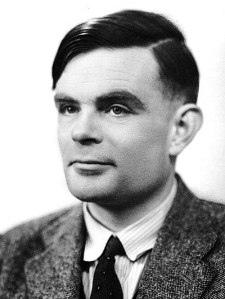
Alan Turing: grandfather of Computer Science
Alan Turing, probably the most influential and famous English computer scientist, has contributed to computer science in a number of highly significant ways. As well as being known for his Bletchley Park cryptography expertise he also developed underlying theories which are the basis for how everyday computers work and underpin our understanding of Artificial Intelligence…(read on)
Peter Landin: Elegance from Logic
A key idea behind programming language design is that a language should make it easy to write complex algorithms in simple and elegant ways. It turns out that logic is key to that. Through his work on programming language design, Peter Landin as much as anyone, promoted both elegance and the linked importance of logic in programming.…(read on)
Lynn Conway: revolutionising chip design
MIT professor and transgender activist, Lynn Conway along with Carver Mead, completely changed the way we think about, do and teach VLSI (Very Large Scale Integration) chip design. Their revolutionary book on VLSI design became the standard book used to teach the subject round the world. It was a whole new way of doing electronics. Their ideas formed the foundation of the way electronics industry subsequently worked, the foundation of the tech start-up boom…(read on)
Christopher Strachey: programming languages and more
Christopher Strachey not only wrote the first ever computer game and programmed the first recorded computer music, the first “creative” program … and he also developed theories and models which underpin all modern programming languages…(read on)
Sophie Wilson: chip design
Sophie Wilson designed the chip for the BBC Micro. This was one of the most popular early personal computers. She then co-designed the chip (the ARM processor) that is in almost all mobile phones as well as in tablets, TV’s and almost every other digital gadget in our homes… (read on)
Edith Windsor: gay marriage
Edie Schlain Windsor, who was a senior systems engineer at IBM and founding president of a software consulting company, led the landmark Supreme Court Case (United States versus Windsor) that led to gay marriage becoming legal in the US…. (read on)
Mary Ann Horton: email attachments
Mary Ann Horton, was one of the key people developing the UNIX operating in the 1970s and 80s. One of her many innovations that have made all our lives easier was the creation of programs that allowed emails to have binary attachments, allowing us to attach images, sound, videos and programs to our emails…. (read on)
Ludwig Wittgenstein: tautology and truth tables
Ludwig Wittgenstein is one of the most important philosophers of the 20th century. His interest was in truth and he made contributions to logical thinking that are a foundation of computing. He invented the modern idea of tautology as something that is true whatever the situation and also popularised truth tables, now used as a simple way to understand logical operations and logical expressions … (read on)
Peter Landin: The logic behind syntactic sugar
Computer Scientists talk about “Syntactic Sugar”. But in what way might a program be made sweet? It is all about how necessary a feature of a language is. The phrase was invented by computer scientist and gay activist, Peter Landin. He realised it made it easier to define the meaning of languages in logic and made the definitions more elegant.…(read on)
David Bowie: creative computing
David Bowie co-wrote an early computing tool to help creativity, based on an algorithm he used to help write lyrics… He also played enigmatic electronic engineer Nikola Tesla in the film The Prestige (read on)










 cs4fn
cs4fn 