Disabled people and those with chronic and debilitating illness have excelled in computer science just like in other subjects. This dates back to the 19th century. Computer Science is not just about computers but about computation. Even before Charles Babbage was trying to design a first, Victorian general purpose computer, others were exploring computational subjects including teenager Louis Braille as he designed a way for blind people to read. Since then many disabled, neurodiverse and others with a variety of conditions have been outstanding computer scientists or done work that computer scientists have built on. Because of its nature, building things for people, Computer Science is only strengthened by the input from those of all needs.
Adrian Stokes: Internet Pioneer
Disabled from birth with spina bifida, Adrian Stokes was a celebrated “Internet pioneer”. He set up the first UK email service so transatlantic one, and the service linking other UK sites to the network making it work as a network of networks in different countries. (read on)
T V Raman: Virtual Guide Dogs
At 14, T. V. Raman became blind. Through his life he has not let it stop him. He made a giant contribution that helps blind and partially sighted people hear information much more like the ways sighted people see screens… (read on)
Robert Weitbrecht and his telecommunication device for the deaf
Robert Weitbrecht was born deaf. He went on to become an award winning electronics scientist who invented the acoustic coupler (or modem) and a teletypewriter (or teleprinter) system allowing the deaf to communicate via a normal phone call. … (read on)
Braille, binary, bits and bytes
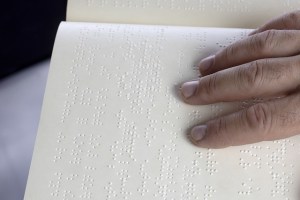
We take for granted that computers use binary: to represent numbers, letters, or more complicated things like music and pictures…any kind of information. Binary wasn’t invented for computers though. Its first modern use as a way to represent letters was actually invented in the first half of the 19th century. It is still used today: Braille, invented by the blind teenager Louis Braille. (Read on)
In space no one can hear you …
Johanna Lucht could do maths before she learned language. Why? Because she was born deaf and there was little support for deaf people where she lived. Despite, or perhaps because of, that she became a computer scientist and works for NASA. (Read on)
Tony Stockman: Sonification
Tony Stockman, blind from birth, devised a simple kind of sonification of data just so that he can do his PhD work on the effect of breathing on heart rate, then went on to become an expert in sonification and auditory displays … (read on)
Art touch and talk tour tech
What could a blind or partially-sighted person get from a visit to an art gallery? Quite a lot if the art gallery puts their mind to it. More if they make use of technology like haptic gloves and AI. So much so, we may all want the enhanced experience. (Read on)
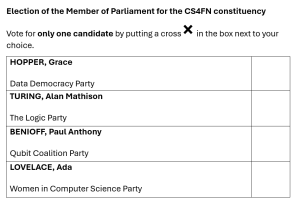
Accessible Technology in the Voting Booth
The right of voters to vote independently and secretly is so important, but many blind / partially sighted people cannot do so without assistance. How does tech enable them to vote independently? (Read on)
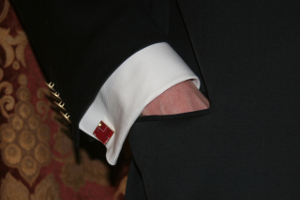
The tactful watch
These days art and high technology don’t mix much. Personal gadgets are one thing, jewellery quite another. That hasn’t always been the case though and hopefully it won’t be in the future. The tactful watch also shows how tech accessible to blind people can have other uses too. (Read on)
My first signs
Lila Harrar, then a computer science student at Queen Mary University of London was inspired by a deaf person to do something to make a difference. Her chance came when she had to think of something to do for her undergraduate project. (Read on)
Involving disabled people in the design of ICT tools and devices
“Inclusive Public Activities for information and Communication Technologies” is an EPSRC-funded project to make sure the voices an opinions of disabled people are included in ICT design… (read on)
Patterns for Sharing
The DePIC research team are a group with a mission to solve problems that involve the senses, and they are drawing on their inner desire to share! The team unlock situations where individuals with sensory impairments are disadvantaged in their use of computers… (read on)
Shh! Can you hear that diagram?
What does a diagram sound like? What does the shape of a sound feel like? At first sight listening to diagrams and feeling sounds might sound like nonsense, but for people who are visually impaired it is a practical issue. Spoken books were originally intended for partially-sighted people, before we all realised how useful they were. Screen readers similarly read out the words on a computer screen making the web and other programs accessible. The written world is full of more than just words though. There are tables and diagrams, pictures and charts. How does a paritally-sighted person deal with them?… (read on).
Neurodiversity and Computer Science Portal
Neurodiversity can be disabling, especially if the world is designed to make it so. However, neurodiversity can also be a positive and give massive advantages. This is especially so with respect to computer science where the way neurodiverse people think can be exactly what is needed to be an outstanding programmer or computer scientist … (read on)
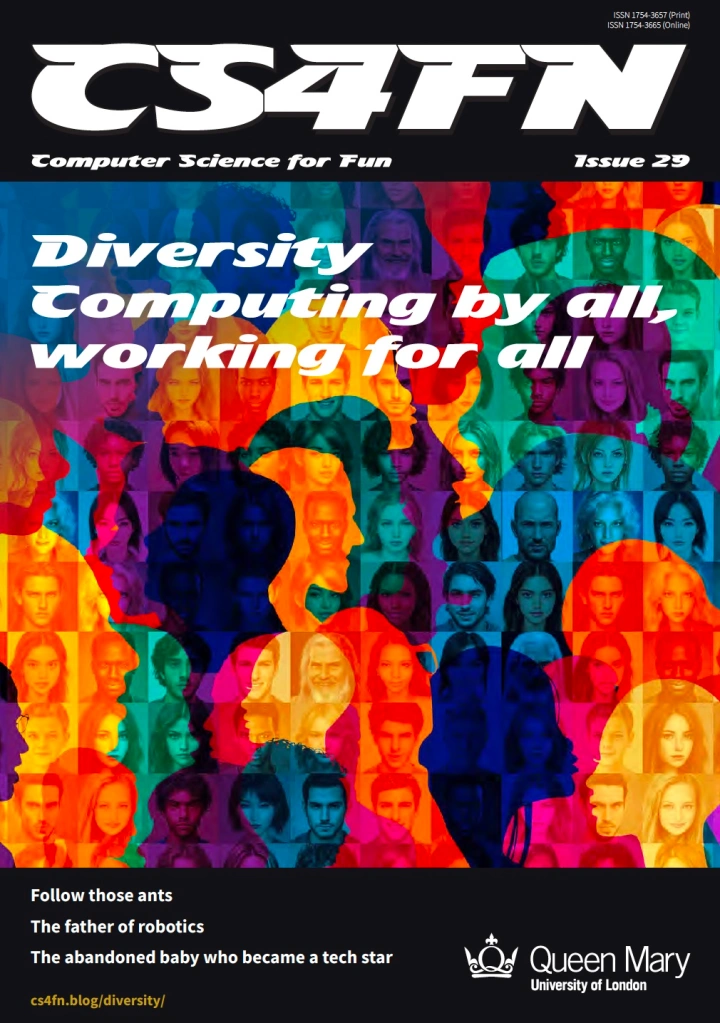
Issue 29 of the CS4FN magazine focusses on Diversity will be out later this year. Read the articles online here as well as finding related links .… (Coming Soon)
Diversity Day by Day
We are gradually linking all our diversity stories to the calendar to give links day by day to relevant stories and people of all backgrounds. It is also helping us find new stories. (To see what we have filled in so far…Read on).
This blog is funded by EPSRC on grant EP/W033615/1.






 cs4fn
cs4fn 