Film Futures (Christmas Special): Elf

A christmas elf
Image from pixabay

Computer Scientists and digital artists are behind the fabulous special effects and computer generated imagery we see in today’s movies, but for a bit of fun, in this series, we look at how movie plots could change if they involved Computer Scientists. Here we look at an alternative version of the Christmas film, Elf, starring Will Ferrell.

***Spoiler Alert***

Christmas Eve, and a baby crawls into Santa’s pack as he delivers presents at an orphenage. The baby is wearing only a nappy, but this being the 21st century the babys’s reusable Buddy nappy is an Intelligent nappy. It is part of the Internet of Things and is chipped, including sensors and a messaging system that allow it to report to the laundry system when the nappy needs changing (and when it doesn’t) as well as performing remote health monitoring of the baby. It is the height of optimised baby care. When the baby is reported missing the New York Police work with the nappy company, accessing their logs, and eventually work out which nappy the baby was wearing and track its movements…to the roof of the orphenage!

The baby by this point has been found by Santa in his sack at the North Pole, and named Buddy by the Elves after the label on his nappy. The Elves change Buddy’s nappy, and as their laundry uses the same high tech system for their own clothes, their laundry logs the presence of the nappy, allowing the Police to determine its location.

Santa intends to officially adopt Buddy, but things are moving rapidly now. The New York Police believe they have discovered the secret base of an international child smuggling ring. They have determined the location of the criminal hideout as somewhere near the North Pole and put together an armed task force. It is Boxing Day. As Santa gets in touch with the orphanage to explain the situation, and arrange an adoption, armed police already surround the North Pole and are moving in.

The  New York Police Commissioner, wanting the good publicity she sees arising from capturing a child smuggling ring, orders the operation to be live streamed to the world. The precise location of the criminal hideout, so operation, is not revealed to the public, which is fortunate given what follows. As the police move in the cameras are switched on and people the world over, are glued to their screens watching the operation unfold. As the police break in to the workshops, toys go flying and Elves scatter, running for their lives, but as Santa appears and calmly allows himself to be handcuffed, it starts to dawn on the police where they are and who they have arrested. The live stream is cut abruptly, and as the full story emerges, and apologies made on all sides. Santa is proved to be real to a world that was becoming sceptical. A side effect is there is a massive boost in Christmas Spirit across the world that keeps Santa’s sleigh powered without the need for engines for many decades to come. Buddy is officially adopted and grows up believing he is an Elf until one fateful year when …

In reality

The idea of the Internet of Things is that objects, not just people, have a presence on the Internet and can communicate with other objects and systems. The idea provides the backbone of the idea of smart homes, where fridges can detect they are out of milk and order more, carpets detect dirt and summon a robot hoover, and the boiler detects when the occupants are nearing home and heats the house just in time.

Wearable computing, where clothes have embedded sensors and computers is also already a reality, though mainly in the form of watches, jewellery and the like.  Clothes in shops do include electronic tags that help with stock control, and increasingly electronic-textiles based on metallic fibres and semi-conducting inks, are being used to create clothes with computers and electronics embedded in them.

Making e-textiles durable to be washed is still a challenge. Smart reusable nappies may be a while in coming.

More on …

Subscribe to be notified whenever we publish a new post to the CS4FN blog.


This page is funded by EPSRC on research agreement EP/W033615/1.

QMUL CS4FN EPSRC logos

Ask About Asthma

by Daniel Gill, Queen Mary University of London

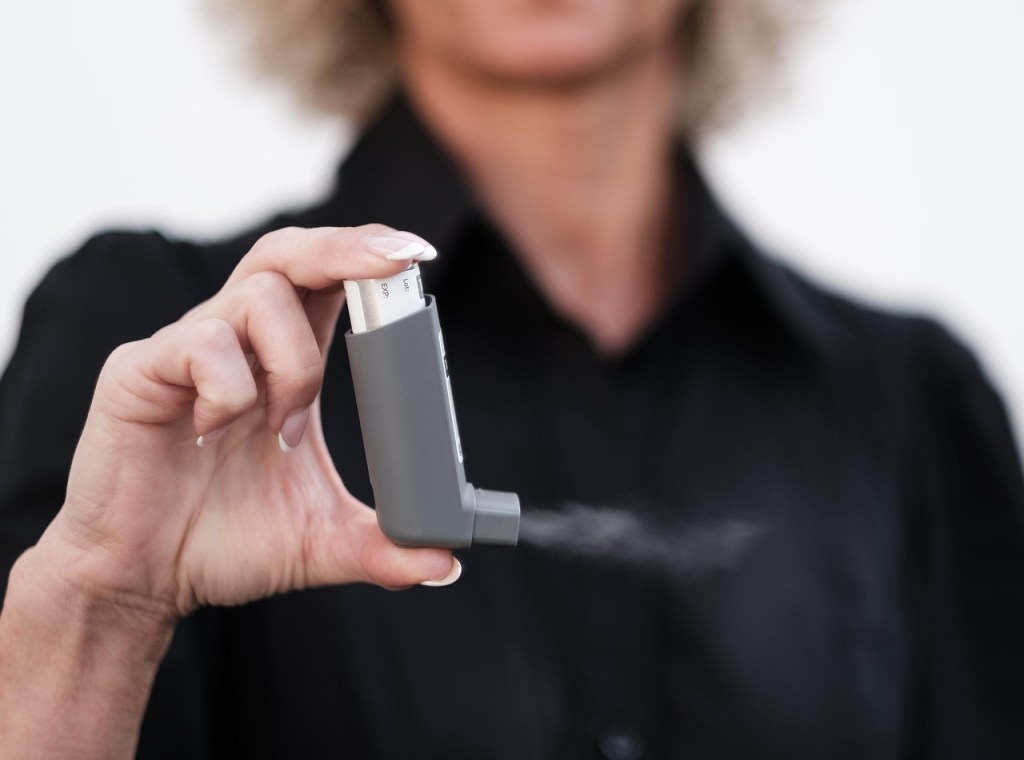
An inhaler being pressed so the mist of drug can be seen emerging
Image of inhaler by Cnordic CNordic from Pixabay

This week (9-15 September), as many young people are heading back to school after their summer holiday, NHS England is suggesting that teachers, employers and government workers #AskAboutAsthma. The goal is to raise awareness of the experiences of those with asthma, and to suggest techniques to put in place to help children and young people with asthma live their best lives.

One of the key bits of kit in the arsenal of people with asthma is an inhaler. When used, an inhaler can administer medication directly into the lungs and airways as the user breathes in. In the case of those with asthma, an inhaler can help to reduce inflammation in the airways which might prevent air from entering the lungs, especially during an asthma attack.

It’s only recently, however, that inhalers are getting the technology treatment. Smart inhalers can help to remind those with asthma to take their medication as prescribed (a common challenge for those with asthma) as well as tracking their use which can be shared with doctors, carers, or parents. Some smart inhalers can also identify if the correct inhaler technique is being used. Researchers have been able to achieve this by putting the audio of people using an inhaler through a neural network (a form of artificial intelligence), which can then classify between a good and bad technique.

As with any medical technology, these smart inhalers need to be tested with people with asthma to check that they are safe and healthy, and importantly to check that they are better than the existing solutions. One such study started in Leicester in July 2024, where smart inhalers (in this case, ones that clip onto existing inhalers) are being given to around 300 children in the city. The researchers will wait to see if these children have better outcomes than those who are using regular inhalers.

This sort of technology is a great example of what computer scientists call the “Internet of Things” (IoT). This refers to small computers which might be embedded within other devices which can interact over the internet… think smart lights in your home that connect to a home assistant, or fridges that can order food when you run out. 

A lot of medical devices are being integrated into the internet like this… a smart watch can track the wearer’s heart rate continuously and store it in a database for later, for example. Will this help us to live happier, healthier lives though? Or could we end up finding concerning patterns where there are none?

More on…

Linked Research Papers

Magazines …


EPSRC supports this blog through research grant EP/W033615/1,

Protecting your fridge

by Jo Brodie and Paul Curzon, Queen Mary University of London

Ever been spammed by your fridge? It has happened, but Queen Mary’s Gokop Goteng and Hadeel Alrubayyi aim to make it less likely…

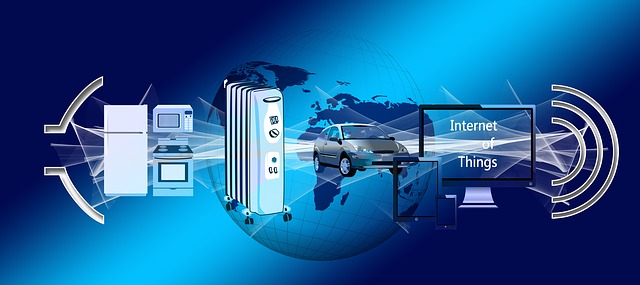
Image by Gerd Altmann from Pixabay

Gokop has a longstanding interest in improving computing networks and did his PhD on cloud computing (at the time known as grid computing), exploring how computing could be treated more like gas and electricity utilities where you only pay for what you use. His current research is about improving the safety and efficiency of the cloud in handling the vast amounts of data, or ‘Big Data’, used in providing Internet services. Recently he has turned his attention to the Internet of Things.

It is a network of connected devices, some of which you might have in your home or school, such as smart fridges, baby monitors, door locks, lighting and heating that can be switched on and off with a smartphone. These devices contain a small computer that can receive and send data when connected to the Internet, which is how your smartphone controls them. However, it brings new problems: any device that’s connected to the Internet has the potential to be hacked, which can be very harmful. For example, in 2013 a domestic fridge was hacked and included in a ‘botnet’ of devices which sent thousands of spam emails before it was shut down (can you imagine getting spam email from your fridge?!)

A domestic fridge was hacked
and included in a ‘botnet’ of devices
which sent thousands of spam emails
before it was shut down.

The computers in these devices don’t usually have much processing power: they’re smart, but not that smart. This is perfectly fine for normal use, but to run software to keep out hackers, while getting on with the actual job they are supposed to be doing, like running a fridge, it becomes a problem. It’s important to prevent devices from being infected with malware (bad programs that hackers use to e.g., take over a computer) and work done by Gokop and others has helped develop better malwaredetecting security algorithms which take account of the smaller processing capacity of these devices.

One approach he has been exploring with PhD student Hadeel Alrubayyi is to draw inspiration from the human immune system: building artificial immune systems to detect malware. Your immune system is very versatile and able to quickly defend you against new bugs that you haven’t encountered before. It protects you from new illnesses, not just illnesses you have previously fought off. How? Using special blood cells, such as T-Cells, which are able to detect and attack rogue cells invading the body. They can spot patterns that tell the difference between the person’s own healthy cells and rogue or foreign cells. Hadeel and Gokop have shown that applying similar techniques to Internet of Things software can outperform other techniques for spotting new malware, detecting more problems while needing less computing resources.

Gokop is also using his skills in cloud computing and data science to enhance student employability and explore how Queen Mary can be a better place for everyone to do well. Whether a person, organisation or smart fridge Gokop aims to help you reach your full potential!

More on …

Related Magazines …


EPSRC supports this blog through research grant EP/W033615/1.