The tale of the mote and the petrel

by Paul Curzon, Queen Mary University of London
(Updated from the archive)

Giant petrel flying over ice and rock
Image by Eduardo Ruiz from Pixabay
Image by Eduardo Ruiz from Pixabay 

Biology and computer science can meet in some unexpected, not to mention inhospitable, places. Who would have thought that the chemical soup in the nests of Petrels studied by field biologists might help in the development of futuristic dust-sized computers, for example?

Just Keep Doubling

One of the most successful predictions in Computer Science was made by Gordon Moore, co-founder of Intel. Back in 1965 he suggested that the number of transistors that can be squeezed onto an integrated circuit – the hardware computer processors are made of – doubled every few years: computers get ever more powerful and ever smaller. In the 60 or so years since Moore’s paper it has remained an amazingly accurate prediction. Will it continue to hold though or are we reaching some fundamental limit? Researchers at chip makers are confident that Moore’s Law can be relied on for the foreseeable future. The challenge will be met by the material scientists, the physicists and the chemists. Computer scientists must then be ready for the Law’s challenge too: delivering the software advances so that its trends are translated into changes in our everyday lives. It will lead to ever more complex systems on a single chip and so ever smaller computers that will truly disappear into the environment.

Dusting computers
Motes are one technology developed on the back of this trend. The aim is to create dust-sized computers. For example, the worlds smallest computer as of 2015 was the Michigan Micro Mote. It was only a few milimetres big but was a fully working computer system able to power itself, sense the world, process the data it collects and communicate data collected to other computers. In 2018 IBM announced a computer with sides a millimetre long. Rising to the challenge, the Michigan team soon announced their new mote with sides a third of a millimetre! The shrinking of motes will is not likely to stop!

Scatter motes around the environment and they form unobservable webs of intelligent sensors. Scatter them on a battlefield to detect troop movements or on or near roads to monitor traffic flow or pollution. Mix them in concrete and monitor the state of a bridge. Embed them in the home to support the elderly or in toys to interact with the kids. They are a technology that drives the idea of the Internet of Things where everyday objects become smart computers.

Battery technology has long been
the only big problem that remains.

What barriers must be overcome to make dust sized motes a ubiquitous reality? Much of the area of a computer is taken up by its connections to the outside world – all those pins allowing things to be plugged in. They can now be replaced by wireless communications. Computers contain multiple chips each housing separate processors. It is not the transistors that are the problem but the packaging – the chip casings are both bulky and expensive. Now we have “multicore” chips: large numbers of processors on a single small chip courtesy of Moore’s Law. This gives computer scientists significant challenges over how to develop software to run on such complicated hardware and use the resources well. Power can come from solar panels to allow them to constantly recharge even from indoor light. Even then, though, they still need batteries to store the energy. Battery technology is the only big problem that remains.

Enter the Petrels

But how do you test a device like that? Enter the Petrels. Intel’s approach is not to test futuristic technology on average users but to look for extreme ones who believe a technology will deliver them massive benefits. In the case of Motes, their early extreme users were field biologists who want to keep tabs on birds in extremely harsh field conditions. Not only is it physically difficult for humans to observe sea birds’ nests on inhospitable cliffs but human presence disturbs the birds. The solution: scatter motes in the nests to detect heat, humidity and the like from which the state and behaviour of the birds can be deduced. A nest is an extremely harsh environment for a computer though, both physically and chemically. A whole bunch of significant problems, overlooked by normal lab testing, must be overcome. The challenge of deploying Motes in such a harsh environment led to major improvements in the technology.


Moore’s Law is with us for a while yet, and with the efforts of material scientists, physicists, chemists, computer scientists and even field biologists and the sea birds they study it will continue to revolutionise our lives.

More on …

Related Magazines …


EPSRC supports this blog through research grant EP/W033615/1. 
Alexander Graham Bell: It’s good to talk

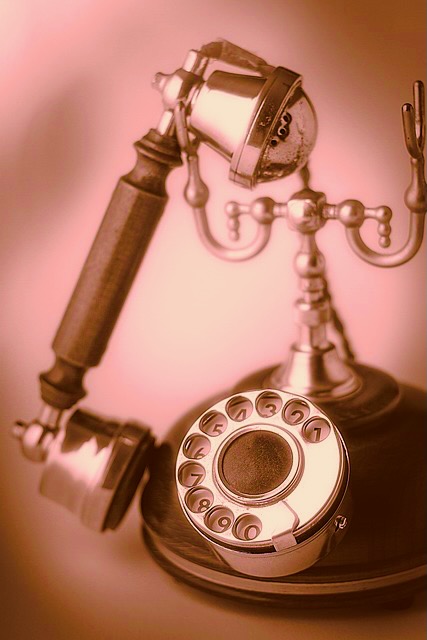
An antique phone

Image modified version of that by Christine Sponchia from Pixabay

by Peter W McOwan, Queen Mary University of London

(From the archive)

The famous inventor of the telephone, Alexander Graham Bell, was born in 1847 in Edinburgh, Scotland. His story is a fascinating one, showing that like all great inventions, a combination of talent, timing, drive and a few fortunate mistakes are what’s needed to develop a technology that can change the world.

A talented Scot

As a child the young Alexander Graham Bell, Aleck, as he was known to his family, showed remarkable talents. He had the ability to look at the world in a different way, and come up with creative solutions to problems. Aged 14, Bell designed a device to remove the husks from wheat by combining a nailbrush and paddle into a rotary-brushing wheel.

Family talk

The Bell family had a talent with voices. His grandfather had made a name for himself as a notable, but often unemployed, actor. Aleck’s Mother was deaf, but rather than use her ear trumpet to talk to her like everyone else did, the young Alexander came up with the cunning idea that speaking to her in low, booming tones very close to her forehead would allow her to hear his voice through the vibrations his voice would make. This special bond with his mother gave him a lifelong intereste in the education of deaf people, which combined with his inventive genius and some odd twists of fate were to change the world.

A visit to London, and a talking dog

While visiting London with his father, Aleck was fascinated by a demonstration of Sir Charles Wheatstone’s “speaking machine”, a mechanical contraption that made human like noises. On returning to Edinburgh their father challenged Aleck and his older brother to come up with a machine of their own. After some hard work and scrounging bits from around the place they built a machine with a mouth, throat, nose, movable tongue, and bellow for lungs, and it worked. It made human-like sounds. Delighted by his success Aleck went a step further and massaged the mouth of his Skye terrier so that the dog’s growls were heard as words. Pretty wruff on the poor dog.

Speaking of teaching

By the time he was 16, Bell was teaching music and elocution at a boy’s boarding school. He was still fascinated by trying to help those with speech problems improve their quality of life, and was very successful in this, later publishing two well-respected books called ‘The Practical Elocutionist’ and ‘Stammering and Other Impediments of Speech’. Alexander and his brother toured the country giving demonstrations of their techniques to improve peoples’ speech. He also started his study at the University of London, where a mistake in reading German was to change his life and lay the foundations for the telecommunications revolution.

A ‘silly’ language mistake that changed the world

At University, Bell became fascinated by the ideas of German physicist Hermann Von Helmholtz. Von Helmholtz had produced a book, ‘On The Sensations of Tone’, in which he said that vowel sounds, a, e, i, o and u, could be produced using electrical tuning forks and resonators. However Bell couldn’t read German very well, and mistakenly believed that Von Helmholtz’s had written that vowel sounds could be transmitted over a wire. This misunderstanding changed history. As Bell later stated, “It gave me confidence. If I had been able to read German, I might never have begun my experiments in electricity.”

Tragedy and Travel

Things were going well for young Bell’s career, when tragedy struck. Both his brothers and he contracted Tuberculosis, a common disease at the time. His two brothers died and at the age of 23, still suffering from the disease, Bell left Britain to move to Ontario in Canada to convalesce and then to Boston to work in a school for deaf mutes.

The time for more than dots and dashes

His dreams of transmitting voices over a wire were still spinning round in his creative head. It just needed some new ideas to spark him off again. Samuel Morse had just developed Morse Code and the electronic telegraph, which allowed single messages in the form of long and short electronic pulses, dots and dashes, to be transmitted rapidly along a wire over huge distances. Bell saw the similarities between the idea of being able to send multiple messages and the multiple notes in a musical chord, the “harmonic telegraph” could be a way to send voices.

Chance encounter

Again chance played its roll in telecommunications history. At the electrical machine shop of Charles Williams, Bell ran into young Thomas Watson, a skilled electrical machinist able to build the devices that Bell was devising. The two teamed up and started to work toward making Bell’s dream a reality. To make this reality work they needed to invent two things: something to measure a voice at one end, and another device to reproduce the voice at the other, what we would call today the microphone and the speaker. The speaker accident June 2, 1875 was a landmark day for team Bell and Watson. Working in their laboratory they were trying to free a reed, a small flat piece of metal, which they had wound too tightly to the pole of an electromagnet. In trying to free it Watson produced a ‘twang’. Bell heard the twang and came running. It was a sound similar to the sounds in human speech; this was the solution to producing an electronic voice, a discovery that must have come as a relief for all the dogs in the Boston area. The mercury microphone Bell had also discovered that a wire vibrated by his voice while partially dipped in a conducting liquid, like mercury or battery acid, could be made to produce a changing electrical current. They had a device where the voice could be transformed into an electronic signal. Now all that was needed was to put the two inventions together.

The first ’emergency’ phone call (allegedly)

On March 10, 1876, Bell and Watson set out to test their new system. The story goes that Bell knocked over a container with battery acid, which they were using as the conducting liquid in the ‘microphone’. Spilled acid tends to be nasty and Bell shouted out “Mr. Watson, come here. I want you!” Watson, working in the next room, heard Bell’s cry for help through the wire. The first phone call had been made, and Watson quickly went through to answer it. The telephone was invented, and Bell was only 29 years old.

The world listens

The telephone was finally introduced to the world at the Centennial Exhibition in Philadelphia in 1876. Bell quoted Hamlet over the phone line from the main building 100 yards away, causing the surprised Brazilian Emperor Dom Pedro to exclaim, “My God, it talks”, and talk it did. From there on, the rest, as they say, is history. The telephone spread throughout the world changing the way people lived their lives. Though it was not without its social problems. In many upper class homes it was considered to be vulgar. Many people considered it intrusive (just like some people’s view of mobile phones today!), but eventually it became indispensable.

Can’t keep a good idea down

Inventor Elisha Gray also independently designed his own version of the telephone. In fact both he and Bell rushed their designs to the US patent office within hours of each other, but Alexander Graham Bell patented his telephone first. With the massive amounts of money to be made Elisha Gray and Alexander Graham Bell entered into a famous legal battle over who had invented the telephone first, and Bell had to fight may legal battles over his lifetime as others claimed they had invented the technology first. In all the legal cases Bell won, partly many claimed because he was such a good communicator and had such a convincing talking voice. As is often the way few people now remember the other inventors. In fact, it is now recognized that Italian Antonio Meucci had invented a method of electronic voice communication earlier though did not have the funds to patent it.

Fame and Fortune under Forty

Bell became rich and famous, and he was only in his mid thirties. The Bell telephone company was set up, and later went on to become AT&T one of Americas foremost telecommunications giants.

Read Terry Pratchett’s brilliant book ‘Going Postal’ for a fun fantasy about inventing and making money from communication technology on DiscWorld.

More on …

Related Magazines and a new book…


EPSRC supports this blog through research grant EP/W033615/1. 

Ingrid Daubechies: Wiggly lines help catching crime

by Paul Curzon, Queen Mary University of London

from the cs4fn women are here special issue.

Blue and yellow sine wave patterns representing light

Computer scientists rely on maths a lot. As mathematicians devise new mathematical theories and tools, computer scientists turn them into useful programs. Mathematicians who are interested in computing and how to make practical use of their maths are incredibly valuable. Ingrid Daubechies is like that. Her work has transformed the way we store images and much besides. She works on the maths behind digital signal processing – how best to manipulate things like music and images in computers. It boils down to wiggly lines.

Pixel pictures

The digital age is founded on the idea that you can represent signals: whether sound or images, radio waves, or electrical signals, as sequences of numbers. We digitise things by breaking them into lots of small pieces, then represent each piece with a number. As I look out my window, I see a bare winter tree, with a robin singing. If I take a picture with a digital camera, the camera divides the scene into small squares (or pixels) and records the colour for each square as a number. The real world I’m looking at isn’t broken into squares, of course. Reality is continuous and the switch to numbers means some of the detail of the real thing is lost. The more pieces you break it into the more detail you record, but when you blow up a digital image too much, eventually it goes blurry. Reality isn’t fuzzy like that. Zoom in on the real thing and you see ever more detail. The advantage of going digital is that, as numbers, the images can be much more quickly and easily stored, transmitted and manipulated by Photoshop-like programs. Digital signal processing is all about how you store and manipulate real-world things, those signals, with numbers.

Curvy components

There are different ways to split signals up when digitising them. One of the bedrocks of digital signal processing is called Fourier Analysis. It’s based on the idea that any signal can be built out of a set of basic building blocks added together. It’s a bit like the way you can mix any colour of paint from the three primary colours: red, blue and yellow. By mixing them in the right proportions you can get any colour. That means you can record colours by just remembering the amounts of each component. For signals, the building blocks are the pure frequencies in the signal. The line showing a heartbeat as seen on a hospital monitor, say, or a piece of music in a sound editing program, can be broken down into a set of smooth curves that go up and down with a given frequency, and which when added together give you the original line – the original signal. The negative parts of one wave can cancel out positive parts of another just as two ripples meeting on a pond combine to give a different pattern to the originals.

This means you can store signals by recording the collection and strength of frequencies needed to build them. For images the frequencies might be about how rapidly the colours change across the image. An image of say a hazy sunset, where the colours are all similar and change gradually, will then be made of low frequencies with rolling wave components. An image with lots of abrupt changes will need lots of high frequency, more spiky, waves to represent all those sudden changes.

Blurry bits

A pulse signal on a spherical monitor surface
Image by Gerd Altmann from Pixabay 

Now suppose you have taken a picture and it is all a bit blurry. In the set of frequencies that blurriness will be represented by the long rolling waves across the image: the low frequencies. By filtering out those low frequencies, making them less important and making the high frequency building blocks stronger, we can sharpen the image up.

more like keyhole surgery on a signal
than butchering the whole thing.

By filtering in different ways we can have different effects on the image. Some of the most important help compress images. If a digital camera divides the image into fewer pixels it saves memory by storing less data, but you end up with blocky looking pictures. If you instead throw away information by losing some of the frequencies of a Fourier version, the change may be barely noticeable. In fact, drawing on our understanding of how our brains process the world to choose what frequencies to drop we might not see a change in the image at all.

The power of Fourier Analysis is that it allows you to manipulate the whole image in a consistent way, editing a signal by editing its frequency building blocks. However, that power is also a disadvantage. Sometimes you want to have effects that are more local – doing something that’s more like keyhole surgery on a signal than butchering the whole thing.

Wiggly wavelets

That is where wavelets come in. They give a way of focussing on small areas of the signal. The building blocks used with wavelets are not the smooth, forever undulating curves of Fourier analysis, but specially designed functions, ie wiggly lines, that undulate just in a small area – a bit like a single heart beat signal. A ‘mother’ wavelet is combined with variations of it (child wavelets) to make the full set of building blocks: a wavelet family.

Wavelets were perhaps more a curiosity than of practical use to computer scientists, until Ingrid Daubechies came up with compact wavelets that needed only a fixed time to process. The result was a versatile and very practical tool that others have been able to use in all sorts of ways. For example, they give a way to compress images without losing information that matters. This has made a big difference with the FBI’s fingerprint archive, for example. A family of wavelets allows each fingerprint to be represented by just a few wavelets, so a few numbers, rather than the many numbers needed if pixels were stored. The size of the collection takes up 20 times less storage space as wavelets without corrupting the images. That also means it can be sent to others who need it more easily. It matters when each fingerprint would otherwise involve storing or sending 10 Megabytes of data.

People have come up with many more practical uses of Wavelets, from cleaning up old music to classifying stars and detecting earthquakes. Not bad for a wiggly line.

More on …

Related Magazines …


EPSRC supports this blog through research grant EP/W033615/1. 

Daphne Oram: the dawn of music humans can’t play

Music notes over paint brush patterns
Image by Gerd Altmann from Pixabay

What links James Bond, a classic 1950s radio comedy series and a machine for creating music by drawing? … Electronic music pioneer: Daphne Oram.

Oram was one of the earliest musicians to experiment with electronic music, and was the first woman to create an electronic instrument. She realised that the advent of electronic music meant composers no longer had to worry about whether anyone could actual physically perform the music they composed. If you could write it down in a machine readable way then machines could play it electronically. That idea opened up whole new sounds and forms of music and is an idea that pop stars and music producers still make use of today.

She learnt to play music as a child and was good enough to be offered a place at the Royal College of Music, though turned it down. She also played with radio electronics with her brothers, creating radio gadgets and broadcasting music from one room to another. Combining music with electronics became her passion and she joined the BBC as a sound engineer. This was during World War 2 and her job included being the person ready during a live music broadcast to swap in a recording at just the right point if, for example, there was an air raid that meant the performance had to be abandoned. The show, after all, had to go on.

Composing electronic music

She went on to take this idea of combining an electronic recording with live performance further and composed a novel piece of music called Still Point that fully combined orchestral with electronic music in a completely novel way. The BBC turned down the idea of broadcasting it, however, so it was not played for 70 years until it was rediscovered after her death, ultimately being played at a BBC Prom.

Composers no longer had to worry
about whether anyone could actually
physically perform the music they composed

She started instead to compose electronic music and sounds for radio shows for the BBC which is where the comedy series link came in. She created sound effects for a sketch for the Goon Show (the show which made the names of comics including Spike Milligan and Peter Sellers). She constantly played with new techniques. Years later it became standard for pop musicians to mess with tapes of music to get interesting effects, speeding them up and down, rerecording fragments, creating loops, running tapes backwards, and so on. These kinds of effects were part of amazing sounds of the Beatles, for example. Oram was one of the first to experiment with these kinds of effects and use them in her compositions – long before pop star producers.

One of the most influential things she did was set up the BBC Radiophonic Workshop which went on to revolutionise the way sound effects and scores for films and shows were created. Oram though left the BBC shortly after it was founded, leaving the way open for other BBC pioneers like Delia Derbyshire. Oram felt she wasn’t getting credit for her work, and couldn’t push forward with some of her ideas. Instead Oram set herself up as an independent composer, creating effects for films and theatre. One of her contracts involved creating electronic music that was used on the soundtracks of the early Bond films starring Sean Connery – so Shirley Bassey is not the only woman to contribute to the Bond sound!

The Music Machine

While her film work brought in the money, she continued with her real passion which was to create a completely new and highly versatile way to create music…by drawing. She built a machine – the Oramics Machine – that read a composition drawn onto film reels. It fulfilled her idea of having a machine that could play anything she could compose (and fulfilled a thought she had as a child when she wondered how you could play the notes that fell between the keys on a piano!).

The 35mm film that was the basis of her system that dates all the way back to the 19th century when George Eastman, Thomas Edison and Kennedy Dixon pioneered the invention film based photography and then movies. It involved a light sensitive layer being painted on strips of film with holes down the side that allowed the film to be advanced. This gave Oram a recording media. She could etch or paint subtle shapes and patterns on to the film. In a movie light was shone through the film, projecting the pictures on the film on to the screen. Oram instead used light sensors to detect the patterns on the film and convert it to electronic signals. Electronic circuitry she designed (and was awarded patents for) controlled cathode ray tubes that showed the original drawn patterns but now as electrical signals. Ultimately these electrical signals drove speakers. Key to the flexibility of the system was that different aspects of the music were controlled by patterns on different films. One for example controlled the frequency of the sound, others the timbre or tone quality and others the volume. These different control signals for the music were then combined by Oram’s circuitry. The result of combining the fine control of the drawings with the multiple tapes meant she had created a music machine far more flexible in the sound it could produce than any traditional instrument or orchestra. Modern music production facilities use very similar approaches today though based on software systems rather than the 1960s technology available to Oram.

Ultimately, Daphne Oram was ahead of her time as a result of combining her two childhood fascinations of music and electronics in a way that had not been done before. She may not be as famous as the great record producers who followed her, but they owe a lot to her ideas and innovation.

Paul Curzon, Queen Mary University of London

More on …

Related Magazines …


EPSRC supports this blog through research grant EP/W033615/1. 

Nikola Tesla: the invisible genius

Nikola Tesla in front of a giant coil
Public domain, via Wikimedia Commons

Nikola Tesla is an enigma wrapped in a mystery. Not bad going for an electronic engineer. Born, so the stories go, in the middle of a thunderstorm in Serbia, Tesla has left a fascinating legacy to the world today. Magnetism is measured in Tesla, a unit named after him. But it is perhaps one victory we owe most to Tesla for. He fought a battle to show that alternating current (A/C) was superior to direct current (D/C) when it came to transmitting electricity over a distance. His opponent was none other than America’s most respected celebrity inventor, Thomas Edison.

Absolutely shocking behaviour

In the so called Battle of the Currents Tesla and his entrepreneurial partner George Westinghouse eventually won (they had maths on their side). If he hadn’t the world would have been filled with electrical substations at the end of each road, because D/C doesn’t do distance well.

Why is A/C better?

A/C is better for distributing power over a distance because it allows the easy changing of voltages using a transformer. Power is calculated as current times voltage (P = IV). For a given amount of power to be sent, a low voltage requires a higher current. But metal conducting wires have resistance. That means some of that precious power will be lost as heat in the wires. Theory (always important to know the theory) says that power loss is given by P = I²R. So from this its obvious that low-voltage, high-current transmissions will cause a much greater power loss than high-voltage, low-current ones. This fact holds whether D/C or A/C is used. But, and here is the clincher, transforming D/C power from one voltage to another is difficult and expensive. In Tesla’s day it needed a large spinning device called a rotary converter, and moving parts are always a problem. But with A/C these voltage changes can be done with simple and cheap transformer coils with no moving parts and no maintenance. Tesla wins in theory and in practice.

A Dirty Fight

Tesla ultimately won, but the fight was a really dirty one – there was ego and money at stake. Edison got his employees to badmouth A/C, to try and convince the public it was dangerous. They used A/C to execute stray cats and dogs to try to prove to the press that A/C was more dangerous than Edison’s system of D/C. They even filmed the A/C electrocution of Topsy, a circus elephant from Coney Island! Edison’s spin doctors also tried to popularise the term “Westinghoused” (the rival company to Edison’s that Tesla was working with) to mean being electrocuted. The battle cost an astronomical amount, and toward the end Tesla pulled out, tearing up the contract that could have made him the world’s first billionaire, and leaving Westinghouse to capitalise on the final victory.

Tesla retreated, and focussed on wireless control inventing the world’s first remote controlled boat, but he also had another card up his sleeve – he had invented the radio, and had the patent. But success was short lived. After a few years the US courts decided that Guglielmo Marconi was the inventor of radio and Tesla lost out again. In fact in 1909 Marconi was awarded the Nobel Prize for Physics for the invention of radio, and the rumour was that Tesla and Edison’s fight had lost them the chance of being included in the award.

Springing back into action

Never daunted, in 1899, Tesla moved to Colorado Springs, Colorado, where he could have enough room for his high-voltage, high-frequency experiments. He told reporters that he was conducting wireless telegraphy experiments, transmitting signals from a mountain called Pikes Peak in Colorado to Paris. He transmitted extremely low frequencies through the ground as well as between the earth’s surface and the ionosphere, and patented the ideas. He also calculated that the resonant frequency of the Earth was approximately 8 Hertz (Hz). Later in the 1950s, researchers confirmed that the resonant frequency of the Earth’s ionosphere was in this range, but chose to name it the Schumann resonance. Tesla was invisible again.

This is the end?

Tesla suffered from a lot of illness as a child and had a condition where he saw bright flashing lights and had visions and saw flashbacks. He was neurodiverse in that he had an eidetic (ie photographic) memory, able to remember pictures in great detail at a glance. He seems to have had an obsessive personality and may well have been on the autistic spectrum. On the whole he turned these things to his advantage leading to his great achievements: such as turning visions into inspiration for ideas and pushing on with ideas despite all the challenges he encountered through his life.

However, Tesla was no good with money. His genius and lifetime of invention led to him dying alone of heart failure, in a New York hotel room, impoverished at the age of 86. The story goes that the documents he had were seized by the American secret service under the direct orders of J Edgar Hoover. Tesla had been developing his radical ideas about transmitting power without wires through the earth over great distances. He called this a peace ray; it could manifest electrical power in mid-air wherever it was needed on the Earth. He also claimed to have worked out a ‘dynamic theory of gravity’ – even Einstein failed at this – but it was never published.

Tesla’s life has of course been the subject of movies; he most recently appeared in the film ‘The Prestige’, played by David Bowie: who else could play such an enigma.

Tesla is also featured on the bank notes of Serbia. So when you next plug in your mobile phone charger or use wifi, remember Tesla, the invisible genius who made it all possible.

– Peter W. McOwan and Paul Curzon, Queen Mary University of London (From the archive)


More on …

Related Magazines …


EPSRC supports the cs4fn blog through research grants (EP/K040251/2 and EP/K040251/2 held by Professor Ursula Martin as well as grant EP/W033615/1). 

QMUL CS4FN EPSRC logos

The optical pony express

Pony express - cowboy galloping on horse at sunset
Image by Ronald Plett from Pixabay

Suppose you want to send messages as fast as possible. What’s the best way to do it? That is what Polina Bayvel, a Professor at UCL has dedicated her research career to: exploring the limits of how fast information can be sent over networks. It’s not just messages that it’s about nowadays of course, but videos, pictures, money, music, books – anything you can do over the Internet.

Send a text message and it arrives almost instantly. Sending message hasn’t always been that quick, though. The Greeks used runners – in fact the Marathon athletic event originally commemorated a messenger who supposedly ran from a battlefield at Marathon to Athens to deliver the message “We won” before promptly dying. The fastest woman in the world at the time of writing, 2011, Paula Radcliffe, at her quickest could deliver a message a marathon distance away in 2 hours 15 minutes and 25 seconds (without dying!) … ( now in 2020, Brigid Kosgei, a minute or so faster).

Horses improved things (and the Greeks in fact normally used horseback messengers, but hey it was a good story). Unfortunately, even a horse can’t keep up the pace for hundreds of miles. The Pony Express pushed horse technology to its limits. They didn’t create new breeds of genetically modified fast horses, or anything like that. All it took was to create an organised network of normal ones. They set up pony stations every 10 miles or so right across North America from Missouri to Sacramento. Why every 10 miles? That’s the point a galloping horse starts to give up the ghost. The mail came thundering in to each station and thundered out with barely a break as it was swapped to a new fresh pony.

The pony express was swiftly overtaken by the telegraph. Like the switch to horses, this involved a new carrier technology – this time copper wire. Now the messages had to be translated first though, here into electrical signals in Morse code. The telegraph was followed by the telephone. With a phone it seems like you just talk and the other person just hears but of course the translation of the message into a different form is still happening. The invention of the telephone was really just the invention of a way to turn sound into an electrical code that could be sent along copper cables and then translated back again.

The Internet took things digital – in some ways that’s a step back towards Morse code. Now, everything, even sound and images, are turned into a code of ones and zeros instead of dots and dashes. In theory images could of course have been sent using a telegraph tapper in the same way…if you were willing to wait months for the code of the image to be tapped in and then decoded again. Better to just wait for computers that can do it fast to be invented.

In the early Internet, the message carrier was still good old copper wire. Trouble is, when you want to send lots of data, like a whole movie, copper wire and electricity are starting to look like the runners must have done to horse riders: slow out-of-date technology. The optical fibre is the modern equivalent of the horse. They are just long thin tubes of glass. Instead of sending pulses of electricity to carry the coded messages, they now go on the back of a pulse of light.

Up to this point it’s been mainly men taking the credit, but this is where Polina’s work comes in. She is both exploring the limits of what can be done with optical fibres in theory and building ever faster optical networks in practice. How much information can actually be sent down fibres and what is the best way to do it? Can new optical materials make a difference? How can devices be designed to route information to the right place – such ‘routers’ are just like mail sorting depots for pulses of light. How can fibre optics best be connected into networks so that they work as efficiently as possible – allowing you and everyone else in your street to be watching different movies at the same time, for example, without the film going all jerky? These are all the kinds of questions that fascinate Polina and she has built up an internationally respected team to help her answer them.

Why are optical fibres such a good way to send messages? Well the obvious answer is that you can’t get much faster than light! Well actually you can’t get ANY faster than light. The speed of light is the fastest anything, including information, can travel according to Einstein’s laws. That’s not the end of the story though. Remember the worn out Marathon runner. It turns out that signals being sent down cables do something similar. Well, not actually getting out of breath and dying but they do get weaker the further they travel. That means it gets harder to extract the information at the other end and eventually there is a point where the message is just garbled noise. What’s the solution? Well actually it’s exactly the one the Pony Express came up with. You add what are called ‘repeaters’ every so often. They extract the message from the optical fibre and then send it down the next fibre, but now back at full strength again. One of the benefits of fibre optics is that signals can go much further before they need a repeater. That means the message gets to its destination faster because those repeaters take time extracting and resending the message. That, in turn, leaves scope for improvement. The Pony Express made their ‘repeaters’ faster by giving the rider a horn to alert the stationmaster that they were arriving. He would then have time to get the next horse ready so it could leave the moment the mail was handed over. Researchers like Polina are looking for similar ways to speed up optical repeaters.

You can do more than play with repeaters to speed things up though. You can also bump up the amount of information you carry in one go. In particular you can send lots of messages at the same time over an optical fibre as long as they use different wavelengths. You can think of this as though one person is using a torch with a blue bulb to send a Morse code message using flashes of blue light (say), while someone else is doing the same thing with a red torch and red light. If two people at the other end are wearing tinted sunglasses then depending on the tint they will each see only the red pulses or only the blue ones and so only get the message meant for them. Each new frequency of light used gives a new message that can be sent at the same time.

The tricky bit is not so much in doing that but in working out which people can use which torch at any particular time so their aren’t any clashes, bearing in mind that at any instant messages could be coming from anywhere in the network and trying to go anywhere. If two people try to use the same torch on the same link at the same time it all goes to pot. This is complicated further by the fact that at any time particular links could be very busy, or broken, meaning that different messages may also travel by different routes between the same places, just as you might go a different way to normal when driving if there is a jam. All this, and together with other similar issues, means there are lots of hairy problems to worry about if coming up with a the best possible optical network as Polina is aiming to do.

Polina’s has been highly successful working in this area. She has been made a Fellow of the Royal Academy of Engineering for her work and is also a Royal Society Wolfson Research Merit Award holder. It is only given to respected scientists of outstanding achievement and potential. She has also won the prestigious Patterson Medal awarded for distinguished research in applied physics. It’s important to remember that modern engineering is a team game, though. As she notes she has benefited hugely by having inspiring and supporting mentors, as well as superb students and colleagues. It is her ability to work well with other people that allowed her build a critical mass in her research and so gain all the accolades. All that achieved and she is a mother of two boys to boot. Bringing up children is, of course, a team game too.

– Paul Curzon, Queen Mary University of London, Autumn 2011

More on …

Magazines …

Subscribe to be notified whenever we publish a new post to the CS4FN blog.


This page is funded by EPSRC on research agreement EP/W033615/1.

QMUL CS4FN EPSRC logos