
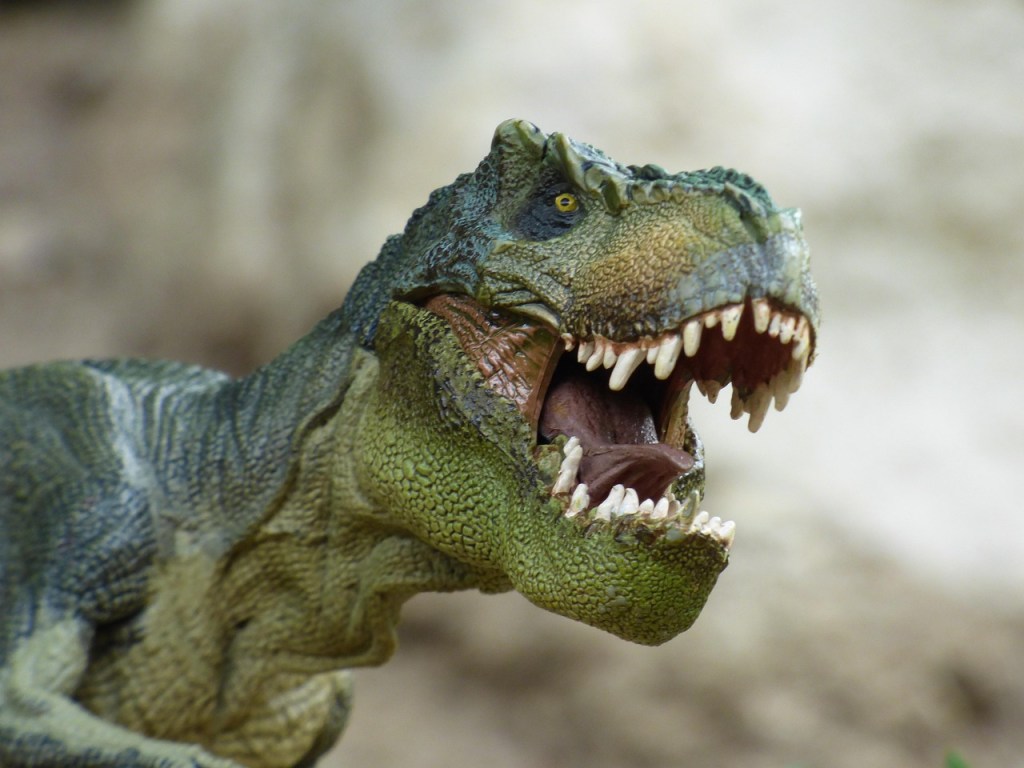
How do you create a full-sized dinosaur without a hint of computer graphics? The answer is through the amazing art of animatronics. Animatronics is a field of special effects that uses sculpture, mechanics, electronics and computer engineering to create life-size moving creatures for films and theme parks. They’re like puppets only much bigger, much smarter and much scarier. While today many film creatures are created using computer graphics in post-production, some filmmakers prefer to have their creatures ‘live’ on the set so the human actors have a real co-star to act along with. In a theme park, animatronics can put a weird creature, like a zombie pirate or a great white shark, right there and in your face. Famous movie animatronics stars include the shark in Jaws, the gigantic Spinosaurus in Jurassic Park III and the lovable alien in ET. How are these amazing effects created? Let’s get primeval with some state-of-the-art computer science.
On and off the drawing board
An animatronic creature starts out in life as a sketch on the drawing board. In some cases it’s a new creature-tastic idea thought up by the designer. In the case of dinosaurs, the sketches are created with the help of expert paleontologists. The sketches are then converted into a scale model, called a maquette. This scale model allows the designers to examine and correct their design plans before the big money is spent bringing the creature to full size ‘life’.
Growing up
Here’s where the model goes from the small to the large. The mini maquette is laser scanned, capturing all the detail of the model sculpture and feeding it into a computer aided design (CAD) software package. From this data whirring, computer-controlled blades automatically sculpt a full sized model using blocks of polyurethane foam. The blocks are assembled like a big 3D jigsaw, and sculptors add the extra fine detail. Now it’s big, it’s real and it’s ready for its screen test!
Pouring in the skin
If the full-sized version shows that star quality, it gets molded. Using the life-size model a set of moulds are made to allow the outside skin of the creature to be created. With the outside finished, now you have to think about the insides – namely, the skeleton, the mechanics of which depend on how the creature will be expected to move. Using a rough shape corresponding to the form of the core skeleton innards, the outer foam rubber skin can be poured in so that it only fills the negative space between the outside creature shape and in the inside skeleton. This reduces the weight of the skin and allows more believable, flexible movements.
More than just the bare bones
Skin done, now the technology really kicks in. The animatronics skeleton inside the creature is where all the smart stuff happens. It’s clever and custom made. It has to be – it’s the part that moves the outside skin to make it look believable. Attached around the main skeleton frame, which is often built with strong-but- light graphite and looks a lot like the real creature’s skeleton, we find the actuators. These are little clumps of clever computing that move the pieces around to make the creature look alive. Computer science abounds here, along with other state-of-the-art techniques. Mechanical and electronic engineering combined with computer-controlled motors are used to move small expressive bits like eyes, or to control the more heavy-duty hydraulic systems that move limbs. The systems may be pre-programmed for characteristic behaviours like blinking or swiping a claw. In essence the animatronics under the skin produce a gigantic remote controlled lifelike puppet for the director to play with.
Does my bum look big in this?
Putting the skin over the animatronics isn’t always easy. As each of the sections of foam rubber skin are added to the skeleton the construction team needs to check that the new bit of skin added doesn’t look too stretched, or too baggy with lots of unsightly flabby folds. One cunning way to help the image conscious creature is to use elastic bungee cords to connect areas of the skin to the frame. These act like tendons under the skin, stretching and bunching when it moves, and making the whole effect more relaxed and natural. Once the skin is on, it’s a quick paint job and the creature is ready for its close up. Action – grrrr -– shriek! Computer science takes centre stage.
Paul Curzon, Queen Mary University of London
More on …
Related Magazine …

Subscribe to be notified whenever we publish a new post to the CS4FN blog.


 cs4fn
cs4fn 