Mary and Eliza Edwards: the mother and daughter human computers

The globe with lines of longitude marked
Lines of Longitude. Image from wikimedia, Public Domain.

Mary Edwards was a computer, a human computer. Even more surprisingly for the time (the 1700s), she was a female computer (and so was her daughter Eliza).

In the early 1700s navigation at sea was a big problem. In particular, if you were lost in the middle of the Atlantic Ocean, there was no good way to determine your longitude, your position east to west. There was of course no satnavs at the time not least because there would be no satellites for 300 years! 

It could be done based on taking sightings of the position of the sun, moon or planets, at different times of the day, but only if you had an accurate time. Unfortunately, there was no good way to know the precise time when at sea. Then in the mid 1700s, an accurate clock that could survive a rough sea voyage and still be highly accurate was invented by clockmaker John Harrison. Now the problem moved to helping mariners know where the moon and planets were supposed to be at any given time so they could use the method.

As a result, the Board of Longitude (set up by the UK government to solve the problem) with the Royal Greenwich Observatory started to publish the Nautical Almanac from 1767. It consisted lots of information of such astronomical data for use by navigators at sea. For example, it contained tables of the position of the moon (or specifically its angle in the sky relative to the sun and planets (known as lunar distances). But how were these angles known years in advance to create the annual almanacs? Well, basic Newtonian physics allow the positions of planets and the moon to be calculated based on how everything in the solar system moves together with their positions at a known time. From that their position in the sky at any time can be calculated. That answers would be in the Nautical Almanac. Each year a new table was needed, so the answers also needed to be constantly recomputed.

But who did the complex calculations? No calculators, computers or other machines that could do it automatically would exist for several hundred years. It had to be done by human mathematicians. Computers then were just people, following algorithms, precisely and accurately, to get jobs like this done. Astronomer Royal, Nevil Maskelyne recruited 35 male mathematicians to do the job. One was the Revd John Edwards (well-educated clergy were of course perfectly capable of doing maths in their spare time!). He was paid for calculations done at home from 1773 until he died in 1884.

However, when he died Maskelyne received a letter from his wife Mary, revealing officially that in fact she had been doing a lot of the calculations herself, and with no family income any more she asked if she could continue to do the work to support herself and her daughters. Given the work had been of high enough quality that John Edwards had been kept on year after year so Mary was clearly an asset to the project, (and given he had visited the family several times so knew them, and was possibly even unofficially aware who was actually doing the work towards the end) Maskelyne was open-minded enough to give her a full time job. She worked as a human computer until her death 30 years later. Women doing such work was not at all normal at the time and this became apparent when Maskelyne himself died and the work stated to dry up. The quality of the work she did do, though, eventually persuaded the new Astronomer Royal  to continue to give her work.

Just as she helped her husband, her daughter Eliza helped her do the calculations, becoming proficient enough herself that when Mary died, Eliza took over the job, continuing the family business for another 17 years. Unfortunately, however, in 1832, the work was moved to a new body called ‘His Majesty’s Nautical Almanac Office’ At that point, despite Mary and Eliza having proved they were at least as good as the men for half a century or more, government imposed civil service rules came into force that meant women could no longer be employed to do the work.

Mary and Eliza, however had done lots of good, helping mariners safely navigate the oceans for very many years through their work as computers.

More on …

Subscribe to be notified whenever we publish a new post to the CS4FN blog.


This page is funded by EPSRC on research agreement EP/W033615/1.

QMUL CS4FN EPSRC logos

Maria Cunitz: astronomer and algorithmic thinker

When did women first contribute to the subject we now call Computer Science: developing useful algorithms, for example? Perhaps you would guess Ada Lovelace in the Victorian era so the mid 1800s? She corrected one of Charles Babbage’s algorithms for the computer he was trying to build. Think earlier. Two centuries or so earlier! Maria Cunitz improved an algorithm published by the astronomer Kepler and then applied it to create a work more accurate than his.

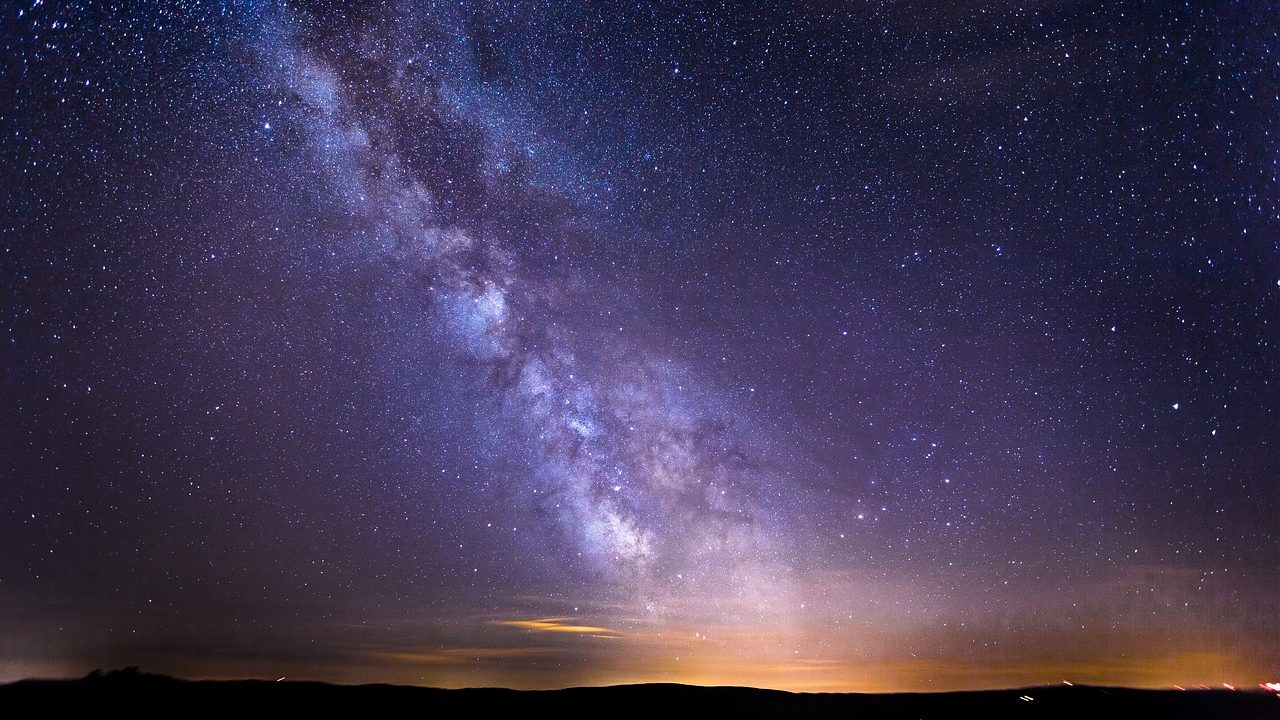
A stary sky with the milky way
Image by Rene Tittmann from Pixabay

Very few women, until the 20th century were given the opportunities to take part in any kind of academic study. They did not get enough education, and even if they did were not generally welcome in the circles of mathematicians and natural philosophers. Maria, who was Polish from an educated family of doctors and scientists, was tutored and supported in becoming a polymath with an interest in lots of subjects from history to mathematics. Her husband was a doctor who also was interested in astronomy something that became a shared passion with him teaching her the extra maths she needed. They lived at the time of the 30 years war that was waged across most of Europe. It was a spat turned into a war about religion between catholic and protestant countries. In Poland, where they lived, it was not safe to be a protestant. The couple had a choice of convert or flee, so left their home taking sanctuary in a convent.

This actually gave Cunitz a chance to pursue an astronomical ambition based on the work of Johannes Kepler. Kepler was famous for his three Laws of Planetary Motion published in the early 1600s on how the planets orbit the sun. It was based on the new understanding from Copernicus that the planets rotated around the sun and so the Earth was not the centre of everything. Kepler’s work gave a new way to compute the positions of the planets,

Cunitz had a detailed understanding of Kepler’s work and of the mathematics behind it, She therefore spent her time in the convent computing tables that gave the positions of all the planets in the sky. This was based on a particular work of Kepler called the Rudolphine Tables. It was one of his great achievements stemming from his planetary laws. Such astronomical tables became vital for navigating ships at sea, as the planetary positions could be used to determine longitude. However, at the time, the main use was for astrology as casting someone’s horoscope required knowledge of the precise positions of the planets. In creating the tables, Cunitz was acting as an early human computer, following an algorithm to compute the table entries. It involved her doing a vast amount of detailed calculation.

Kepler himself spent years creating his version of the tables. When asked to hurry up and complete the work he said: “I beseech thee, my friends, do not sentence me entirely to the treadmill of mathematical computations…” He couldn’t face the role of being a human computer! And yet a whole series of women who came after him dedicated their lives to doing exactly that, each pushing forward astronomy as a result. Maria herself took on the specific task he had been reluctant to complete in working out tables of planetary positions.

Kepler had published his algorithm for computing the tables along with the tables. Following his algorithm though was time consuming and difficult, making errors likely. Maria realised it could be improved upon, making it simpler to do the calculations for the tables and making it more likely they were correct. In particular, Kepler was using logarithms for the calculations. but she realised that was not necessary. Sacrificing some accuracy in the results for the sake of the avoidance of larger errors, the version she followed was even simpler. By the use of algorithmic thinking she had avoided at least some of the chore that Kepler himself had dreaded. This is exactly the kind of thing good programmers do today, improving the algorithms behind their programs so the programs are more efficient. The result was that Maria produced a set of tables that was more accurate than Kepler’s, and in fact the most accurate set of planetary tables ever produced to that point in time. She published them privately as a book “Urania Propitia’ in 1650. Having a mastery of languages as well as maths and science, she, uniquely, wrote it in both German and Latin.

Women do not figure greatly in the early history of science and maths just because societal restrictions, prejudices and stereotypes meant few were given the chance. Those who were like Maria Cunitz, showed their contributions could be amazing. It just took the right education, opportunities, and a lot of dedication. That applies to modern computer science too, and as the modern computer scientist, Karen Spärck Jones, responsible for the algorithm behind search engines said: “Computing is too important to be left to men.”

– Paul Curzon, Queen Mary University of London

More on …

Magazines …

Front cover of CS4FN issue 29 - Diversity in Computing

Our Books …


Subscribe to be notified whenever we publish a new post to the CS4FN blog.


This page and talk are funded by EPSRC on research agreement EP/W033615/1.