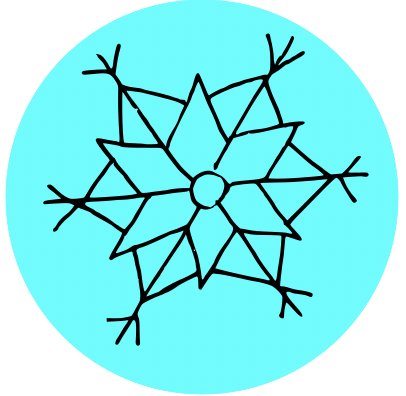
The picture for today’s door of the CS4FN Christmas Computing Advent Calendar is a snowflake and, inspired by its six-sides, this post is celebrating the similarly six-sided (and six-faced) HexaHexaFlexagon.
A hexahexaflexagon is a strip of paper cleverly folded to hide and then reveal six hexagonal faces within it. You pinch and flex them to reveal another face, as shown in the video below. It’s effectively a Möbius strip.

The name references a hexagonal shape which is flexed to show a new face (‘flexagon’) and the hexa-hexa bit just means each face has six sides and there are six faces.

Flexagons were discovered in the late 1930s by a British maths student (Arthur Stone) who’d arrived at Princeton University with a binder / folder from home and discovered that American paper was too large to fit in. He cut off the excess strips and ‘doodled’ with them by folding them into different shapes, then involving his classmates in developing them.
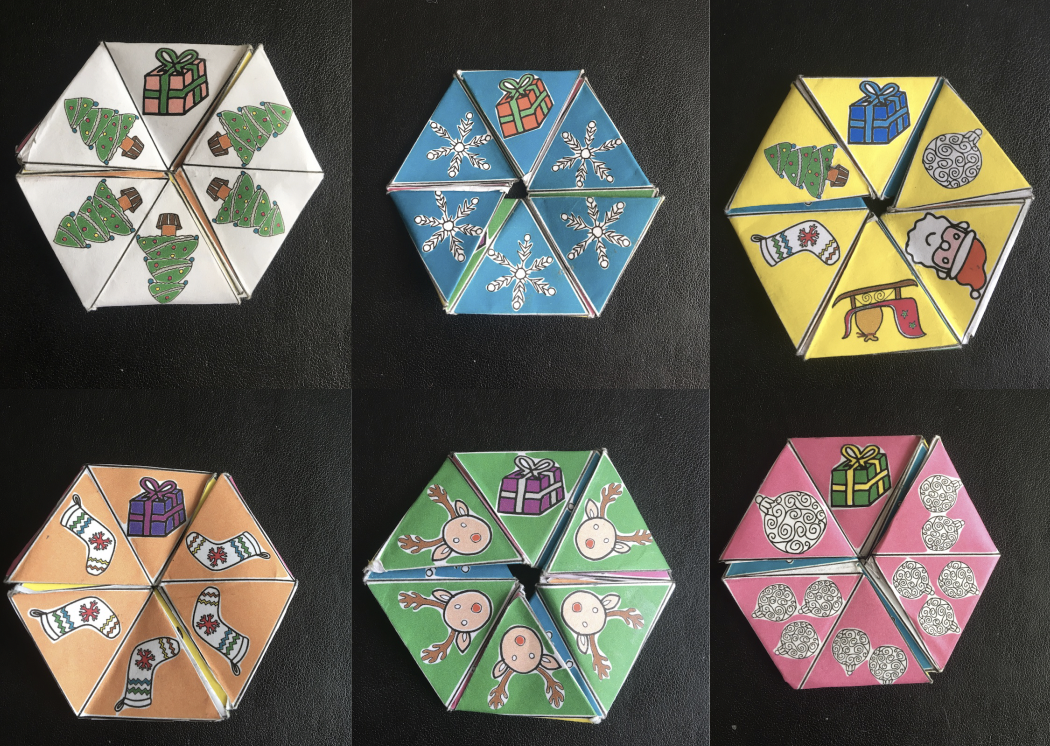
There are lots of ways to make them but we’ve created some templates to help. You can print our HexaHexaFlexagons or make and decorate your own from scratch. Ours depict Father Christmas looking for the six presents he’s lost among the different faces but there’s a blank template if you’d like to design your own.
Of course there’s some computer science and maths behind these too – we have a free PDF booklet which you can download, called Computational Thinking: HexaHexaFlexagon Automata.
Print or make your own HexaHexaFlexagon
Click here to download the patterns for printing. There are black and white ones for you to colour in yourself as well as an already-coloured one. There are also blank templates for you to make your own.
Vi Hart has a series of short fun videos about hexaflexagons.
Answers to yesterday’s puzzle
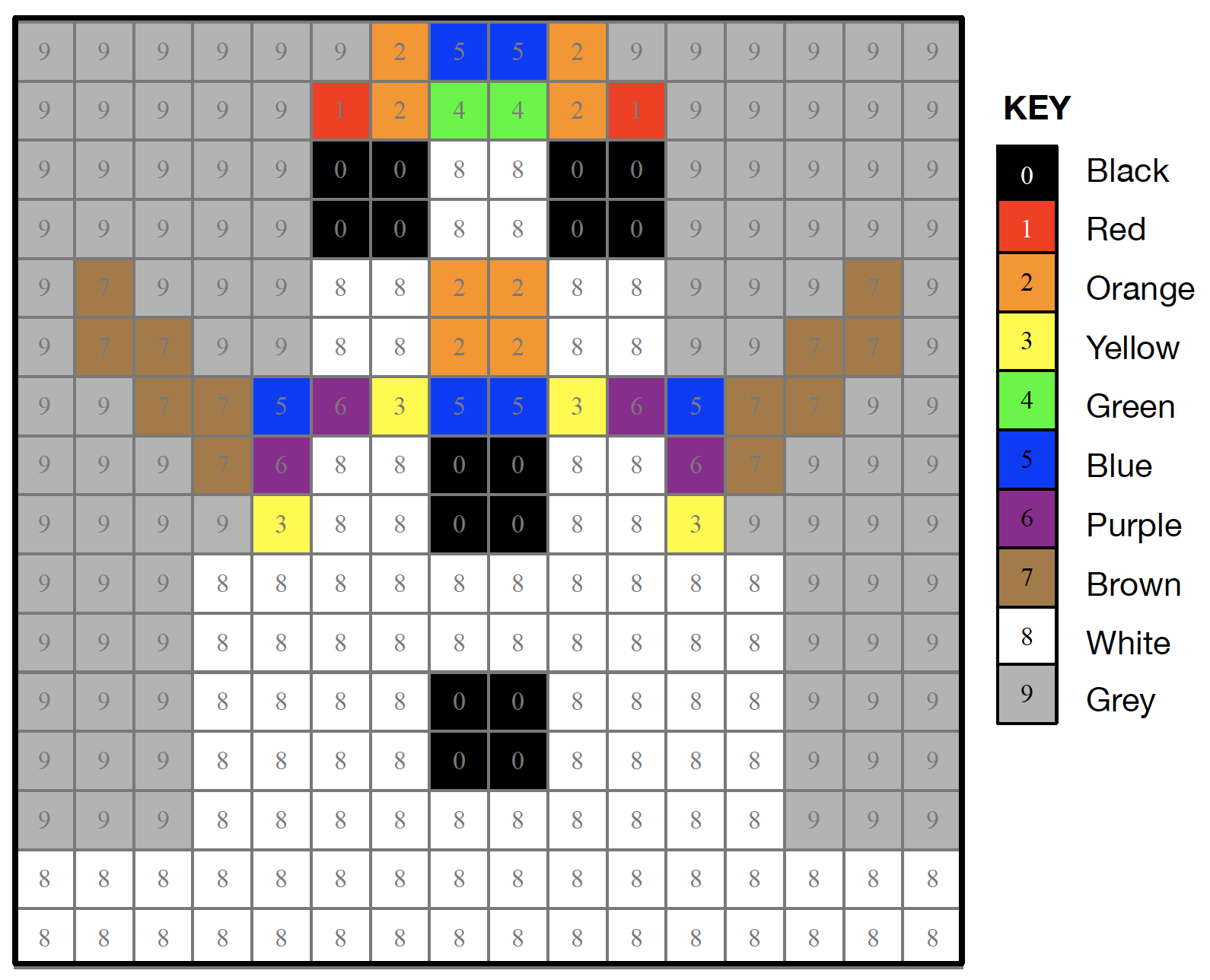
Did you spot our snowman?
View the solution sheet here (PDF).


EPSRC supports this blog through research grant EP/W033615/1.

 cs4fn
cs4fn 