

Machines getting wet…
We think of computers and electronics generally as machines that must stay dry (not least because you can electrocute yourself …don’t do this at home!) but there are lots of ways that computer science is of help at, on, watching over or under the sea.
We explore some of the ways here from history to modern research.
Scilly Cable Antics

Undersea telecommunications cables let the world communicate and led to the world spanning Internet. It was all started by the Victorians. Continents were connected, but closer islands were too including the Scilly Isles. (read on)
Even the dolphins use pocket switched networks!

A slow network is a frustrating network. So why would anyone be remotely interested in doing research into slow networks? Surprisingly, slow networks deserve study. Jon Crowcroft of the University of Cambridge and his team were early researchers of this area, and this kind of network could be the network of the future. The idea is already being used by the dolphins. (read on)
Gladys West: where is my satellite?

Satellites are critical to much modern technology, and especially GPS. Gladys West played a critical part and it started with her work on satellites sensing the sea. (read on)
Ammonite propulsion of underwater robots
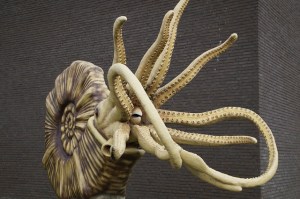
Intending to make a marine robot that will operate under the ocean? Time to start learning the physics of marine biology! It turns out you can learn a lot from ammonites: marine creatures that ruled the ocean for millennia and died out while dinosaurs ruled the earth. Perhaps your robot needs a shell, not for protection, but to help it move efficiently. (read on)
An experiment in buoyancy

Here is a little science experiment anyone can do to help understand the physics of marine animals and their buoyancy. It shows how animals such as ancient ammonites and now cuttlefish move up and down at will just by changing the density of internal fluids. It also shows how marine robots can be used to better understand ammonites from 350 million years ago (read on)
The Digital Seabed

For many of us, the deep sea is a bit of a mystery. But an exciting interactive digital tool at the National Museum of the Royal Navy is bringing the seabed to life! (read on)
Why do we still have lighthouses?

In an age of satellite navigation when all ships have high-tech navigation systems that can tell them exactly where they are to the metre, on accurate charts that show exactly where dangers lurk, why do we still bother to keep any working lighthouses? (read on)
1700s: Mary and Eliza Edwards: the mother and daughter human computers

Mary Edwards was a computer, a human computer. Even more surprisingly for the time (the 1700s), she was a female computer (and so was her daughter Eliza). They helped computer entries for the Nautical Almanac that helped sailors navigate for over 50 years… (read on)
Soft squidgy robots

Think of a robot and you probably think of something hard, metal, solid. Bang into one and it would hurt! But researchers are inventing soft robots, ones that are either completely squidgy or have squidgy skins.… (read on)
Gutta-Percha: how a tree launched a global telecom revolution

Obscure plants and animals can turn out to be surprisingly useful. The current mass extinction needs to be stopped for lots of reasons but an obvious one is that we risk losing forever materials that could transform our lives. Gutta-percha is a good example from the 19th century. It provided a new material that kick-started the worldwide telecoms boom of the 19th century based on undersea cables that ultimately led to the creation of global networks including the Internet….. (read on)
Sea sounds sink ships
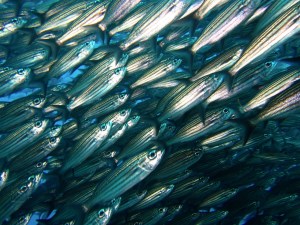
Find out about the sounds under the sea (natural and made by humans) and how scientists in the second World War measured the threshold of these sounds – in order to set the trigger for sonic warfare with acoustic mines… (read on).
Subscribe to be notified whenever we publish a new post to the CS4FN blog.
Click the Portals image below to uncover our other themed pages.

Subscribe to be notified whenever we publish a new post to the CS4FN blog.
This blog is funded by EPSRC on research agreement EP/W033615/1.

 cs4fn
cs4fn 