

Before there were computers, there were people who computed…
The original meaning of the word computer was a human who did computation. Now we call them human computers. Those dedicated enough and with sufficient attention to detail spent their lives computing numbers, day in day out, year after year. Those numbers helped us to do things like navigate at sea, tell people’s fortunes, or help put men into space.
1400: Mādhava of Sangamagrāma: calculating Pi

How on earth do you compute a number like Pi (3.1.4159….). It has an infinite number of digits containing no repeating pattern so you can never tie it down exactly. A favourite way for calculating pi was devised by the Indian mathematician Mādhava of Sangamagrāma in around 1400. He worked out an algorithm for working out Pi based on the maths of infinite series that he had also worked out and then computed the most accurate version ever up to then… (read on)
1600: Maria Cunitz: predicting positions of planets

Maria Cunitz improved an algorithm published by the astronomer Kepler and then applied it to create a work more accurate than his for predicting the positions of the planets…. (read on)
1700: Maria Kirch: computing for calendars

Maria Kirch was a very early female human computer. Working in the late 1600s into the early 1700s, with her husband, she created astronomical tables that while mainly used for astrological purposes were also useful for navigation. They computed the future times of sunrises, the phases of the moon, the positions of planets, eclipses and the like for calendars….. (read on)
1700s: Mary and Eliza Edwards: the mother and daughter human computers

Mary Edwards was a computer, a human computer. Even more surprisingly for the time (the 1700s), she was a female computer (and so was her daughter Eliza). They helped computer entries for the Nautical Almanac that helped sailors navigate for over 50 years… (read on)
1800s: Florence Nightingale: rebel with a cause

Florence Nightingale is known for her nursing, in the Crimean War. She rebelled against convention to become a nurse when nursing was seen as a lowly job, not suitable for ‘ladies’. She broke convention in another less well-known, but much more significant way too. She was a mathematician. She pioneered the use of pictures (which were based on her doing lots of computation) to present her statistical data about causes of war deaths and issues of sanitation and health: a Victorian version of the Big Data revolution … (read on)
1800s: Charles Babbage: Victorian adders

Charles Babbage realised machines might replace the work of human computers. His Victorian “computers” were made of Victorian tech – metal, wheels and levers. It had a cunning contraption at its core that allowed it to store and add numbers. how did it work? … (read on)
1930s: Mary Clem: dependable computing

Mary Clem was a pioneer of dependable computing long before the first computers existed. She was a computer herself, but became more like a programmer…(read on)
1950s: Hidden Figures: NASA’s brilliant calculators

NASA Langley was the birthplace of the U.S. space program where astronauts like Neil Armstrong learned to land on the moon. Everyone knows the names of astronauts, but behind the scenes a group of African-American women were vital to the space programme: Katherine Johnson, Mary Jackson and Dorothy Vaughan… (read on)
1950s: Annie Easley: putting rockets into space
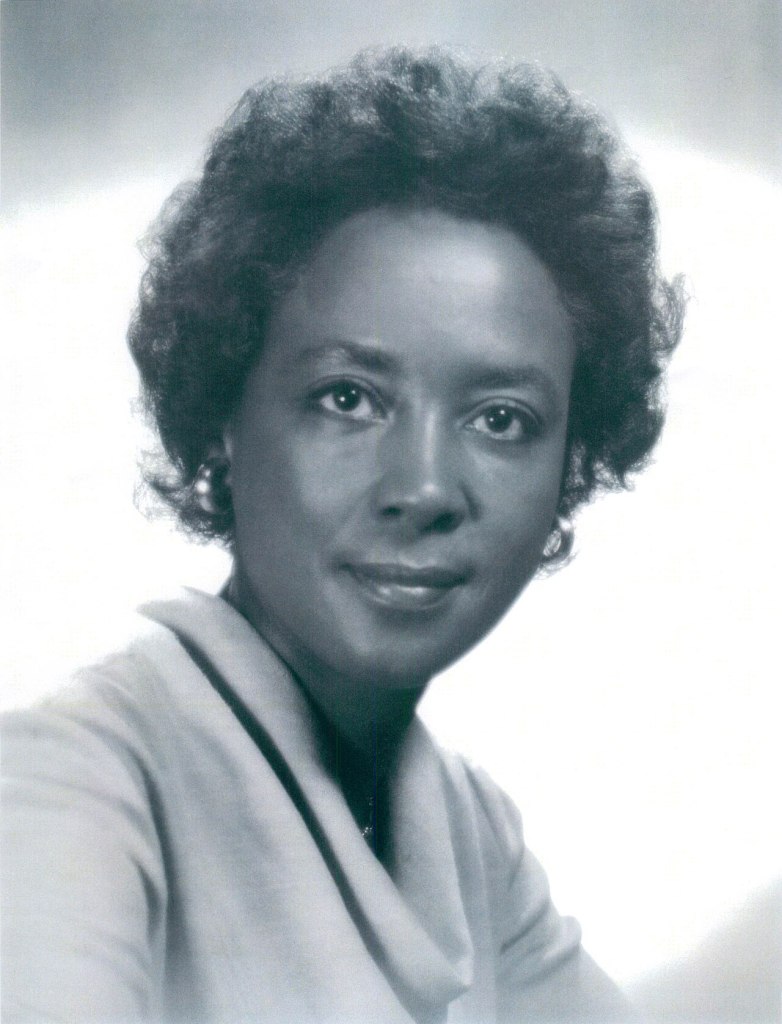
Annie Easley was a pioneer both as a computer programmer but also as a champion of women and minorities into computer science. She went from being a human computer doing calculations for the rocket scientists (in the days before computers were machines), to becoming a programmer whose programs were integral to many NASA projects…(read on)
This blog is funded by EPSRC on grant EP/W033615/1.

 cs4fn
cs4fn 