


Wanna make a difference ?
If you want to really make a difference (or just become rich), one way many computer scientists and electronic engineers have followed is to become an entrepreneur – take a good idea and create a startup company to turn it into reality.
You need technical skills, people skills, business skills and a lot of luck. All but the last you can work on and the more you practice the better you get. But you also need a good idea. Where does that come from? Well, it is all about spotting a need that others haven’t spotted yet, or if they have, haven’t come up with a good enough solution. Being interested in and wanting to understand people really helps. There are ways to become good at that too. You can, for example, help it along by being observant and interested in people’s real needs, and learn to do the right kind of research, too.
Many start by doing computer science research and then develop their (and their own student’s) research ideas into innovative products, but that is not the only way. Some university students turn their final year projects into products.
It doesn’t have to be all about money. Now the idea of social ventures is taking hold where a company is just a vehicle for doing sustainable social good not becoming rich.
Some ideas work, some don’t. The best entrepreneurs learn from their failures, continue to build their skills and keep trying.
Avoiding loneliness with StudyBuddy

University has always been a place where you make great friends for life. And yet many students suffer from loneliness while at university. Klara Brodahl realised there was a novel need here that no one was addressing well and decided to try to solve it for the final year project of her QMUL computer science degree. Her solution was StudyBuddy and with the support of an angel investor she has now set up a startup company and is rolling it out for real…. (read on)
To be (CEO) or not to be (CEO)
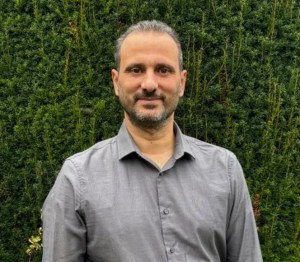
Just because you start a start-up doesn’t mean you have to be the boss (the CEO) running the company… Hamit Soyel didn’t and his research-based company, DragonFlyAI is flourishing…. (read on)
A sound social venture: recognising birds

Dan Stowell was a researcher at Queen Mary University of London when he founded an early version of what is now known as a Social Venture: a company created to do social good. With Florence Wilkinson, he turned birdsong into a tech-based social good... (read on)
Designing an interactive prayer mat

Successful interactive systems design is often based on seeing a need that really good solutions do not yet exist for, then coming up with a realistic solution others haven’t thought of. Kamal Ali showed how its done with the development of My Salah Mat, an interactive prayer mat to help young children learn to pray…(read on)
Stopping sounds getting left behind: the Bela computer

Computer-based musical instruments are so flexible and becoming more popular. They have had one disadvantage though. The sound could drag behind the musician in a way that made some digital instruments seem unplayable. Thanks to a new computer called Bela, that problem may now be a thing of the past.…(read on)
Kickstarting a new software industry

Back in its early days, after the war, women played a pivotal role in the computing industry, as skilled programmers. Dina St Johnston was one such early programmer. And as an entrepreneur she personally went on to kick-start the whole independent UK software industry!…(read on)
Nemisindo: breaking the sound barrier

Games are becoming ever more realistic. Now, thanks to the work of Joshua Reiss’s research team and their spinout company, Nemisindo, it’s not just the graphics that are amazing, the sound effects can be too with procedural sound... (read on)
Mixing entrepreneurship with research

Becoming a successful entrepreneur starts with seeing a need and fixing it. For David Ronan, the need was for anyone to mix music, but that it is hard to do. Now his company RoEx is filling that need by combining signal processing and artificial intelligence tools applied to music. It is built on his research as a PhD student… (read on)
Wanna be a rock star?

Want to make sure your life turns out the way you want? Want to trade this life for fortune and fame? Believe rock band Nickelback’s 2005 single, then ‘you wanna be a Rockstar’! Are they right, or do you really wanna be a tech entrepreneur?… (read on)
Jacquie Lawson: the multi-million pound greeting

There is real money to be made out there in the virtual world – if you are willing to put in the effort to develop appropriate skills.
You don’t have to be young or a geek either. At the age of 62, grandmother Jacquie Lawson turned a hobby into a multi-million pound business…(read on)
Freddie Figgers: abandoned baby to tech star

As a baby, born in 1989, Freddie Figgers was abandoned by his biological parents but he was brought up with love and kindness by two much older adoptive parents who kindled his early enthusiasm for fixing things and inspired his work in smart health. He now runs the first Black-owned telecommunications company in the US…. (read on)
DragonFly AI: I see what you see

What use is a computer that sees like a human? Can’t computers do better than us? Well, such a computer can predict what we will and will not see, and there is BIG money to be gained doing that…. (read on)
Sequencing succcess

Mike Lynch was one of Britain’s most successful entrepreneurs. An electrical engineer, he built his businesses around machine learning long before it was a buzz phrase. He also drew heavily on a branch of maths called Bayesian statistics which is concerned with understanding how likely, even apparently unlikely, things are to actually happen. (read on)
An Wang’s Magnetic Memory

An Wang was one of the great pioneers of the early days of computing. Just as the invention of the transistor led to massive advances in circuit design and ultimately computer chips, Wang’s invention of magnetic core memory provided the parallel advance needed in memory technology… (read on)
Nurses in the mist

What do you do when your boss tells you “go and invent a new product”? Lock yourself away and stare out the window? Go for a walk, waiting for inspiration? Medical device system engineers Pat Baird and Katie Hansbro did some anthropology.… (read on)
Babbage’s triumph over brutal reality

Charles Babbage is famous for his amazing technical skills in designing a computer in Victorian times, but also infamous for his apparent spiky and obsessive personality that caused his investors to drop him (if only he had left business to a business partner)…. (read on)
Why is your Internet so slow

Sometimes we enjoy really fast Internet access, and yet at other times it’s frustratingly slow! So the question is why, and what does this have to do with posting a letter, or cars on a motorway? And how did electronic engineers turn the problem into a business opportunity?….. (read on)
It’s good to talk

The famous inventor of the telephone, Alexander Graham Bell, was born in 1847 in Scotland. His story is a fascinating one, showing that like all great inventions, a combination of talent, timing, drive and a few fortunate mistakes are what’s needed to develop a technology that can change the world….. (read on)
Sophie Wilson: chip design

Sophie Wilson designed the chip for the BBC Micro. This was one of the most popular early personal computers. She then co-designed the chip (the ARM processor) that is in almost all mobile phones as well as in tablets, TV’s and almost every other digital gadget in our homes… (read on)
Tesla: the invisible genius
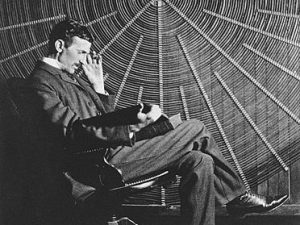
Nikola Tesla is an enigma wrapped in a mystery. Not bad going for an electronic engineer. Born, so the stories go, in the middle of a thunderstorm in Serbia, Tesla has left a fascinating legacy to the world today. He fought a battle to show that alternating current (A/C) was superior to direct current (D/C) when it came to transmitting electricity over a distance. His opponent was none other than America’s most respected celebrity inventor, Thomas Edison…. (read on)
My first signs

Like Alexander Graham Bell, Lila Harrar, then a computer science student at Queen Mary University of London was inspired by a deaf person to do something to make a difference. Her chance came when she had to think of something to do for her undergraduate project…and it went on to become a commercial product (read on)
Herman Hollerith: from punch cards to a special company

Herman Hollerith, the son of immigrants, struggled early on at school and then later in bookkeeping at college but it didn’t stop him inventing machines that used punch cards to store data. He founded a company to make and sell his machines. It turned into the company now called IBM, which of course helped propel us into the computer age.
(read on)
More to come (of course)
Subscribe to be notified whenever we publish a new post to the CS4FN blog.
This blog is funded by EPSRC on research agreement EP/W033615/1.

 cs4fn
cs4fn 