
The science and engineering of Deep Learning
Just as our own bodies and brains are so complex, we are still understanding their mysteries, we are now building AI systems that internally are so huge we barely understand them, and that do things that were not predicted or intended even by those creating them. We need a far better grasp on how they work so what they do.
One way to do that is Artificial Neuroscience where we measure, explore and examine the inner workings of these vast systems of interacting artificial brain cells (neurons) that we are building.
Another way is to explore their fundamental properties in a black box way, testing their external abilities in general rather than with respect to just single programs or applications.
If we better understand these vast systems, we will have a better chance of being able control existing Deep Learning models and then design better ones, so that they do good for humanity and the planet rather than harm.
.
Humanity’s Last Exam

A big research project has investigated whether humans can devise expert questions they can answer but GenAI can’t. It turns out this is far harder than you might think. Is humanity running out of exam questions?… (read on)
Perceptrons and the AI Winter
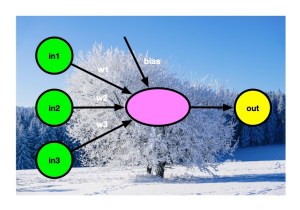
A simple, but misunderstood, theoretical result about a little gadget called a perceptron that is now the basis of machine learning tools, led to the AI winter that set back AI development decades. Learn about perceptrons and how theoretical computer science can help us understand AI … (read on)
More on …
The Fundamentals of AI and Computational Theory

More on theoretical work in computer science along with basic science and engineering form the foundations of solid applications that work… (read on)
Subscribe to be notified whenever we publish a new post to the CS4FN blog.

 cs4fn
cs4fn 