
Maths, puzzles, magic and real life
Here are some of our articles on the fun side of mathematics and logic including:
- How to prove magic tricks works
- The maths of strong passwords
- Why the romans were pants at maths
- (and more)
You can also download a free copy of our issue of CS4FN magazine issue 27, all about Bayes theorem and its many uses..
The logic piano
Find out about Victorian economist William Stanley Jevons and his 1869 “logic piano”: a device that looked a little like a piano but that “played” logic… (read on)
Hear and their magic square
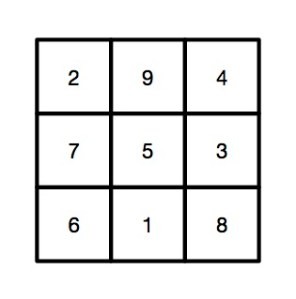
Victorian Computer Scientists, Ada Lovelace and Charles Babbage were interested in Magic Squares. Find out how to create your own… (read on)
Calculating Pi for Pi Day
There are several Pi Day’s (14 March: 3.14; 22 July: 22/7) so we should look at how on earth you compute a number like Pi (3.1.4159….). It has an infinite number of digits containing no repeating pattern so you can never tie it down exactly… (read on)
Proving magic works using algebra
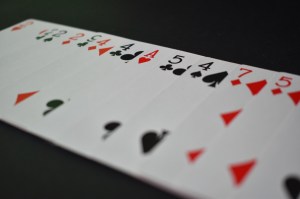
Magic tricks are just algorithms – they involve a magician following the steps of the trick precisely. But how can a magician be sure a trick will definitely work when they do it in front of an audience? Just like computer scientists who can prove their algorithms always work, a magician can use algebra, logic and deduction to be sure their tricks always work too... (read on)
Frequency analysis for fun
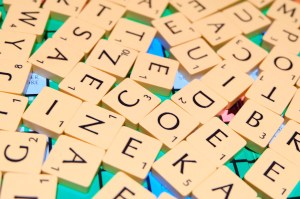
Frequency Analysis, was invented by Al-Kindi, a 9th Century Muslim, Arabic Scholar. It is a technique beloved by spies for centuries, and that led to the execution of at least one Queen, also played a part in the development of the game Scrabble, over a hundred million copies of which have been sold worldwide...(read on)
Password Strength and Information Entropy
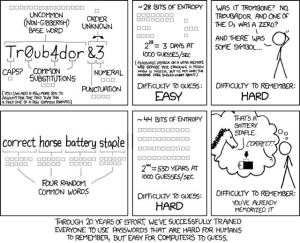
How do you decide whether a password is strong? Computer scientists have a mathematical way to do it. Based on an idea called information entropy it’s part of “Information Theory”, invented by electrical engineer Claude Shannon back in 1948. This XKCD cartoon for computer scientists uses this idea to compare two different password. Unless you understand information theory the detail is a bit mind blowing to work out what is going on though… so let’s explain the computer science!… (read on)
Ancient Egyptian Numerals
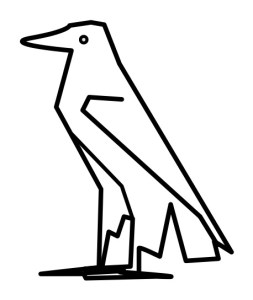
There are lots of ways numbers can be represented. Choosing a good representation can make things easier or harder to do. The Ancient Egyptians had a simple way using hieroglyphs (symbols). It is similar to Roman Numerals but simpler… (read on)
Why the Romans were pants at maths

The Romans were great at counting and addition but they were absolutely pants at multiplication. It wasn’t because they were stupid. It was because they hadn’t invented a good way to represent numbers, and that meant they needed really convoluted algorithms…. (read on)
I Ching binary
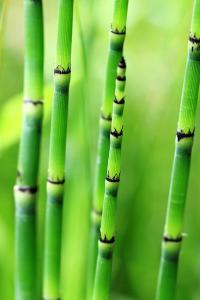
I Ching the ancient Chinese divination text, several thousand years old, is based on a binary pattern…. (read on)
Florence Nightingale: visualising statistics
Florence Nightingale, the most famous female Victorian after Queen Victoria, is known for her commitment to nursing, especially in the Crimean War. She rebelled against convention to become a nurse at a time when nursing was seen as a lowly job, not suitable for ‘ladies’. She broke convention in another less well-known, but much more significant way too. She was a mathematician – the first woman to be elected a member of the Royal Statistical Society. She also pioneered the use of pictures to present the statistical data that she collected about causes of war deaths and issues of sanitation and health…. (read on)
A handshaking puzzle
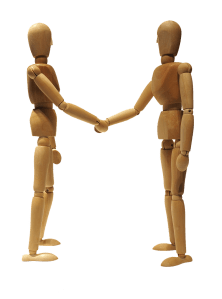
Logical reasoning and proof, whether done using math notation or informally in your head, is an important tool of computer scientists. The idea of proving, however, is often daunting for beginners and it takes a lot of practice to master this skill. Here we look at a simple puzzle to get you started… (read on)
The social machine of maths
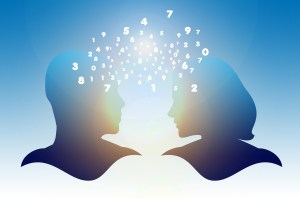
Real maths is about discovering new results not just using old ones as we do in school, and the way that is done is changing. We tend to think of maths as something done by individual geniuses: an isolated creative activity, to produce a proof that other mathematicians then check, but modern maths is a very social activity now. … (read on)
More to come (of course)
Subscribe to be notified whenever we publish a new post to the CS4FN blog.

 cs4fn
cs4fn 