
Computer science and computer scientists have been depicted in films as both heroes or villains, and there is lots of computer science in films including how computing knowledge and digital skills could be used to help (or misused to harm) humanity.
One golden-age movie star was even an inventor who invented a technology that is now the backbone of mobile communication.
You might also like Starring the Computer, a database that tells you which computers are in any film and also organises it by which films feature a particular computer.
Rogue One: Physical Security

In a galaxy far, far away cyber security matters quite a lot. So much so, in fact, that the whole film Rogue One is about it. The plot is all about the bad guys trying to keep their plans secret, and the good guys trying to steal them.. and there is only a story to tell at all because the Empire used physical security…. (read on)
Rogue One: Authentication

In a galaxy far, far away cyber security matters. So much so, that the whole film Rogue One is about it. Part of the key to keeping the Death Star plans secret is good authentication… (read on)
Guardians of the Galaxy: Fail Secure Security
“…Electromagnetic door locks let you can program who is and isn’t allowed entry. Want to keep someone out – you can just cancel their keycard in the system. They are held locked by electromagnets: magnets are switched on and off using an electric current. That means computers can control them. As the designer you can make them either “fail safe” or “fail secure”. With a fail safe lock, when the power goes, the doors automatically unlock. With fail secure, instead they lock. Its just a matter of whether the magnet is holding the door open or closed. Which you choose when designing the lock depends on your priorities. … (read on)
Understanding Ultron: a Turing test for world domination

AI is becoming ever present in our lives, at least in the form of software tools that demonstrate elements of human-like intelligence. AI in our mobile phones apply and adapt their rules to learn to serve us better, for example. But fears of AI’s potential negative impact on humanity remain as seen in its projection into characters like Ultron, a super-intelligence accidentally created by the Avengers. (read on)
Moon: mind-body dualism

The least interesting thing about Duncan Jones is who his superstar father is. He directed one of the coolest films ever: Moon. It premiered at Sundance in 2009 to brilliant reviews. If you are interested in artificial intelligence (which Jones obviously is) then you will undoubtedly love Moon… (read on)
Castles in the Sky: RADAR winning the Battle of Britain

Spitfires and their heroic fighter pilots have always got the credit for winning the Battle of Britain, but was it really electronic engineers? The wonderful film Castles in the Sky starring Eddie Izzard tells the story of how RADAR helped Britain control the skies… (read on)
Torchwood: in need of some backup

Disaster planning, that’s the Torchwood game. They are there to save the Earth whenever it needs saving from aliens (which is every week). Shame they blew it when it came to disaster planning for Torchwood itself!… (read on)
Hidden Figures: NASA’s brilliant calculators

Everyone knows the names of the astronauts, but behind the scenes a group of African-American women were vital to the space program: Katherine Johnson, Mary Jackson and Dorothy Vaughan. Before electronic computers were invented ‘computers’ were just people who did calculations and that’s where they started out, as part of a segregated team of mathematicians. Dorothy Vaughan became the first African-American woman to supervise staff there and helped make the transition from human to electronic computers by teaching herself and her staff how to program in the early programming language, FORTRAN (read on)
Return of the killer robot? Evil scientist?! Helpless woman?!?
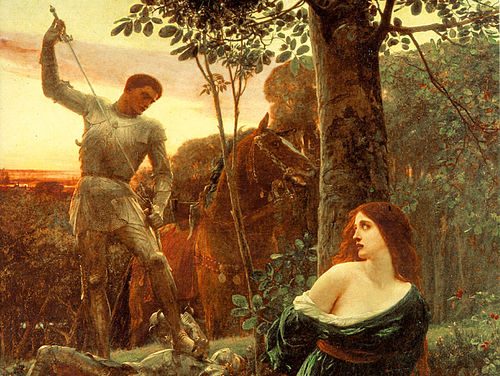
‘Geeky male computer scientist’ is just a stereotype, like ‘helpless female in need of rescue by male hunk’, ‘scientist as mad eccentric in white coat’, or ‘evil robot wanting to take over the world’. Where do false stereotypes come from? … (read on)
Catwoman: The weakest link
The 2004 film Catwoman, starring Halle Berry has been voted as one of the worst films of all time, and has won multiple Razzies. I certainly features some of the worst cyber-physical security seen in a film by a corporate giant. So what can we learn about cyber-physical security from the film? That security is only as good as the weakest link and physical security can be the weak link…. (read on)
Hedy Lamarr: The movie star, the piano player and the torpedo

Hedy Lamarr was a movie star. Back in the 1940’s, in Hollywood’s Golden Age, she was considered one of the screen’s most beautiful women and appeared in several blockbusters. But Hedy was more than just good looks and acting skills. Even though many people remembered Hedy for her pithy quote “Any girl can be glamorous. All she has to do is stand still and look stupid”, at the outbreak of World War 2 she and composer George Antheil invented an encryption technique for a torpedo radio guidance system! … (read on)
Oppenheimer: an AI Oppenheimer moment

All computer scientists should watch Christopher Nolan’s film, Oppenheimer. It charts the life of J. Robert Oppenheimer, “father of the atom bomb”, and the Los Alamos team as they designed and built the first weapons of mass destruction. The film is about science, politics and war, not computer science . Despite that, Christopher Nolan believes the film has lessons for those in Silicon Valley… (read on)
Film Futures…
Film futures: Tsotsi

In this film future, alternative plot, we look at an alternative version of the film Tsotsi…. (read on)
Film futures: Brassed off

In this film future, alternative plot, we look at an alternative version of the film Brassed Off exploring music and the effects of computers on society…. (read on)
Film futures: The Lord of the Rings

In this film future, alternative plot, we look at an alternative version of the film series The Lord of the Rings exploring the use of drone technology…. (read on)
Film futures: Elf

In this film future, alternative plot, we look at an alternative version of the Christmas film Elf exploring what would happen if intelligent nappies had been used…. (read on)
More to come of course!
Click the Portals image below to uncover our other themed pages.
Subscribe to be notified whenever we publish a new post to the CS4FN blog.
This blog is funded by EPSRC on research agreement EP/W033615/1.

 cs4fn
cs4fn 